

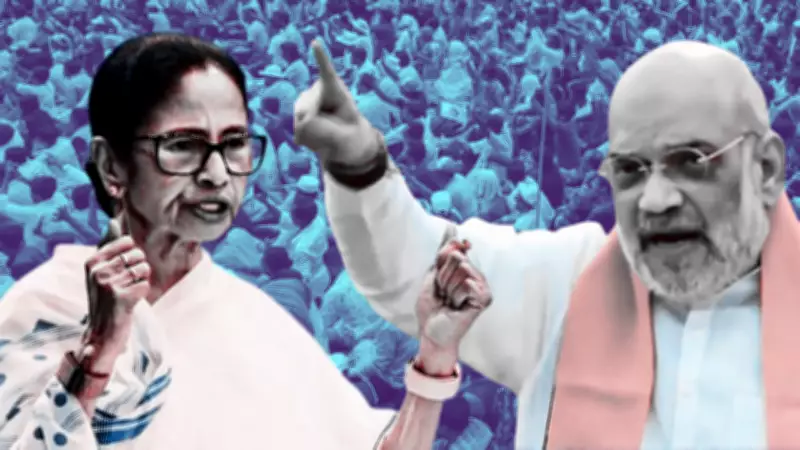
TMC Launches Counter-Chargesheet Against BJP in Escalating Political Battle
In a swift and strategic political maneuver, the Trinamool Congress (TMC) has released its own comprehensive "chargesheet" targeting the Bharatiya Janata Party (BJP), mere hours after Union Home Minister Amit Shah unveiled a similar document criticizing the Mamata Banerjee-led government in West Bengal. This rapid response sets the stage for an intense war of narratives as the state approaches crucial polling dates.
Duelling Documents: A Clash of Political Narratives
The TMC's counter-document represents a direct challenge to the BJP's allegations, turning the spotlight back on the saffron party's governance record. TMC leaders have positioned their chargesheet as a necessary rebuttal to what they describe as politically motivated accusations from their rivals. The document specifically questions women's safety in BJP-ruled states and accuses the party of exhibiting selective outrage on critical issues.
"The TMC's chargesheet argues that pressing concerns such as law and order and women's safety are equally significant in states governed by the BJP," explained political analysts. This framing attempts to position the BJP's campaign as an effort to deflect attention from its own governance challenges elsewhere in the country.

Amit Shah's Initial Salvo: Allegations of "Fear, Corruption and Violence"
Earlier in the day, Union Home Minister Amit Shah launched the BJP's offensive during a press conference in Kolkata, releasing what he termed a "chargesheet" against the TMC government. Shah accused the Mamata Banerjee administration of presiding over "15 years of fear, corruption and violence," framing the upcoming election as a fundamental choice between "fear and trust."
The senior BJP leader made several serious allegations, including:
- West Bengal has become a hub for criminal syndicates under TMC rule
- The state has transformed into a "graveyard for industry"
- Bengal's law and order situation poses broader national security concerns
- Infiltration remains a key issue, with Bengal serving as the primary route for illegal entry after stricter controls in neighboring Assam
Organizational Push and Electoral Significance
Shah also highlighted the BJP's growing organizational strength in West Bengal, specifically praising Leader of Opposition Suvendu Adhikari for his statewide outreach efforts. "Adhikari has been instrumental in raising critical issues such as economic distress, public disorder, and alleged governance failures during his extensive travels across the state," Shah noted during his presentation.
The electoral context adds significant weight to this exchange of chargesheets. West Bengal is scheduled to vote in two crucial phases on April 23 and April 29, covering all 294 constituencies, with vote counting set for May 4. These duelling documents are expected to form a central plank of campaign rhetoric as both major parties intensify their efforts to influence voters in what promises to be a closely watched electoral contest.
Broader Implications for Political Discourse
This exchange of chargesheets represents more than just routine political sparring. It signals a strategic escalation in campaign tactics as both parties prepare for a high-stakes electoral battle. The TMC's decision to immediately counter the BJP's allegations demonstrates their determination to control the narrative rather than simply respond defensively.
Political observers note that the focus on women's safety and governance issues reflects broader national concerns that have gained prominence in recent political discourse. "By highlighting these specific issues, both parties are attempting to connect with voters on matters that resonate deeply with the electorate," commented a veteran political analyst.
As the election dates approach, this war of chargesheets is likely to intensify, with both parties refining their arguments and presenting additional evidence to support their respective positions. The effectiveness of these competing narratives in swaying undecided voters will ultimately be tested at the ballot box in what promises to be one of India's most significant state elections this year.






