

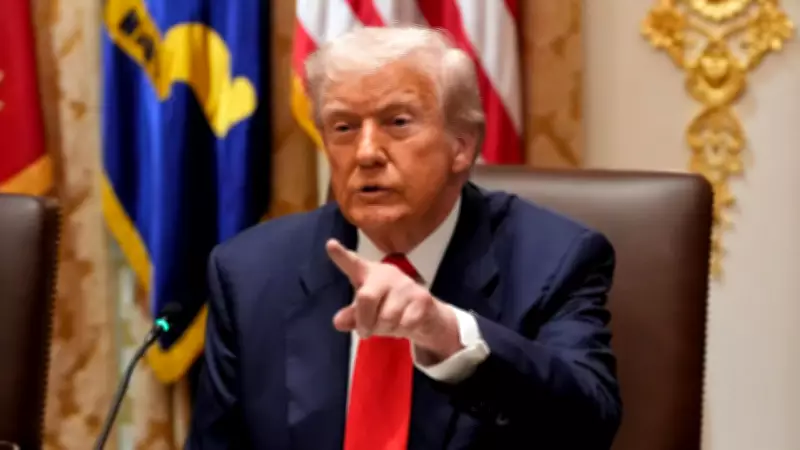
In a fiery exchange with CBS 60 Minutes correspondent Norah O'Donnell, US President Donald Trump vehemently denied allegations of rape and pedophilia after she read excerpts from a manifesto purportedly written by the suspect in a security scare at a media dinner. Trump cut off O'Donnell, calling her "a disgrace" for airing the claims, even in the context of reporting on the suspect's motives.
President Rejects Allegations
"I'm not a rapist. I didn't rape anybody," Trump asserted forcefully, rejecting the accusations embedded in the document, which investigators say was circulated shortly before the attack. The conversation quickly turned into a broader critique of the media, with Trump accusing journalists of amplifying the words of a "sick person" to smear him on national television.
Security Incident at Washington Hilton
The interview, aired less than 24 hours after the dramatic security incident at the Washington Hilton, provided the first extended look into Trump's account of the episode. He insisted he "wasn't worried" as shots rang out near the venue, portraying the presidency as inherently dangerous. The shooting occurred on Saturday evening during the annual WHCA dinner, an event that gathers journalists, politicians, and celebrities.

Law enforcement officials identified the suspect as 31-year-old Cole Tomas Allen, who attempted to breach the security perimeter armed with multiple weapons, including a shotgun and handgun, before being intercepted by Secret Service agents. One officer was injured, but no fatalities were reported, and Trump, along with Vice President JD Vance, was swiftly evacuated.
Manifesto Sparks Political Firestorm
Investigators say the suspect circulated a rambling manifesto expressing anger at the federal government and outlining a plan to target high-ranking officials. The document has become a central point of political contention, especially after Trump's explosive reaction during the 60 Minutes interview.
While Trump praised the Secret Service's response as "brave and skillful," he also made an unusual admission: he may have delayed his own evacuation by hesitating to follow agents' instructions in the chaotic moments after gunfire erupted. This acknowledgment has added to growing controversy over security arrangements at the high-profile gathering.
Security Vulnerabilities Questioned
Critics, including former law enforcement officials, have questioned how a heavily armed individual was able to get so close to an event attended by the president and much of the American leadership. Reports point to potential vulnerabilities stemming from the Washington Hilton itself, a functioning hotel with multiple public access points that was only partially secured for the event. The suspect noted perceived security gaps in his writings, intensifying concerns.
The Secret Service has defended its performance, emphasizing that agents neutralized the threat before it could escalate into a mass-casualty attack. However, dissenting voices argue the focus should be on prevention, raising the possibility of procedural changes for future events involving dense concentrations of top officials.
Political Fallout and Media Relations
Politically, the episode is already reverberating across Washington. Trump framed the attack as part of a broader pattern of hostility fueled by political opponents and the liberal media. He described the suspect as a "lone wolf" but linked the incident to what he called "dangerous" narratives about his presidency.
Media commentators have seized on Trump's on-air outburst as further evidence of an increasingly adversarial relationship between the White House and the press. His decision to personally attack O'Donnell, particularly in response to a question grounded in reporting about the suspect, has drawn criticism from those who argue it risks legitimizing hostility toward journalists.
Public reaction appears deeply polarized. Supporters have praised Trump's forceful rebuttal of what they see as defamatory insinuations, while critics have described the exchange as emblematic of a president unwilling to engage with uncomfortable facts. Despite the turmoil, Trump signaled he does not want the WHCA dinner tradition disrupted, urging organizers to reschedule if necessary. Canceling it, he said, would hand a symbolic victory to political violence.






