

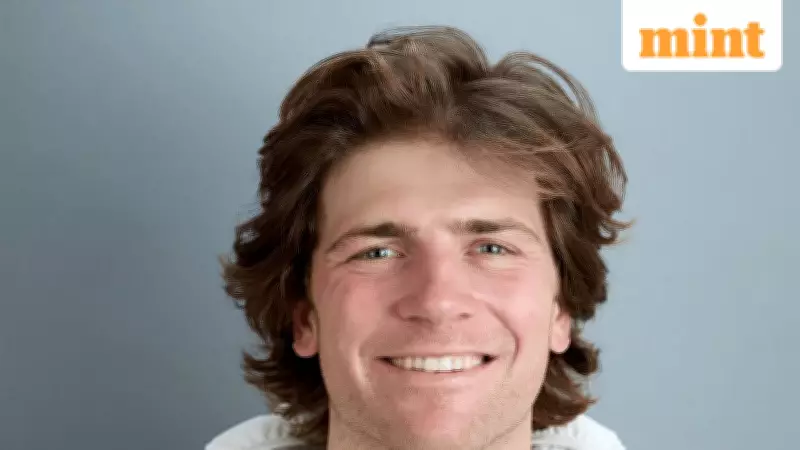
Trump Launches Scathing Attack on US Olympic Skier Hunter Hess
Former US President Donald Trump has unleashed a fiery criticism against first-time Olympian skier Hunter Hess, just days after the athlete voiced concerns about representing the current political priorities of the Trump administration. The controversy erupted on Sunday local time through Trump's preferred social media platform, Truth Social.
In a characteristically blunt post, Trump wrote: "U.S. Olympic Skier, Hunter Hess, a real Loser, says he doesn't represent his Country in the current Winter Olympics. If that's the case, he shouldn't have tried out for the Team, and it's too bad he's on it. Very hard to root for someone like this. MAKE AMERICA GREAT AGAIN!"
Who Is Hunter Hess?
Hunter Hess, a 27-year-old freestyle skier from Bend, Oregon, is competing in his first Olympic Games. Ahead of the Winter Olympics opening ceremony in Italy on February 6, Hess made comments that sparked the political firestorm. Speaking to Politico, Hess explained his complex relationship with representing the United States on the world stage.

"It's a little hard," Hess admitted. "There's obviously a lot going on that I'm not the biggest fan of, and I think a lot of people aren't. Just 'cause I'm wearing the flag doesn't mean I represent everything that's going on in the U.S."
The athlete clarified that he feels he represents his country only when it aligns with his moral values, emphasizing that he's primarily representing his family and friends rather than the entirety of American political leadership.
Republican Backlash Intensifies
Trump wasn't alone in his condemnation of Hess. The criticism quickly spread among Republican lawmakers, creating a political storm around the young athlete.
Florida Republican Representative Byron Donalds took to X (formerly Twitter) to express his disapproval: "YOU chose to wear our flag. YOU chose to represent our country. YOU chose to compete at the @Olympics. If that's too hard for you, then GO HOME. Some things are bigger than politics. You just don't get it."
Tennessee Republican Representative Tim Burchett offered even more direct advice, telling the Olympian to "shut up and go play in the snow."
Growing Trend of Athlete Activism
Hess's remarks reflect a broader pattern emerging among Team USA athletes who are increasingly using their Olympic platform to comment on political issues. Several freestyle skiers have fielded questions about the current political climate in the United States, with many choosing to speak out against certain White House policies.
Gold medalist freestyle skier Chris Lilis recently expressed being "heartbroken" by recent actions of Immigration and Customs Enforcement (ICE) officers. "As a country, we need to focus on respecting everybody's rights and making sure that we're treating our citizens as well as anybody, with love and respect," Lilis stated, while affirming his love for the United States.
Figure skater Amber Glenn addressed the challenges facing the LGBTQ+ community under the Trump administration during her press conference. "I know that a lot of people say, 'You're just an athlete. Like, stick to your job. Shut up about politics,' but politics affect us all," Glenn asserted. "It is something that I will not just be quiet about because it is something that affects us in our everyday lives."
Olympics Take on Political Tone
According to a Politico report, while the Olympics have frequently occurred against a backdrop of geopolitical tensions, the 2026 Winter Games have taken on an unusually overt political dimension. Trump's policies are reportedly threatening to strain the longstanding partnership between the United States and Europe, adding another layer of complexity to international relations during the sporting event.
The controversy surrounding Hess highlights the delicate balance athletes must navigate between national pride and personal principles, particularly in an increasingly polarized political climate where sports and politics have become increasingly intertwined.






