A fresh wave of violence during a Municipal Corporation of Delhi (MCD) demolition drive in the historic Turkman Gate area has unearthed painful memories of a nearly five-decade-old tragedy. The recent incident, where residents allegedly pelted stones and police responded with tear gas, serves as a grim echo of one of the darkest episodes of the Emergency imposed by Prime Minister Indira Gandhi.
A Gateway Steeped in Centuries of History
Standing plain and austere in the dense lanes of Old Delhi, Turkman Gate is far more than a Mughal-era archway of battered stone and plaster. Historian Swapna Liddle, in her work Chandni Chowk: The Mughal City of Delhi, explains that the gate's significance predates the 17th-century city of Shahjahanabad. The area was built around older settlements and a crucial thoroughfare.
This road was historically associated with a Sufi saint, Shah Turkman Bayabani, whose shrine lies nearby. Adjacent to it is the grave traditionally identified as Razia Sultan, the first and only woman ruler of the Delhi Sultanate. When Shah Jahan built his capital's walls, the gateway nearest to Shah Turkman's shrine was named Turkman Darwaza, or Turkman Gate, indicating the enduring reverence for the saint.

The gate survived the 1857 rebellion and colonial-era alterations, though sections of the adjoining walls were demolished by the British to prevent the walled city from being sealed off.
The Emergency and the 1976 Turkman Gate Massacre
Much of the harrowing narrative of Turkman Gate during the Emergency is pieced together from memoirs, inquiry records, and oral histories. In the mid-1970s, the area, home to a predominantly Muslim population, was thrust into the center of Sanjay Gandhi's aggressive "beautification" and family-planning drives.
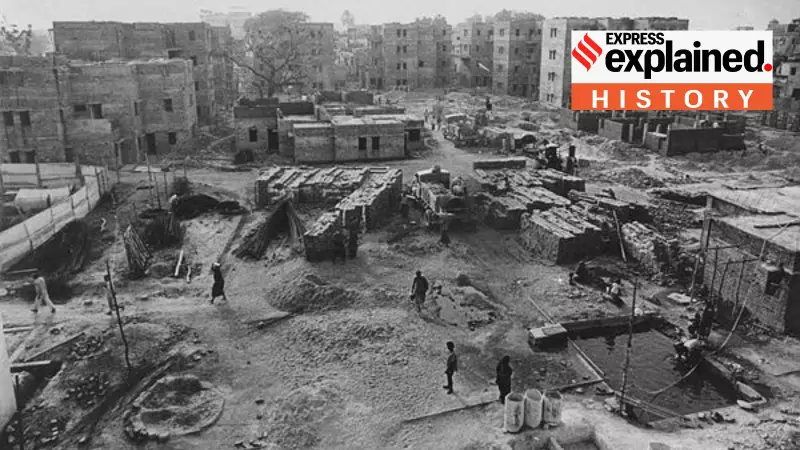
Economist Ashok Chakravarti's memoir notes that Sanjay Gandhi's visit to the area earlier in 1976 was met with hostility, allegedly prompting the decision to clear the "slums" around the gate. The first bulldozers arrived on April 13, 1976.
The situation intensified with the opening of a family-planning clinic at Dujana House near Jama Masjid, run by Sanjay Gandhi associate Rukhsana Sultana. Testimonies reveal that sterilizations were coerced, with promises of cash or protection from demolitions. Anthropologist Emma Tarlo, in Unsettling Memories, recorded that Sultana demanded 300 sterilization cases in a week in exchange for help.
Resistance grew. On April 19, 1976, as bulldozers pushed deeper, protests erupted. A crowd, estimated between 5,000 and 6,000, gathered. Police used tear gas, lathi charges, and eventually opened fire. Eyewitness accounts cited by inquiry commissions reported hearing police orders to shoot.
The aftermath was horrific. Chakravarti wrote that bulldozers worked through the night, clearing rubble along with bodies, including injured survivors, treating them as refuse. Journalists John Dayal and Ajoy Bose documented that demolitions continued relentlessly until April 22. Subsequent research estimates the death toll at around 400, with over 1,000 injured.
Unanswered Justice and a Lingering Legacy
The Shah Commission, established in 1977 to investigate Emergency-era excesses, examined the Turkman Gate events. However, no prosecutions followed, and no senior official was ever held accountable for the massacre.
The recent clashes at the same location, though on a different scale, have forcefully dragged this buried history back into public consciousness. The physical space of Turkman Gate now stands as a silent witness to two eras of conflict between state authority and citizens, linked by the violent tool of the demolition drive. It underscores how urban spaces in Delhi carry layered memories of power, resistance, and trauma that can resurface decades later.