VHP Reiterates Commitment to Reclaim Mathura and Kashi Sites, Citing 1984 Resolution
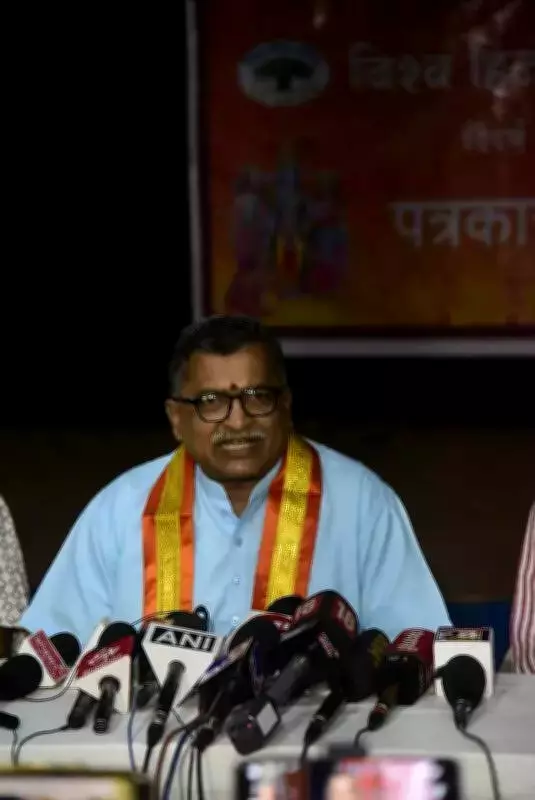
In a significant declaration, Vishwa Hindu Parishad (VHP) secretary general (organisation) Milind Parande asserted on Wednesday that the Hindu community remains steadfast in its resolve to "liberate" Krishna Janmabhoomi in Mathura and Kashi Vishwanath in Varanasi. This stance, he emphasized, is rooted in a resolution adopted during the first Dharam Sansad held in 1984, underscoring a long-standing ideological commitment.
Historical Pledge and Future Mobilization
Parande elaborated that seers and the VHP have pledged to "take back" these sacred sites, aligning with Hindu sentiments. He drew a parallel to the Ram Janmabhoomi movement, noting, "It started with the Ram Janmabhoomi andolan and the temple was constructed. Likewise, sankalp to take over Krishna Janmabhoomi and Kashi Vishwanath will also be fulfilled by the Hindu samaj." The VHP leader indicated that the Hindu community will ultimately decide whether to initiate a mass movement for these two sites, similar to the Ram Janmabhoomi campaign.
Political Context and Electoral Implications
This reiteration is widely perceived as part of the BJP's strategy to amplify Hindu sentiments ahead of crucial electoral cycles, particularly the 2027 Uttar Pradesh elections. The timing is notable, coming just a day after Chief Minister Yogi Adityanath advised Samajwadi Party chief Akhilesh Yadav to support the cause of Krishna Janmabhoomi. Adityanath also mentioned he would visit the Kedareshwar Temple in Etawah, constructed by Akhilesh, if the SP leader demonstrated "clear intention."

Analysts suggest that Akhilesh Yadav's temple-building initiative has prompted a response from the saffron camp, which traditionally relies on consolidating Hindu votes across caste lines. By reaffirming its pledge, the VHP aims to maintain ideological consistency following the construction of the Ram Temple in Ayodhya.
Legal Complexities and Current Status
The disputes over Krishna Janmabhoomi in Mathura and Kashi Vishwanath-Gyanvapi in Varanasi are mired in legal intricacies. Key issues include:
- The maintainability of civil suits under the Places of Worship (Special Provisions) Act.
- Determining the "religious character" of these sites as per legal frameworks.
In Mathura, the dispute involves land where the Shahi Idgah mosque stands adjacent to the Krishna Janmabhoomi temple. The Allahabad High Court is set to hear 18 consolidated petitions from Hindu litigants this week. Meanwhile, the Gyanvapi-Kashi Vishwanath case remains sub judice, with the Allahabad High Court granting permission in February 2024 for puja to be performed in the southern cellar (Vyas Tehkhana) of the Gyanvapi mosque.
VHP's Strategic Positioning
VHP president Alok Kumar previously stated that a public movement is unnecessary while legal proceedings are ongoing, asserting that the Hindu side holds a stronger position against the Anjuman Intezamia Masjid in the court battle. Political experts interpret the VHP's renewed focus on Kashi and Mathura as a move to reinforce its ideological stance post-Ayodhya. By placing Hindu Samaj at the forefront, the organization seeks to shift responsibility onto community sentiment rather than relying solely on formal organizational strategies.
This development highlights the ongoing interplay between religious aspirations, legal challenges, and political dynamics in India, with the VHP positioning itself as a key advocate for Hindu causes in the national discourse.