West Bengal's Budget Reallocation: Boosting Cash Transfers While Cutting Social Welfare
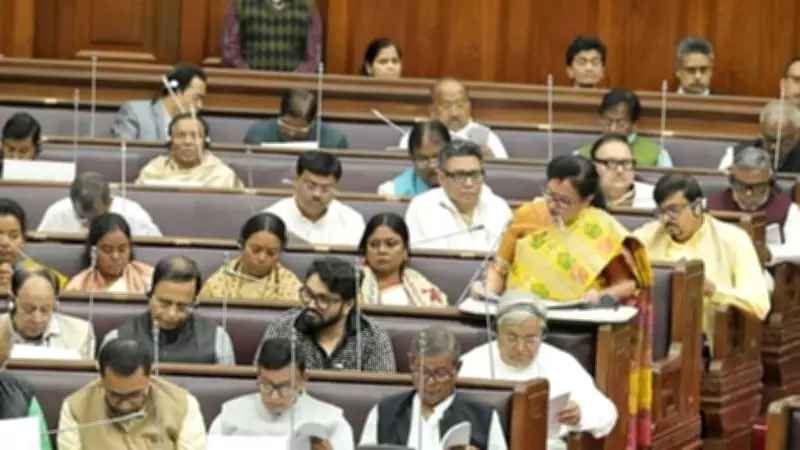
In a significant fiscal maneuver, the Trinamool Congress (TMC) government in West Bengal has substantially increased spending on its flagship women-centric direct cash benefit schemes while simultaneously reducing allocations for several critical social welfare and educational programs. This budgetary shift is revealed in the state's interim Budget document for 2026-27, presented by Finance Minister Chandrima Bhattacharya in the Assembly last Thursday.
Substantial Increases in Cash Transfer Schemes
The revised estimates for the 2025-26 financial year demonstrate a clear pattern of overspending on direct cash benefit initiatives. For the Kanyashree scheme, which provides financial assistance to girls from economically backward classes, the government allocated Rs 816.31 crore but ended up spending Rs 1,058.08 crore – a significant increase of nearly 30 percent.
Similarly, the Lakshmir Bhandar scheme, offering direct cash transfers to women aged 25 to 60, saw its allocation rise from Rs 26,700 crore to Rs 28,615.11 crore in revised estimates. In the current interim Budget, the TMC government has further enhanced this program by increasing the monthly grant to women beneficiaries by an additional Rs 500.

Other women-focused schemes also received increased funding. The Rupashree program, which provides one-time grants of Rs 25,000 to poor families under financial stress, saw its allocation grow from Rs 689.90 crore to Rs 693.76 crore. The Widow Pension Scheme allocation increased from Rs 2,101.45 crore to Rs 2,661.12 crore.
Drastic Cuts in Social Welfare and Education
While cash transfer schemes received enhanced funding, several essential social welfare and educational programs faced substantial budget reductions. The government's own "Gender and Child Budget" document, published alongside the Economic Survey, reveals dramatic decreases in revised allocations for numerous schemes.
The mid-day meal scheme experienced one of the most severe cuts, with only Rs 156.22 crore spent against a budgetary allocation of Rs 819.83 crore – representing just 19 percent of the original allocation. The Samagra Shiksha Mission saw its spending decrease from Rs 1,788.3 crore to Rs 760.4 crore, a reduction of over 50 percent.
Other affected areas include:
- Housing for Destitute Minority Women: Revised estimate dropped to Rs 19 crore from Rs 272 crore
- Pre and post-matric scholarship programs: Allocation decreased from approximately Rs 94 crore to around Rs 18 crore
- Mass Education Extension and Library Services: Revised to Rs 84 crore from Rs 136.80 crore
- Rural drinking water supply: Reduced to Rs 1,443.63 crore from Rs 5,503.58 crore
Child Budget Suffers Major Reductions
The Child Budget section experienced particularly severe cuts. While last year's budgetary allocation stood at Rs 1,673.12 crore, actual spending was a mere Rs 320.01 crore. The scheme for Development of Children in the Sundarban Area saw its allocation reduced from Rs 83.88 crore to Rs 43.88 crore in actual expenditure.
Government's Fiscal Balancing Act
A senior official from the state Finance Department explained the budgetary reallocation, stating, "The government is spending more than Rs 50,000 crore in different direct cash transfer schemes. Naturally, we had to curtail money from some other projects." This statement highlights the fiscal trade-offs involved in prioritizing direct cash benefits over other social welfare initiatives.
The budgetary documents indicate that schemes targeting 30-99 percent women experienced more severe spending cuts. This pattern suggests that while women-specific cash transfer programs received increased funding, other initiatives that also benefit women significantly have faced substantial reductions.
This budgetary approach represents a clear policy choice by the West Bengal government to emphasize direct cash transfers to women while reducing support for broader social welfare infrastructure. The long-term implications of this fiscal strategy on education, health, and social development in the state remain to be seen as these budgetary allocations take effect in the coming financial year.