Opposition Inflicts Major Legislative Defeat on Government Over Women's Quota Bill
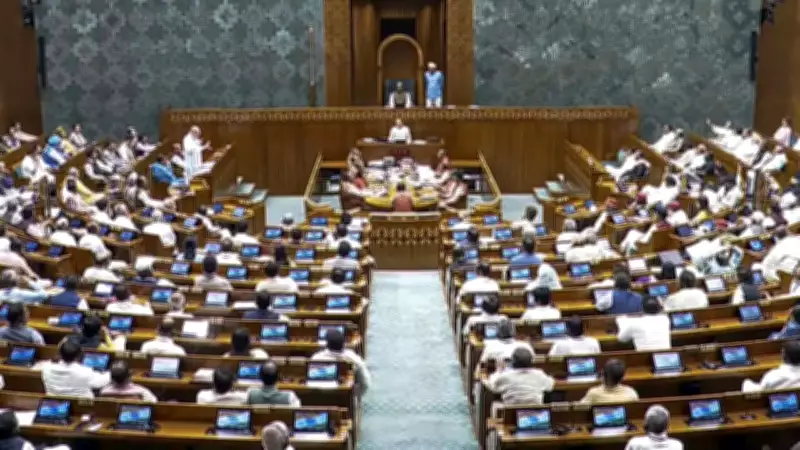
A united opposition bloc on Friday decisively rejected Prime Minister Narendra Modi's last-minute appeal for a "conscience vote" and Home Minister Amit Shah's significant concession, leading to the government's first major legislative defeat in twelve years. The proposed Constitution (131st Amendment) Bill, which aimed to reserve one-third of Lok Sabha seats for women, failed to secure the required two-thirds majority in the House.
Vote Tally and Immediate Consequences
The bill received 298 votes in favor against 230 opposing votes. It needed at least 352 affirmative votes from members present for passage. Following this defeat, Parliamentary Affairs Minister Kiren Rijiju announced that two other bills "intrinsically" linked to the main proposal, including one concerning delimitation, would be withdrawn.
Shah's Arguments and Opposition's Unwavering Stance
Replying to the debate, Union Home Minister Amit Shah outlined two primary objectives behind the bills: ensuring a time-bound implementation of women's reservation by 2029 and upholding the principle of "one person, one vote, one value." He highlighted electoral disparities, noting that the Malkajgiri Lok Sabha seat in Telangana has over 39 lakh voters, with 127 constituencies nationwide exceeding 20 lakh voters.

Shah firmly rejected opposition allegations that the delimitation process would reduce the political weight of southern states in Parliament. He argued that, on average, Lok Sabha seats in the south have far fewer voters than those in the north, and the proposed formula would marginally increase southern representation.
Despite these arguments, opposition parties remained unconvinced. They had consistently alleged that the bill was a strategic ploy to cut southern representation, redraw the political map to benefit the BJP, and indefinitely delay a comprehensive caste enumeration. Shah's assertion that the government remained committed to conducting a caste count did not sway them.
A Dramatic Offer and a Firm Rejection
The most dramatic moment occurred when Shah accepted a demand from Congress MP K.C. Venugopal to explicitly write into the bill that Lok Sabha seats in every state would increase by 50%. However, he immediately rejected Venugopal's parallel demand to delink the women's reservation bill from the delimitation process, calling it an "enticing trap" designed to deny women their quota by 2029.
Political Counterattacks and Warnings
Striking a combative tone, Shah warned the opposition of severe electoral consequences. "If you do not vote in support of the bill, it will fall through, but women of the country are seeing who is the obstacle in their way. You will have no place to hide in elections," he declared. He predicted that the opposition would face the wrath of women not only in the 2029 Lok Sabha polls but in every subsequent election.
Shah later took to social media to criticize opposition parties for celebrating the bill's defeat. He also launched a sharp political counterattack against the Congress, labeling it "the most anti-OBC party." He cited historical decisions, such as the non-implementation of the Kalelkar Commission recommendations under Jawaharlal Nehru and Indira Gandhi's inaction on the Mandal Commission report. He contrasted this with the BJP giving the country a Prime Minister from an extremely backward caste in Narendra Modi.
Shah accused the Congress and its INDIA bloc allies of having a history of scuttling women's reservation proposals five times since the idea was first mooted during the P.V. Narasimha Rao government. He also referenced the party's positions on the Shah Bano verdict and triple talaq, alleging a pattern of opposing progressive measures.
Clarifications on Caste and Religion
On the contentious issue of caste-based quotas, Shah stated, "BJP government will go by the collective sense of Parliament. Let there be no doubt." He emphasized that representation and participation of all people in legislatures was paramount for the BJP. However, he unequivocally ruled out any quota for Muslims, stating it would be violative of the Constitution and vowing, "We will not allow anyone to implement this."

The defeat of this centerpiece legislation marks a significant political moment, highlighting deep divisions over representation, federal balance, and electoral strategy as the nation moves toward future polls.