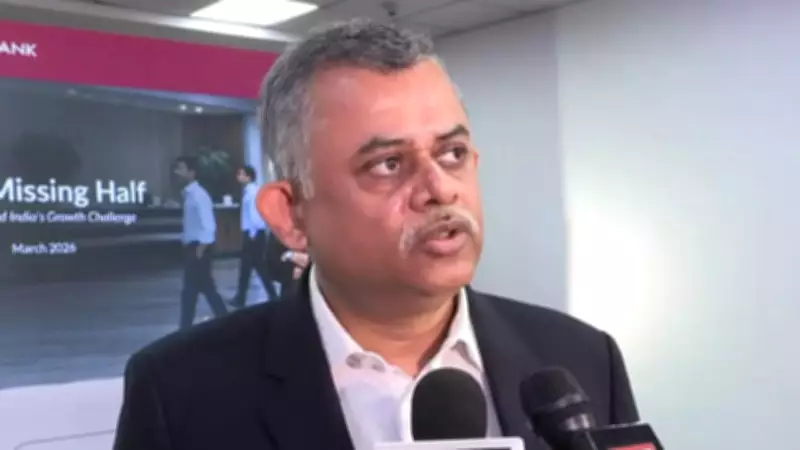
India's economic growth remains resilient, and concerns that higher crude oil prices could significantly derail the economy are overstated, according to Neelkanth Mishra, India's newly appointed Executive Director at the World Bank.
India Better Positioned to Absorb Oil Shocks
In an interview with ANI, Mishra said India is better positioned than many other energy-importing economies to absorb elevated oil prices without suffering major damage to growth. Mishra, who is also a member of the Prime Minister's Economic Advisory Council, highlighted that India's economy grew 7.1% in FY25 despite fiscal and monetary tightening.
"If our growth was 7.1% despite fiscal and monetary tightening, it means without that, growth would have been higher," he said.

Underlying Economic Strength
According to Mishra, the combination of improving credit growth and a less restrictive fiscal stance suggests the economy was expanding at an annual pace of more than 8% until February-March 2026. He pointed to indicators such as 29% year-on-year growth in car sales in May, strong mall footfalls and sales, and high single-digit growth in cement demand as evidence of underlying economic strength.
"You can't build inventory of cement...whatever is being bought is being consumed," he said.
Oil Exposure Lower Than Perceived
Mishra argued that India's exposure to oil shocks is lower than often portrayed because domestic oil marketing companies also benefit from refining operations. Explaining the dynamics, he said that while higher crude prices increase costs, stronger refining margins partly offset the impact.
With crude oil currently trading around $94-95 per barrel and diesel refining margins easing, Mishra said, "India does not need to raise any further fuel prices." He added that concerns about a large implicit fuel subsidy are misplaced.
"The feared implicit subsidy of Rs 20-30/litre is not needed; the Rs 8/litre cushion is sufficient as oil prices have eased due to inventory releases by China and the US," he said.
Impact of $100 Oil
Mishra estimated that oil at $100 per barrel would create a roughly 2% drag on growth, but said the impact would not be enough to derail the economy. He compared the effect to an aircraft facing headwinds. At the same time, he argued that support measures such as fertiliser price caps may not be required by March 2027 if oil prices move towards the $80-per-barrel level indicated by futures markets.
Growth Outlook
According to Mishra, the economy could accelerate again if crude prices moderate. While acknowledging that energy prices remain a risk, he said India's refining surplus, strong domestic demand and easing fiscal and monetary headwinds should help growth remain in the 7.5-8% range even if crude prices stay elevated.
"The bigger challenge," he said, "is managing the narrative until data proves the resilience."