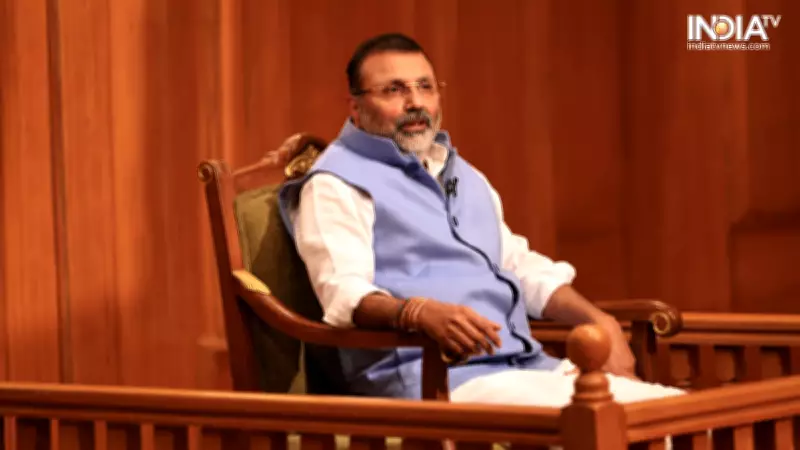
BJP MP Nishikant Dubey Takes Aim at Rahul Gandhi Over Parliamentary Attire
In a recent episode of the television show Aap Ki Adalat, Bharatiya Janata Party (BJP) Member of Parliament Nishikant Dubey launched a sharp critique against Congress leader Rahul Gandhi, focusing on the latter's choice of clothing during parliamentary sessions. Dubey emphasized the need to uphold the dignity and decorum of the Parliament, suggesting that Gandhi's casual attire undermines the institution's respect.
Debate Over Dress Code and Institutional Respect
Dubey argued that Parliament is a sacred space where elected representatives should demonstrate utmost respect through their conduct and appearance. He pointed out that wearing shabby or informal clothes could be seen as a sign of disrespect towards the parliamentary proceedings and the people of India. This comment has ignited a broader discussion on whether there should be a stricter dress code enforced in the Indian Parliament to maintain its solemnity.
The BJP MP's remarks come at a time when political decorum is under scrutiny, with many calling for more professionalism in legislative bodies. Dubey's criticism is not just about clothing but touches on deeper issues of how politicians present themselves in public forums, especially in institutions as pivotal as Parliament.

Rahul Gandhi's Response and Political Implications
While Rahul Gandhi has not yet publicly responded to Dubey's comments, this incident adds to the ongoing political tensions between the BJP and the Congress party. Observers note that such critiques often serve as tools for political point-scoring, highlighting differences in values and priorities between the two major parties.
The debate over attire in Parliament is not new, but Dubey's vocal stance brings it back into the spotlight, prompting questions about tradition versus modernity in Indian politics. Some argue that focus should remain on substantive issues like policy and governance, while others believe that symbols like dress code play a crucial role in upholding institutional integrity.
- Nishikant Dubey's criticism centers on maintaining parliamentary dignity through proper attire.
- The issue sparks debate on dress codes and respect for legislative institutions.
- Political tensions between BJP and Congress are highlighted by this exchange.
- Broader implications for how politicians conduct themselves in public forums are discussed.
As this story develops, it remains to be seen whether it will lead to any formal changes in parliamentary rules or simply fade as another episode in India's vibrant political discourse. For now, Dubey's comments serve as a reminder of the ongoing efforts to balance tradition with contemporary political practices in the world's largest democracy.