

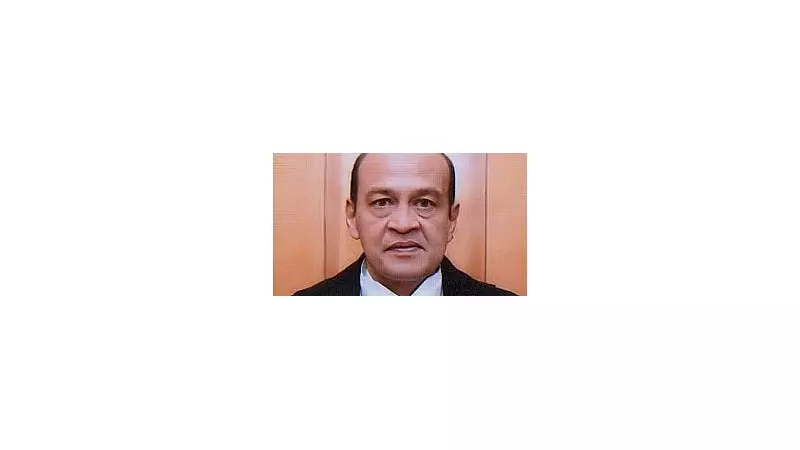
In a significant development within India's highest judicial forum, Supreme Court Justice Yashwant Varma has raised serious legal objections regarding the constitution of an inquiry committee by the Lok Sabha Speaker. The committee was formed to investigate specific corruption charges, a move now under judicial scrutiny for its constitutional validity.
Core of the Legal Challenge
The controversy centers on a procedural anomaly highlighted by a senior lawyer arguing before the bench. The lawyer contended that the motion which prompted the inquiry had already been cancelled in the Rajya Sabha. Consequently, the subsequent decision by the Lok Sabha Speaker to establish an investigative panel is being termed as 'non-est' in legal parlance – meaning it holds no legal standing or is considered non-existent in the eyes of the law.
This argument suggests that the foundation for the Speaker's action was invalid from the outset, as the original proposal had not survived parliamentary process in the other house. The hearing, which took place on 07 January 2026, brings to the fore intricate questions about parliamentary procedure, the powers of presiding officers, and the limits of such authority when the initiating action lapses.

Implications for Parliamentary Oversight
The observations made by Justice Varma point towards a potential constitutional fault line. If the Supreme Court upholds the view that the committee is 'non-est', it could set a major precedent for how parliamentary inquiries are initiated, especially in matters involving charges that span across both Houses.
This case is not merely about the specific corruption allegations but delves deeper into the rule of law and procedural sanctity within India's democratic institutions. It questions whether an action can be sustained if its root cause has been nullified in a complementary legislative chamber. The outcome will clarify the scope of the Lok Sabha Speaker's discretionary powers in forming investigative bodies.
What Happens Next?
The Supreme Court's examination of this issue is ongoing. Legal experts are closely watching the proceedings, as the final judgment could redefine protocols for bipartisan probes and the checks and balances between the two Houses of Parliament. The assertion that the committee is legally void challenges the current understanding of parliamentary privilege and autonomy.
This development underscores the critical role of the judiciary in interpreting constitutional mandates and ensuring that all branches of government operate within the framework established by law. The decision, when delivered, will have lasting implications for future parliamentary conduct and the mechanisms of accountability in India's political system.






