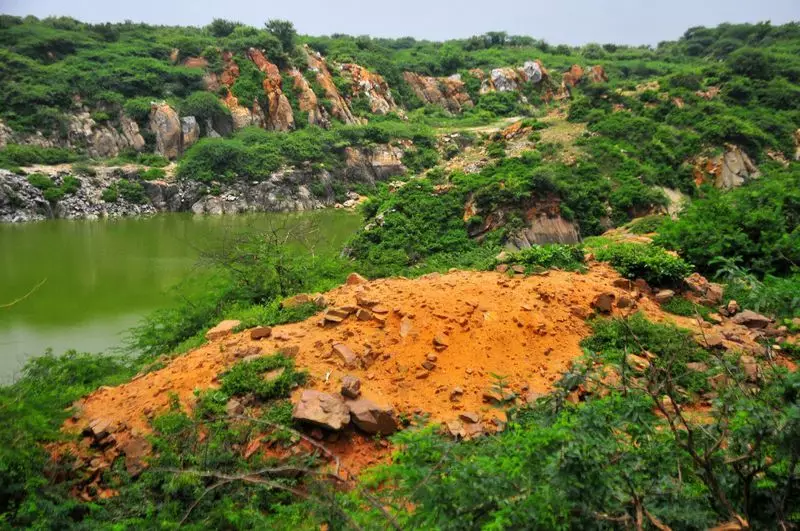
A recent directive from India's Supreme Court has thrown a harsh spotlight on a deepening crisis of confidence between state governments and the Union government over the protection of the ecologically fragile Aravalli range. The core of the dispute lies in the interpretation and application of the Forest Conservation Act (FCA), 1980, a law designed to safeguard the nation's forest cover.
The Supreme Court's Stern Intervention
The apex court, in an order dated February 19, 2024, took a firm stand. It directed the Union Ministry of Environment, Forest and Climate Change (MoEFCC) to decide, within a strict three-month deadline, on a long-pending proposal from the Haryana government. This proposal seeks to classify vast tracts of the Aravalli region in Haryana as 'forest' and 'deemed forest' lands, a move that would grant them legal protection from unchecked development and mining.
This judicial push was necessary because of a glaring trust deficit. The Haryana government had submitted its proposal to the Centre back in March 2022, but for nearly two years, no conclusive decision was made. The court noted that this delay seemed to stem from a fundamental disagreement between the state and central authorities on what precisely constitutes a 'forest' under the law.

A Clash of Definitions and Federal Tensions
The heart of the conflict is a 1996 Supreme Court judgment in the T.N. Godavarman Thirumulpad case. This landmark ruling expanded the definition of 'forest' beyond just officially recorded areas to include any land that meets the dictionary meaning of a forest, irrespective of its ownership or classification in government records. This is often referred to as 'deemed forest'.
However, the central government's stance has created confusion. The MoEFCC has, on multiple occasions, insisted that states must first identify and submit their own records of forests and deemed forests. Only then, the Centre argues, can it issue a final, consolidated notification. States like Haryana see this as passing the buck, leaving them vulnerable to legal challenges and political pressure from powerful mining and real estate lobbies.
This bureaucratic impasse has real-world consequences. The Aravalli range, a critical geological formation spanning several states, acts as a natural barrier against desertification from the Thar Desert. Its degradation leads to:
- Loss of biodiversity and wildlife habitat.
- Increased air pollution in the National Capital Region (NCR).
- Depletion of groundwater resources.
- Higher vulnerability to climate change impacts.
The Imperative for Central Leadership
The editorial argues that the onus to break this deadlock rests squarely with the Union government. The Centre cannot remain a passive observer in a matter of such national environmental significance. It must provide clear, unambiguous guidelines for the identification of deemed forests, drawing from the Godavarman judgment's spirit.
Furthermore, the Centre should take the lead in creating a transparent, scientific, and collaborative process with the states. A cooperative federal approach is essential, rather than an adversarial one where states are left to fend for themselves. The Supreme Court's three-month deadline is not just a timeline for a decision on Haryana's proposal; it is a test of the government's commitment to environmental federalism.
The protection of the Aravallis is not merely a state subject; it is a national imperative with cross-border ecological implications for the entire north Indian plains. Continued ambiguity and delay only serve the interests of those seeking to exploit these lands for short-term gain, jeopardizing long-term ecological security.
In conclusion, bridging the trust deficit requires proactive and decisive leadership from the Centre. It must harmonize environmental conservation with cooperative federalism, ensuring that the letter and spirit of the Forest Conservation Act are upheld to save one of India's oldest and most vital mountain ranges from irreversible ruin.