Himachal Cantonment Residents' Dreams of Freedom Deferred
The long-awaited liberation of civilian areas from British-era army cantonments in Himachal Pradesh has hit a major roadblock, with the Ministry of Defence (MoD) putting the excision process on indefinite hold. This development has dashed the hopes of thousands of residents across six cantonments who have been demanding freedom from military administration for decades.
The excision process, which gained significant momentum over the past two years, has come to a complete standstill after the MoD postponed a crucial meeting scheduled for December last year to discuss survey reports from Himachal's cantonments. The meeting never took place, and there has been no forward movement since.
Decades of Protests and Rising Expectations
Manmohan Sharma, general secretary of the Himachal Pradesh Cantonment Association (HPCA) and a resident of Sabathu Cantonment, expressed the collective disappointment of cantonment residents. "After years and decades of protests, we finally had high hopes that our pending demand would be met as the MoD itself took the initiative to separate civilian and army areas," he said.

The optimism among residents was particularly high when the MoD decided to denotify 10 of India's 61 cantonments last year. The then defence secretary, Giridhar Aramane, had publicly described cantonments as a symbol of colonial legacy that should be removed. In a June 2024 meeting, he specifically called it an "anathema that in independent India the municipal administrations in cantonments continue to be controlled by the army and Defence Estates Organisation."
The Six Cantonments and Their Grievances
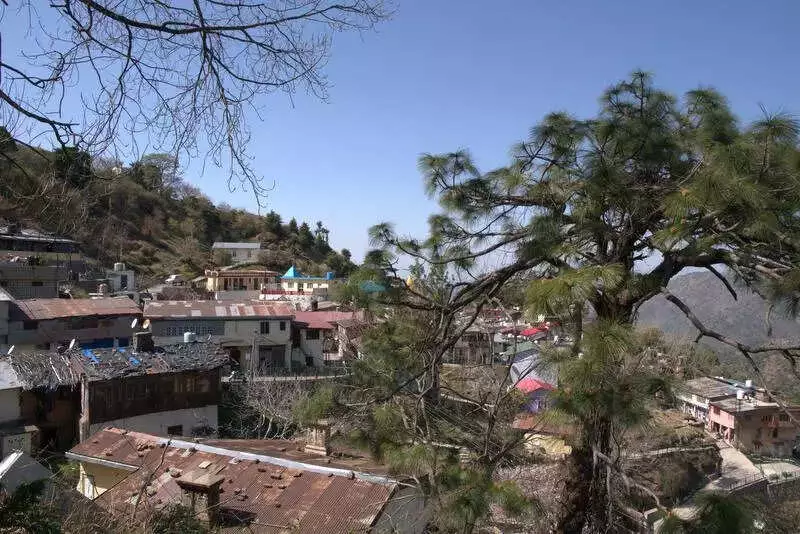
The six army cantonments affected in Himachal Pradesh include Sabathu, Dagshai, Kasauli, Jutogh, Bakloh, and Dalhousie. Residents have been vocal about their demand for "freedom from army rule" due to multiple pressing issues:
- Absence of land rights for citizens
- No access to state or central welfare schemes
- Additional taxes imposed by cantonment boards
- Strict architectural controls limiting development
- Lack of business and employment opportunities
These restrictions have made life increasingly difficult for civilian residents who feel trapped under colonial-era regulations that continue to govern their daily lives.
Conflicting Signals from Defence Ministry
The hopes of cantonment residents suffered another blow when Defence Minister Rajnath Singh announced last month that all 61 cantonments in the country would be developed into smart, green, and sustainable cities by 2025. This statement directly contradicts the MoD's earlier excision initiative, creating confusion about the government's actual intentions.
Manish Sharma, senior vice-president of HPCA and resident of Dagshai Cantonment, highlighted this contradiction: "Either the MoD can develop cantonments into smart cities or continue with the excision process and separate civilian areas. There is no way both things can happen simultaneously."
Despite the current stalemate, Sharma remains hopeful that bureaucratic hurdles rather than policy reversal are causing the delay. "I still don't want to believe that the whole process has been scuttled or that we will keep on living forever under colonial laws," he added.
The Land Ownership Clause Controversy
A significant factor that might have halted the excision process emerged in June 2024 when the MoD introduced a new land ownership clause. This clause stipulated that the Union government would continue to own land in civilian areas even after excision, a condition that proved unacceptable to state governments, including Himachal Pradesh.
Sharma explained the implications: "The defence estates wing owns 18 lakh acres of land in all cantonments of the country. It's clear that Army officers don't want to lose control over cantonments primarily because of this fact only. So, when we opposed this new clause and state governments, including Himachal, refused to accept the MoD condition, the excision process was halted."

Historical Context and Timeline
The British established seven cantonments in Himachal's hills, with Khasyol Cantonment becoming the first in India to be abolished in April 2023. These cantonments not only served military purposes but also acted as sanatoriums for European soldiers seeking relief from the plains' oppressive heat.
The excision process timeline shows consistent progress until recent months:
- May 23, 2022: MoD initiates excision process, seeking comments from state chief secretaries
- January 30, 2023: Himachal Pradesh becomes among first states to support excision
- April 28, 2023: Khasyol Cantonment becomes first in country to be denotified
- July 31, 2023: MoD forms eight-member committee for Himachal cantonments
- November 16, 2023: Himachal government creates 14-member survey committee
- January 9, 2024: All six cantonments submit joint survey reports
- February 2024: MoD directs Dalhousie Cantonment CEO to prepare denotification proposal
- June 25, 2024: MoD introduces controversial land ownership clause
- November 27, 2024: Himachal government rejects land ownership condition
- December 5, 2024: MoD postpones crucial meeting indefinitely
Future Course of Action
The HPCA has already written to Prime Minister Narendra Modi seeking clarity on the excision process status. Sharma warned that if the PMO doesn't intervene, the association would be forced to approach the courts. "Residents have suffered a lot under army-controlled cantonments. They just don't want to live under army rule any longer," he emphasized.
The residents' determination remains strong, with their ultimate goal being the merger of civilian areas with respective state governments. As the excision process stalls, the colonial legacy continues to cast its shadow over the lives of thousands in Himachal Pradesh's cantonments, leaving them wondering when, if ever, they will experience true administrative freedom.