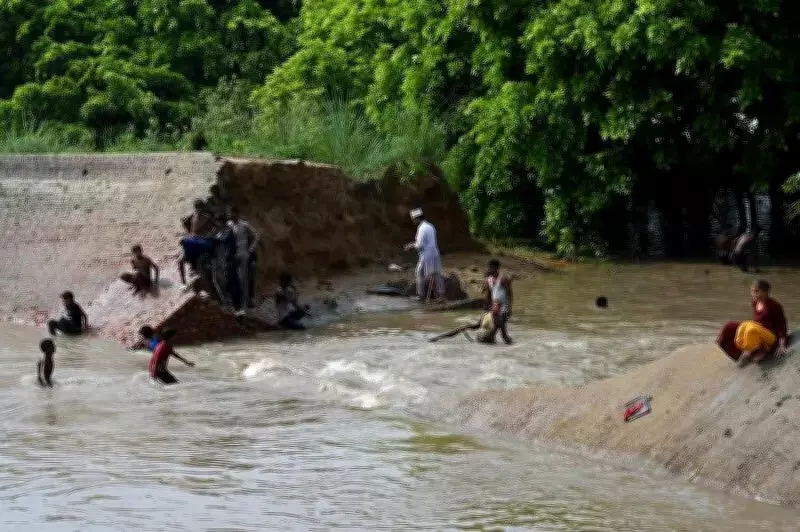
A major breach in the Baruwali canal in Sirsa district has disrupted irrigation and drinking water supply in several villages, worsening the ongoing water crisis in the region. The canal developed a nearly 20-foot-wide breach near Makhosarani village on Tuesday evening, barely three hours after water was released into it. The breach led to large-scale flooding in nearby agricultural fields, while irrigation and drinking water supply to more than a dozen villages was severely affected.
Repair Work to Begin After Shutting Water Flow
Officials said repair work would begin after shutting water flow in the canal, a process likely to take three to four days. Residents alleged that they repeatedly warned the irrigation department about the weakened condition of the canal embankment, fearing a collapse once water was released. However, they claimed no preventive measures were taken.
Impact on Water Supply and Agriculture
The Baruwali canal supplies irrigation and drinking water to villages including Jamal, Kutiyana, Barasari, Raipur, Rupawas, Dhukra and Gudia Khera. With the canal damaged, village water reservoirs reportedly have run dry, leaving residents struggling for potable water amid rising temperatures. Several villagers expressed anger over what they termed negligence by the authorities. They said people were being forced to suffer even for basic facilities.

The breach also hit farming activities hard in villages such as Makhosarani, Dadba Kalan and Rupana Khurd, where canal water is crucial for irrigation. Farmers said fields were left dry and sowing of cotton crop was disrupted due to suspension of water supply. Farmers alleged that canal breaches occur repeatedly whenever their turn for irrigation water arrives. "Now irrigation supply will remain suspended for at least three days, making cotton sowing difficult and affecting crop production," they said.
Administration's Response
District administration officials said the canal would first be blocked from the rear end before repair work on the damaged embankment could begin. The process is expected to take three to four days, during which water supply will remain suspended.