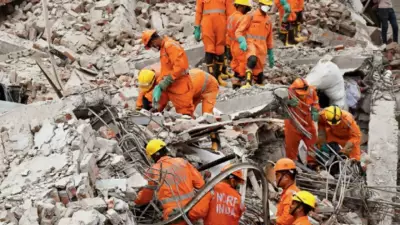
The fire that killed 21 people at Flourish Stay B&B in Delhi's Malviya Nagar was not just a hotel tragedy—it revealed a wider urban safety crisis. Residents of Hauz Rani describe a neighbourhood packed with narrow lanes, tangled overhead wires, transformers, unauthorized construction, and buildings operating beyond approved limits. Authorities say the hotel allegedly ran 25 rooms despite permission for only six and lacked critical fire-safety systems, including sprinklers, smoke detectors, and a fire NOC. Locals claim warnings about unsafe infrastructure and overcrowding were routinely ignored. The disaster highlights a problem affecting many Indian cities: rapid commercial expansion, weak enforcement, and emergency access challenges in dense residential areas. For residents, the question is no longer how the fire happened, but how many similar buildings remain vulnerable to the next emergency.
Systemic Neglect and Overcrowding
The tragedy at Flourish Stay B&B underscores a deeply entrenched culture of negligence, often referred to locally as 'chalta hai'—a phrase that encapsulates a casual attitude towards rules and safety. In Hauz Rani, a densely populated locality in South Delhi, narrow alleys are lined with buildings that have been illegally extended or converted into commercial spaces without proper permits. The B&B itself operated with 25 rooms, far exceeding the approved six, and did not have essential fire-fighting equipment. This pattern of non-compliance is not unique to this establishment but is widespread across many residential areas that have seen rapid commercialization without corresponding infrastructure upgrades.
Community Warnings Ignored
Local residents had repeatedly raised concerns about the unsafe conditions in their neighbourhood. They pointed to the proliferation of guesthouses and hotels operating in residential buildings, often without adequate parking or emergency exits. The narrow roads make it nearly impossible for fire tenders to access the area during emergencies. Despite these warnings, authorities failed to take corrective action. The fire department noted that the building lacked a no-objection certificate (NOC) for fire safety, a common violation in many parts of Delhi.

Broader Urban Safety Challenges
The disaster in Malviya Nagar is symptomatic of a larger problem affecting Indian cities, where rapid urbanization outpaces regulatory enforcement. Unauthorized construction, overloaded electrical wiring, and lack of basic safety measures are prevalent in many urban centres. Experts argue that a combination of corruption, bureaucratic inertia, and public apathy allows such conditions to persist. The 'chalta hai' attitude permeates not just among building owners but also among residents who often ignore safety violations for the sake of convenience or low costs.
Aftermath and Accountability
In the wake of the fire, authorities have launched a crackdown on illegal hotels and guesthouses in the area. Several buildings have been sealed, and notices have been issued to others for violating safety norms. However, residents remain skeptical about the long-term impact. They fear that once the media attention fades, the enforcement will slacken, and the cycle of negligence will continue. The incident has sparked a debate about the need for stricter building codes, regular inspections, and harsher penalties for violations.
For many, the fire at Flourish Stay B&B is a wake-up call. It highlights the urgent need to address the systemic failures that make such tragedies possible. As one resident put it, 'We are sitting on a powder keg. It is not a question of if another fire will happen, but when.' The challenge now is to translate this awareness into sustained action to ensure that no more lives are lost to preventable disasters.