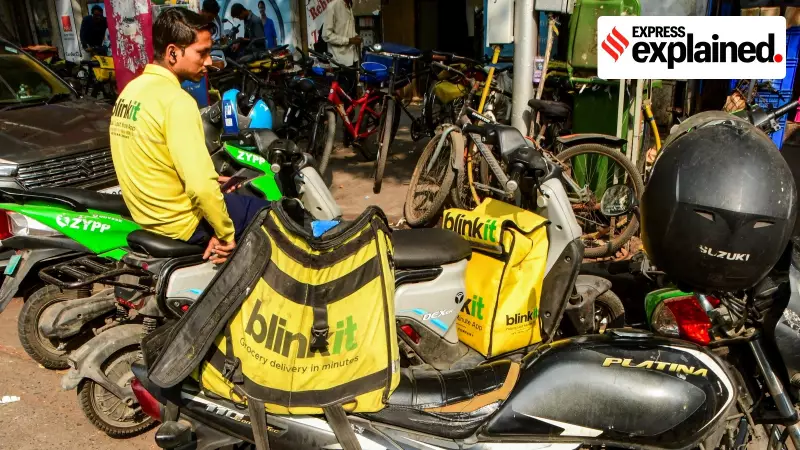
On December 31, 2025, a significant strike by delivery workers across India brought food delivery and quick-commerce services to a halt on one of the year's busiest days. Workers from major platforms like Swiggy, Zomato, Zepto, and Blinkit protested against low and unpredictable pay, the sudden blocking of worker IDs, and the intense pressure created by 10-minute delivery targets.
This action, supported by multiple gig worker unions across states, followed a similar protest on December 25. The grievances are not isolated to India. For over a decade, platform-based workers globally have raised identical demands: predictable incomes, social security, safety at work, and protection against arbitrary termination.
How the World is Responding to Gig Worker Demands
Governments and courts from Europe to Asia have responded in varied ways, often after sustained protests or lengthy legal battles.

Europe Leads with Legal Presumptions and Protections
In Europe, the core debate has centered on reclassifying gig workers as employees rather than independent contractors. Spain's 2021 "Riders' Law" was a landmark, creating a legal presumption that food delivery riders are employees, granting them minimum wages, social security, and collective bargaining rights after years of strikes.
France has adopted a step-by-step approach. Its courts have reclassified individual workers based on platform control, while Parliament has extended accident insurance and collective representation without granting full employee status. Italy's courts recognized riders as "organized workers," ensuring minimum pay and insurance, a move prompted by nationwide strikes between 2018 and 2020.
These national efforts culminated at the European Union level with the Platform Work Directive, effective December 2024. It establishes a presumption of employment and mandates transparency in the algorithmic management used by platforms to assign work and calculate pay.
Contested Terrain in the UK, Americas, and Brazil
In the United Kingdom, a 2021 Supreme Court ruling declared Uber drivers as "workers"—a middle category—entitling them to minimum wage and paid leave. This followed a long union-backed legal campaign.
In contrast, the United States largely classifies gig workers as independent contractors federally. California's attempt to reclassify them was countered by Proposition 22, a ballot initiative funded by platforms that passed in 2020, offering limited benefits like earnings guarantees but maintaining contractor status.
Canada's province of Ontario introduced minimum pay guarantees and transparency rules after worker advocacy, while Brazil saw massive "Breque dos Apps" strikes in 2020 pushing the government to propose social security contributions and minimum pay laws in 2024.
New Legal Categories in Australia and Asia
Australia's 2024 Fair Work Legislation Amendment Act created protections for "employee-like" workers, setting minimum standards for pay, insurance, and unfair deactivation. In Asia, Singapore's Platform Workers Act (effective 2025) mandates shared social security contributions.
Malaysia's Gig Workers Bill, passed in September 2025, stands out as one of Asia's most comprehensive laws. It guarantees minimum pay, workplace safety responsibility from platforms, freedom to work across apps, and establishes a dedicated tribunal for disputes.
China relied on executive directives after public outrage over worker deaths, issuing guidelines in 2021 and 2024 to ensure minimum pay, rest periods, and accident insurance.
India's Path: Recognition Awaits Concrete Implementation
India formally recognized gig and platform workers under the Code on Social Security, 2020. The law empowers the central government to frame welfare schemes for life insurance, health benefits, and old-age protection. However, it does not mandate these benefits and hinges on rules that are yet to be fully notified.

The union government has indicated that implementation may begin from April 1, 2026, after draft rules are finalized. Some states have taken the lead. Rajasthan enacted the Platform Based Gig Workers Act in 2023, creating a welfare board and requiring platform contributions to a social security fund. Karnataka has a similar draft bill.
Despite these steps, a critical gap remains. Indian law still does not guarantee a minimum income floor, account for waiting time, or provide clear protection against arbitrary deactivation—precisely the issues that fueled the December 31 strike. As global movements solidify rights, Indian gig workers await actionable policies to match the formal recognition they have received.