

Parliamentary Panel Seeks Constitutional, Compassionate Framework for Street Dog Management
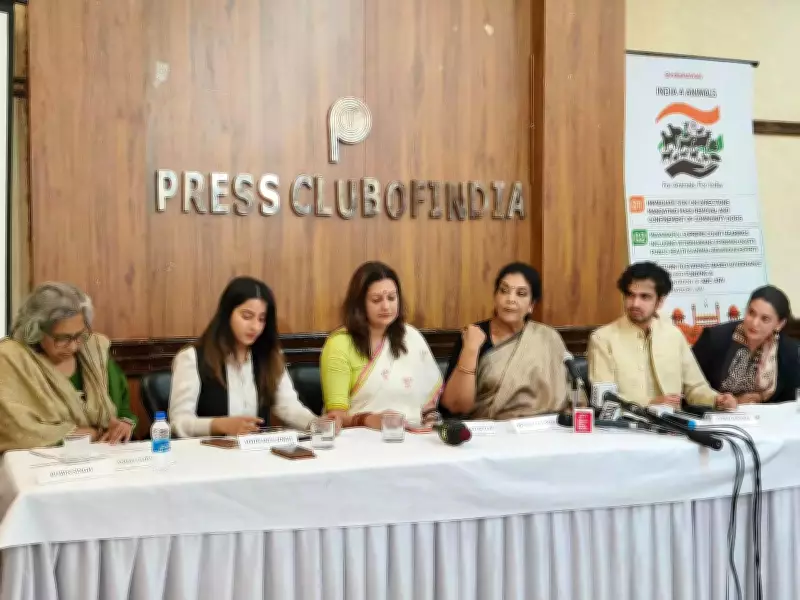
In response to a recent Suo Moto judgment that has sparked nationwide debate and division, a diverse panel of parliamentarians, legal experts, activists, administrators, and civil society leaders convened in Delhi on February 16. The urgent gathering aimed to deliberate on a humane, constitutional, and nationally coordinated solution to India's street dog management crisis, moving beyond polarization toward practical governance.
Deepening Polarization and Violence Demand Immediate Action
The discussion acknowledged that the court judgment has exacerbated tensions between community animal caregivers and citizens demanding permanent removal of street dogs. This rift has led to increased violence against community animals, including disturbing incidents reported in Telangana, alongside harassment and attacks on feeders and caretakers. Panelists unanimously identified two critical realities:
- The Animal Birth Control (ABC) programme has been severely underfunded and underutilized across municipalities.
- Permanent mass sheltering is neither a sustainable nor humane long-term solution, often creating health risks.
The consensus emphasized that India must shift from reactive measures like culling to focus on scientific sterilization, vaccination, accountability, and public awareness as core pillars of reform.

Parliamentarians Advocate for Balanced Media Narratives and Collaborative Governance
Senior parliamentarian Renuka Chowdhury stressed that cruelty toward animals frequently precedes cruelty toward humans, highlighting a societal warning sign. She pointed to successful adoption drives—including over 120-130 Indie dogs adopted in recent campaigns—as proof that humane solutions are viable with genuine intent. Chowdhury criticized media imbalance, noting that while dog bite incidents receive extensive coverage, the killing of a feeder did not get proportional attention. She raised concerns about illegal breeding and abandonment, calling for multilingual public education campaigns and collaborative governance structures.
MP Priyanka Chaturvedi acknowledged that human-dog conflict exists and must be addressed responsibly. She advocated for:
- Auditable municipal spending records and transparent dashboards for data tracking, similar to systems introduced by BMC.
- Technological integration, including AI tools, to manage sterilization, vaccination, and complaint systems effectively.
- Public-private partnerships and structured budgeting for technology-driven monitoring.
"We cannot work in silos," Chaturvedi emphasized, underscoring the need for coordinated action between the Centre, State governments, and civil society.
Activists Highlight Global Models and Link Animal Welfare to Human Welfare
Activist Anjali Gopalan asserted that while NGOs can demonstrate effective models, political will is indispensable for scaling solutions. Citing the Netherlands as a global example, she highlighted adoption drives and strict breeding control as proven strategies. Gopalan warned that internationally documented patterns show many perpetrators of violent crimes begin with acts of cruelty toward animals, often enabled by weak legal systems.
Advocate Poulomi Pavini Shukla delivered a powerful intervention linking child welfare and animal welfare, noting that a society unkind to animals cannot be kind to its children. Drawing attention to India's estimated 31 million orphaned children and 1.68 crore children living on the streets, she questioned prioritizing funds for permanent dog shelters when critical human welfare sectors remain under-resourced. Shukla cautioned that large-scale sheltering could trigger health crises, including viral outbreaks affecting both animals and humans. Emphasizing community-based sterilization success—such as achieving nearly 80% coverage over five years in Lucknow—she argued that humane, decentralized ABC implementation is both effective and ethical.

Community Leaders and Key Resolutions for National Framework
Anil Goswami of RWA Jangpura called for a unified Resident Welfare Association platform to collectively demand accountability from municipalities. "Each one, teach one," he urged, highlighting the importance of community-level awareness and grassroots mobilization.
The discussion culminated in several key resolutions aimed at building a national framework grounded in compassion and data transparency:
- Immediate and adequate funding for the ABC programme to ensure scientific sterilization and vaccination.
- Implementation of transparent dashboards and auditable municipal spending records for public oversight.
- Enhanced centre-state coordination and cross-party collaboration to overcome bureaucratic silos.
- Strict regulation of illegal breeding and abandonment to address root causes.
The clear call from the gathering was to move beyond polarization, reject fear-based narratives, and foster a collaborative governance model that balances animal welfare with public safety through evidence-based policies.





