

Oklahoma Moves Toward Legalizing Human Composting Amid Heated Debate
A recent social media post by Oklahoma State Representative Jim Shaw has ignited a fierce online discussion regarding Natural Organic Reduction (NOR), commonly referred to as human composting. This process involves using deceased human bodies to enrich agricultural soil, and Shaw revealed that the Oklahoma House has advanced bill HB3660, which could legalize this method in the state.
Bill Advances Despite Opposition
If passed, Oklahoma would become the 15th state to permit human composting, joining a list that includes Arizona, California, Nevada, Colorado, Delaware, Georgia, Maine, Minnesota, Maryland, New Jersey, New York, Oregon, Vermont, and Washington DC. Shaw expressed strong disapproval, labeling the move as a "disgusting step forward." He noted that he had previously proposed bills to ban the use of biosolids as fertilizers in Oklahoma, but these efforts were "killed outright."
While biosolids have been utilized in farmlands for decades, HB3660 would extend this practice to human remains. The controversy stems from ethical concerns about transforming human bodies into fertilizer, raising questions about dignity and sustainable death care.

Public Reaction and Industry Context
Many netizens have echoed Shaw's disappointment, with one user mocking, "My state government is an SNL skit," and another pleading, "This is reprehensible and absurd... Please do not let this bill pass." The debate highlights a broader shift in funeral practices, as the $20 billion U.S. funeral industry faces growing consumer concerns about costs, with nearly 50% of Americans worried about funeral or burial expenses.
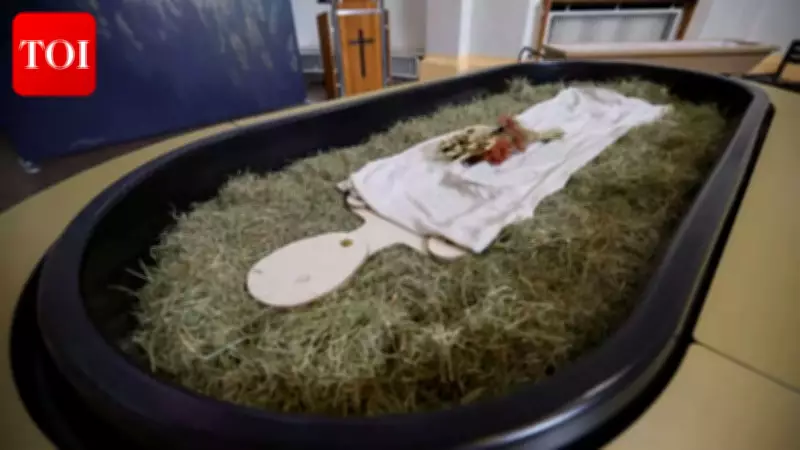
Human composting first gained approval in Washington state in 2019 and has since grown in popularity as an eco-friendly alternative to traditional burial and cremation. Companies like Recompose have developed the process, which involves placing a body in a vessel with organic materials such as wood chips, straw, and alfalfa. Over 30-60 days, oxygen, moisture, and microbial activity break down the remains, producing about one cubic yard of soil.
Process Details and Economic Factors
The cost of human composting typically ranges around $7,000, making it more affordable than many traditional funeral options. In Utah, for instance, Starks Funeral Parlor offers the service, with funeral director Shayneh Starks telling PBS Utah that it "in some way, feels like the person living on." Currently, the parlor completes the process in Seattle and transports the soil back to Utah, while a bill to legalize it locally is pending.
Criticisms and Ethical Concerns
Critics argue that human composting reduces individuals to mere nitrogen-rich additives for crop cycles, stripping away the sacredness of the human body. During a February hearing on Capitol Hill, funeral director Andrew Anderson raised concerns about the "safe placement" of the resulting soil and its potential uses. Some compare this to dystopian scenarios, fearing it commodifies human remains and erodes dignity.
As Oklahoma deliberates on HB3660, the discussion reflects a larger societal conversation about balancing environmental sustainability with ethical considerations in end-of-life care.






