

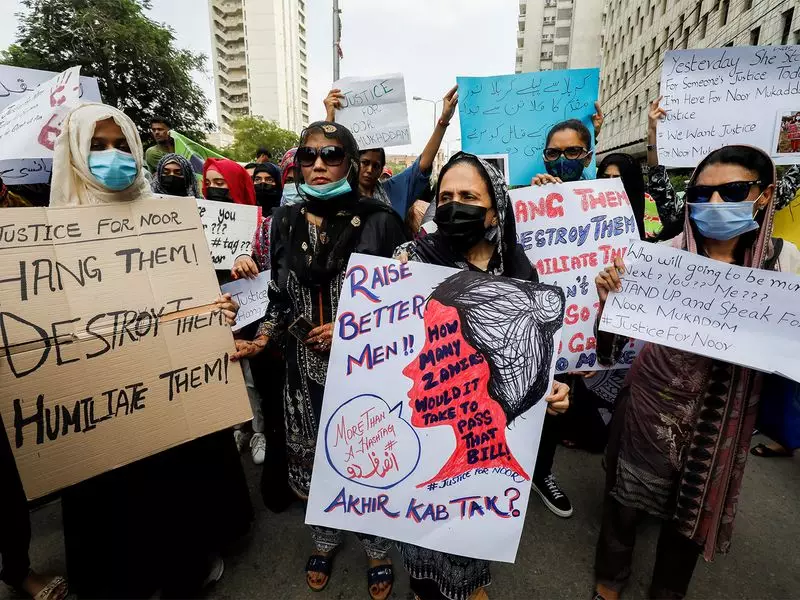
Pakistan is witnessing an alarming escalation in violence against women, revealing a disturbing institutional collapse that has left female citizens increasingly vulnerable and unprotected. Recent data and expert analysis paint a grim picture of systemic failures across law enforcement, judicial systems, and government institutions specifically designed to safeguard women's rights.
Alarming Statistics Reveal Disturbing Trend
The Human Rights Commission of Pakistan has documented over 2,000 cases of gender-based violence during the current year alone, with many experts believing the actual numbers are significantly higher due to widespread underreporting. These cases span the entire spectrum of violence, including domestic abuse, honor killings, sexual assault, and forced marriages.
What makes these statistics particularly concerning is the consistent upward trajectory of violence against women over recent years. Despite legislative measures and public commitments to women's protection, the implementation gap has widened dramatically, leaving victims without recourse and perpetrators with virtual impunity.

Institutional Failures and Systemic Barriers
The collapse begins at the most fundamental level of protection - law enforcement. Police stations across Pakistan frequently demonstrate reluctance to register cases involving violence against women, often dismissing serious complaints as "family matters" that should be resolved privately. This institutional apathy creates the first and most crucial barrier to justice.
Even when cases manage to navigate initial police resistance, the judicial system presents its own set of challenges. Court proceedings are characterized by extensive delays and procedural obstacles that drain victims' resources and resolve. The combination of societal pressure and bureaucratic hurdles means that only a small fraction of reported cases ever reach conclusion.
Specialized institutions created specifically to address these issues, including provincial women protection authorities and dedicated helplines, suffer from chronic underfunding and staffing shortages. These agencies, theoretically designed as safety nets, often lack the basic resources to function effectively.
Root Causes and Societal Factors
Multiple intersecting factors contribute to this crisis. Deep-rooted patriarchal norms continue to influence both institutional responses and community attitudes toward gender-based violence. The persistent treatment of women as property rather than individuals with inherent rights undermines protection efforts at every level.
Economic vulnerabilities further compound the problem. Women with limited financial independence face significantly higher barriers to seeking protection or leaving abusive situations. The lack of economic empowerment creates dependency that traps many women in cycles of violence.
Legal frameworks, while improved on paper, contain significant implementation gaps and loopholes that perpetrators exploit. Laws intended to protect women are often weakly enforced or interpreted in ways that favor traditional power structures over individual rights.
Consequences and Required Actions
The impact of this institutional failure extends far beyond individual victims. The normalization of violence against women creates a culture of fear that limits women's participation in public life, education, and economic activities. This not only violates fundamental human rights but also hinders national development by excluding half the population from full societal participation.
Addressing this crisis requires comprehensive institutional reform beginning with law enforcement training and accountability measures. Police forces need specialized units with mandatory protocols for handling gender-based violence cases. The judicial system requires streamlined processes and victim support services to ensure cases are resolved efficiently and fairly.

Beyond institutional changes, societal attitudes must evolve through education and public awareness campaigns. Changing deep-seated cultural norms requires sustained effort across multiple generations, but is essential for creating lasting change.
The current situation represents not just a failure of individual institutions but a systemic collapse of protection mechanisms for women in Pakistan. Without urgent and comprehensive intervention, the cycle of violence will continue to claim victims and undermine the nation's social fabric.





