

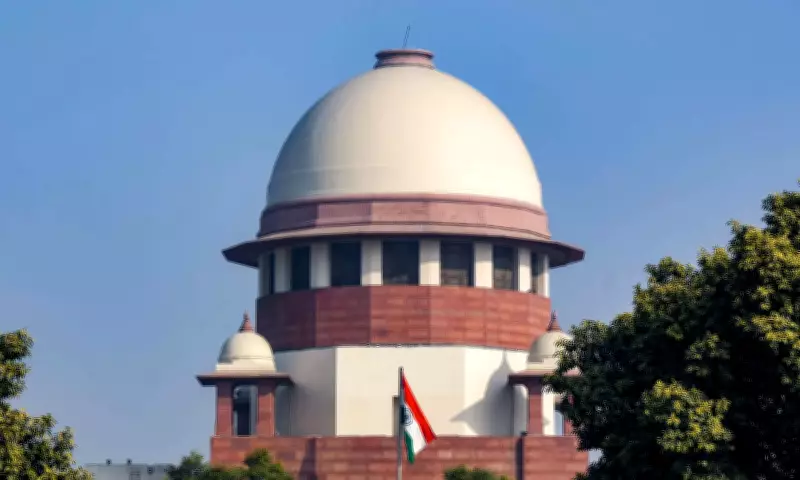
The Supreme Court on Tuesday made it clear that educational institutions cannot deny admission to students from disadvantaged sections under the Right to Education (RTE) Act merely because of pending grievances or disagreements between government authorities and school managements. The court stressed that such issues can be dealt with subsequently, but the immediate admission of students must not be delayed.
Court's Directive on Admissions
A bench of Justices P S Narasimha and Alok Aradhe emphasized that the interests of students should not be compromised due to a tug-of-war between government authorities and school managements. The court stated, "We find that schools, like the petitioner's that may have some disagreement with the selection by the government, can make representation to the concerned authority, but they ought not wait for the outcome of such a representation and are mandated to grant admission to the student whose name finds mention in the list forwarded to the school in the interregnum. This immediacy is essential to actualise the promise of Article 21A of the Indian Constitution."
National Mission for Social Justice
The court further observed that providing free elementary education to children from weaker sections and disadvantaged groups is a national mission. It said, "This model envisages the school as a civic space that breaks down barriers of caste, class and gender, thereby advancing substantive social justice." The bench underscored that the law should be implemented in letter and spirit to ensure that no child is left behind.

The ruling comes as a significant relief for many students who have been denied admission due to administrative disputes. The Supreme Court's directive reinforces the constitutional mandate under Article 21A, which guarantees free and compulsory education to all children aged 6 to 14 years.






