

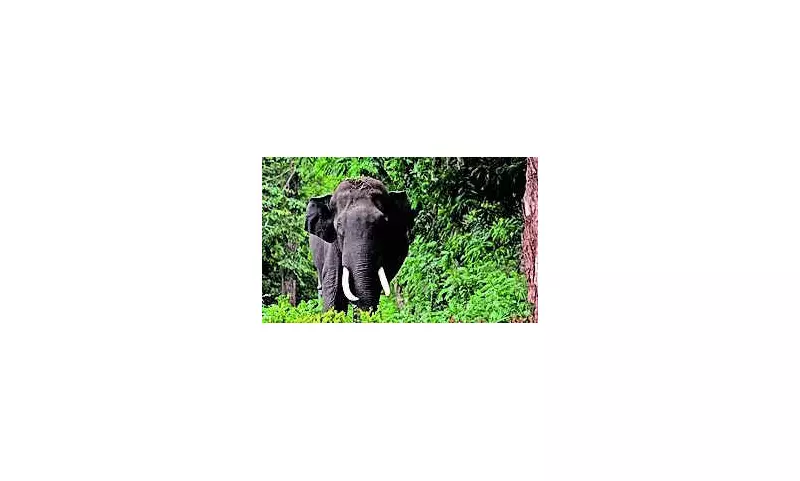
The state of Jharkhand is grappling with a severe and deadly surge in human-elephant conflict, with at least 22 people killed in a span of just 21 days. The incidents, concentrated in the Ramgarh and West Singhbhum districts, have highlighted a critical wildlife management crisis, with one sub-adult male elephant in a heightened state of musth responsible for a majority of the recent fatalities.
A Tale of Two Conflicts: Ramgarh and West Singhbhum
The nature of the conflict differs between the two affected districts. In Ramgarh, officials report that a lone elephant turned violent only after being provoked by villagers who attacked it with bows and arrows. This elephant ran amok for three days, resulting in six deaths. Most victims were either directly in its path or attempting to take photographs.
In stark contrast, the situation in West Singhbhum is driven by a sub-adult male elephant in musth—a period of increased sexual activity and aggression. This tusker has been on a sustained deadly rampage, killing 16 people since January 1, 2026. Divisional Forest Officer (DFO) Aditya Narayan confirmed the animal's state, stating, "We are certain it is in musth, which explains its heightened aggression. The elephant appears to have turned rogue, and our focus now is to tranquilise it at the earliest."

Nightly Attacks and Elusive Pursuit
The pattern of attacks in West Singhbhum has been consistently nocturnal. Smita Pankaj, Regional Chief Conservator of Forests (RCCF) for the Kolhan division, explained that the elephant becomes violent after dark, attacking houses and villagers before retreating deep into the forests during daylight hours, making it nearly invisible. "It moves extremely fast and keeps changing locations, repeatedly giving our teams the slip," she said.
A tragic example of this pattern occurred on the intervening night of Tuesday and Wednesday in the Noamundi block. The elephant bulldozed straw-thatched hutments, killing seven people as they slept, including five members of a single family in Babaria village. A minor child miraculously escaped. Two more individuals were killed about two kilometers away from the initial attack site.
Despite over 80 forest personnel, including Quick Response Teams (QRTs), being deployed, and the use of drones, tracking efforts have seen limited success. DFO Narayan cited heavy fog and dense forest cover as major obstacles. The operation faces an even graver danger: the presence of underground Improvised Explosive Devices (IEDs) laid by Maoist groups in several parts of West Singhbhum, severely hampering safe movement for tracking teams.
Long-Standing Crisis and Immediate Measures
This recent spike is part of a larger, ominous trend. A study by the Wildlife Institute of India (WII) notes that since Jharkhand's formation, over 1,300 people have been killed in elephant-related incidents. The forest department is now implementing emergency measures.
Specialised teams from Bankura in West Bengal and Odisha have been deployed, alongside personnel from the Vantara Rescue and Rehabilitation Centre (VRRC) and Wildlife SOS. A key strategy involves the temporary relocation of villagers from high-risk zones. Officials are mapping the tusker's movement to facilitate evacuations.
DFO Narayan pointed out a critical challenge: despite public warnings, many villagers continue to sleep in makeshift, warm hutments made of paddy husk near their fields—a long-standing post-harvest winter practice. "Almost all deaths followed a similar pattern," he noted. The elusive elephant was last located around 5 am on Wednesday near Katepara forest village in the Chaibasa forest division, as authorities continue their urgent mission to bring the crisis under control.






