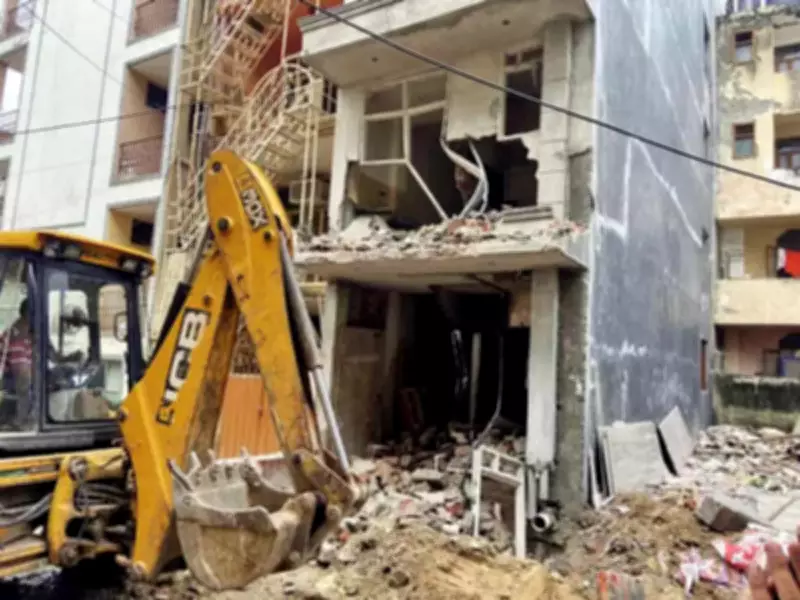
Over 250 Shops and Houses Face Demolition Threat in Bihar's Nawada District
In a significant crackdown on illegal encroachments, more than 250 shops and houses in the Rajauli block area of Nawada district, Bihar, are now under the looming threat of demolition. The local administration has issued a stern warning, giving occupants time until February 17 to voluntarily remove their structures from public land. Failure to comply will result in the bulldozing of these encroachments, with the costs of demolition being recovered from those responsible for building the shops or houses.
Administrative Action and Legal Basis
The notice for encroachment removal has been formally issued by Ghufran Mazhari, the circle officer–cum–chief executive officer of Rajauli Nagar Panchayat. This action is being taken under the provisions of the Bihar Public Land Encroachment Act, 1956, which empowers authorities to clear public land of illegal occupations. According to official records, the encroachments include a mix of both temporary and permanent structures, highlighting the scale of the issue.
Earlier, the notice recipients were asked to submit valid documents to establish their claim over the land. However, none could furnish admissible proof to support proprietary rights, leading to the current demolition threat. This lack of documentation underscores the illegal nature of these constructions and the administration's resolve to enforce the law.

Public Complaints and Local Impact
According to sources, the decision to issue final demolition notices followed persistent public complaints about regular traffic congestion and related inconveniences in the area. Many of the affected people have homes or businesses in the local market, which typically witnesses heavy footfall, exacerbating the congestion issues. To prevent any potential law-and-order problems during the upcoming demolition drive, the circle officer has alerted the local police, ensuring that the process is carried out smoothly and without incident.
Encroachment of public land—including roads, lanes, grazing grounds, burial grounds, and water bodies—remains a major concern in Nawada district. Raj Kumar, a local businessman, emphasized the severity of the problem, stating, "The issue is particularly serious in Nawada town, where roads have narrowed significantly due to rampant encroachments." This has not only disrupted daily life but also posed safety hazards for residents and commuters alike.
Controversy and Demands for Rehabilitation
Meanwhile, roadside vendors in Nawada have voiced their concerns, demanding rehabilitation as an alternative to demolition. They argue that encroachment is often a compulsion rather than a choice, driven by economic necessity and lack of affordable alternatives. These vendors allege that anti-encroachment drives disproportionately affect the poor and marginalized, while influential violators usually escape punitive action. This raises questions about the fairness and equity of such enforcement measures, highlighting the need for a more holistic approach that considers the socio-economic realities of those affected.
The situation in Nawada reflects a broader challenge in urban and rural areas across Bihar, where illegal encroachments on public land have become a persistent issue. As the February 17 deadline approaches, all eyes are on the administration to see how it balances law enforcement with humanitarian considerations, potentially setting a precedent for future actions in the region.