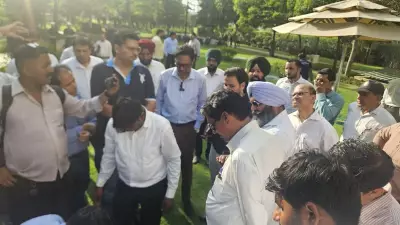
AIMIM Leader's 'Two Dozen Children' Remark Ignites Political Firestorm in Uttar Pradesh
The political landscape of Uttar Pradesh has been set ablaze by controversial statements from All India Majlis-e-Ittehadul Muslimeen's state president Shaukat Ali, who has sparked intense debate with his call for Muslims to have more children.
Provocative Suggestion at Moradabad Rally
Addressing a public gathering in Moradabad recently, Ali unveiled what he described as the party's "new slogan" - "Hum do, hamare do darjan" (we two, our two dozen). This striking phrase directly encourages Muslim families to aim for significantly larger numbers of children than current national averages.
"Children are a divine blessing from Allah," Ali declared emphatically during his speech. "When Allah is giving, one should gratefully accept this gift." The AIMIM leader framed his argument within both religious and nationalistic contexts, creating a multifaceted justification for his controversial position.

Population Growth as National Strength
Drawing an unexpected parallel with global superpowers, Ali pointed to China's historical population policies as evidence supporting his viewpoint. "People express concern about our rising numbers, but they fail to recognize that a larger population fundamentally strengthens a nation," he argued.
The AIMIM leader suggested that demographic growth translates directly into national power and economic potential, positioning his comments within broader discussions about India's demographic dividend and global positioning.
Immediate Political Backlash and Social Media Frenzy
Ali's remarks triggered immediate and severe reactions from political opponents across the spectrum. Critics from rival parties universally condemned the statements as "deliberately provocative" and "socially irresponsible." The controversy rapidly spilled beyond political circles, igniting fierce debates across social media platforms where thousands of users expressed polarized views on the sensitive topic.
Notably, AIMIM's central leadership has maintained complete silence regarding the controversy, issuing neither clarification nor endorsement of their state president's statements. This strategic silence has only intensified speculation about the party's official position on population matters.
Broader Concerns About Muslim Safety and Institutions
Beyond the population controversy, Ali's speech addressed multiple sensitive issues affecting Muslim communities in Uttar Pradesh. He expressed grave concerns about mob violence, stating that many Muslims "experience genuine fear and insecurity" during routine travel by train or bus.
The AIMIM leader specifically highlighted incidents involving harassment of Muslim women and criticized what he characterized as systematic "stigmatization of madrasas." Ali made serious allegations about recent administrative actions in Moradabad, claiming approximately 100 madrasas had been forcibly closed under what he described as unfair accusations of extremism.
Historical Context and Political Accusations
Reaching into political history, Ali referenced communal violence during previous Congress administrations, asserting that "significant numbers of Muslim lives were lost" during those periods. These historical references added another layer to his critique of current political dynamics and security concerns.
The combination of demographic advocacy, security concerns, educational institution allegations, and historical grievances created a comprehensive narrative that has resonated strongly within certain community segments while alarming others.
Ongoing Implications and Political Ramifications
This controversy emerges at a sensitive political juncture in India's most populous state, where demographic discussions frequently intersect with religious identity and political mobilization. The absence of official clarification from AIMIM headquarters suggests the party may be carefully calculating its response amid competing political pressures.

As the debate continues to unfold, Shaukat Ali's remarks have undoubtedly shifted political discourse in Uttar Pradesh, forcing conversations about population policies, minority security, educational institutions, and the complex intersection of demography with national identity and strength.