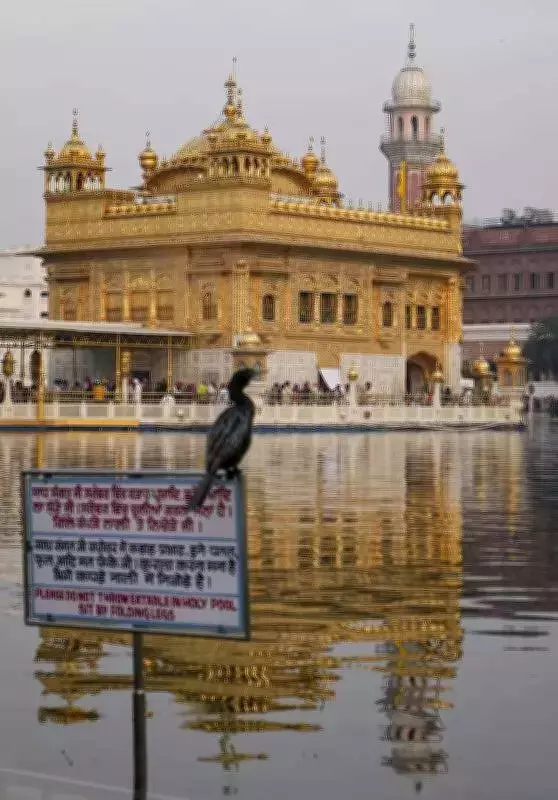
Amritsar's Holy City Declaration Leaves Traders in Uncertainty as Implementation Lags
Nearly two months after the Punjab government issued a notification declaring the walled city of Amritsar a holy city, prohibiting the sale and use of meat, tobacco, and alcohol within its limits, a concrete implementation plan has yet to materialize. Despite the announcement made on December 15, 2025, authorities have not framed any guidelines for providing compensation and rehabilitating shopkeepers affected by this move.
Shopkeepers Voice Concerns Over Lack of Alternatives
Rajinder Kumar, a fourth-generation fish trader operating inside the Hall Gate fish market, is among those impacted. "There is silence from the Amritsar municipal corporation side, so we are waiting too," he said, adding, "They are yet to provide us with an alternate place. If they do not do so, we will go to court. The wholesalers will move if given an alternate place but what about the small-time meat sellers across the city?"
A few streets away, Manmohan Singh, a restaurant owner, echoed this sentiment while wiping down empty tables. "The administration has not provided us with any alternative, so nothing has been done so far," he stated, highlighting the widespread frustration among business owners.

Government Response and Political Pressure Mount
Joint commissioner Jai Inder Singh maintained that officials are holding continuous meetings with stakeholders to ensure no one suffers losses during the implementation of the holy city guidelines. However, political pressure is intensifying as the delay continues.
Dr. Jagmohan Singh Raju of the BJP recently wrote a strongly worded letter to the chief minister, demanding immediate formulation and implementation of a comprehensive rehabilitation policy for shopkeepers, vendors, and workers affected by the prohibition. His demands include:
- Identification and survey of affected persons
- Structured rehabilitation plans
- Establishment of alternative business zones outside the prohibited area
- Financial assistance during the transition period
He insisted that sanctity must not cost livelihoods, emphasizing that rehabilitation is the responsibility of the government.
Election-Year Caution Adds to Delay
Sources indicate that the government, barely a year ahead of elections, is proceeding with caution, aware that this decision could anger thousands of voters. The notification has been issued, but the guidelines remain absent, leaving a void of uncertainty in the narrow lanes of the walled city where devotion now competes with echoes of doubt and economic anxiety.