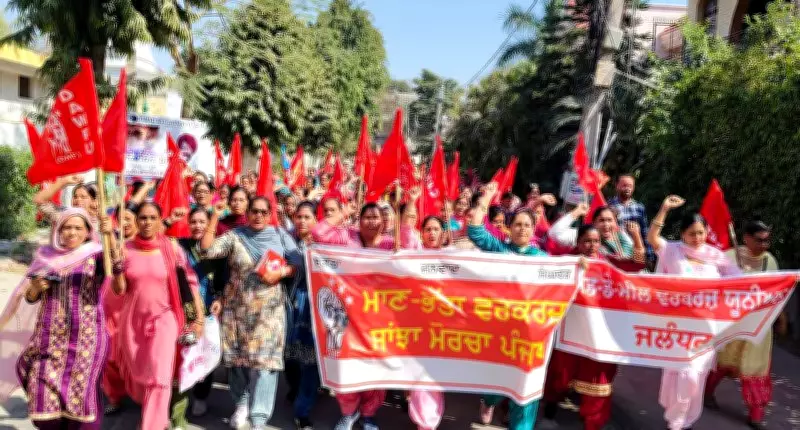
Asha and Mid-Day Meal Workers Stage Protest March in Jalandhar
In a significant display of collective action, hundreds of Asha (Accredited Social Health Activists) and mid-day meal workers took to the streets of Jalandhar, marching towards the residence of Punjab Minister Balkar Singh Bhagat. The protest, organized to highlight longstanding grievances, saw participants from across the district converging to voice their demands for fair treatment and enhanced support from the state government.
Key Demands of the Protesting Workers
The march was driven by a set of core issues that have plagued these essential workers for years. Asha workers, who play a crucial role in rural healthcare by facilitating immunizations, maternal care, and health awareness, are seeking a substantial increase in their honorariums, which they argue are inadequate given their responsibilities. Similarly, mid-day meal workers, responsible for preparing and serving meals in government schools, are demanding regular wages, job security, and recognition as permanent employees rather than contractual staff.
Other pressing concerns include the lack of social security benefits such as pensions and health insurance, delayed payments, and insufficient infrastructure support. The protesters emphasized that their work is vital for public health and education, yet they remain undervalued and undercompensated, leading to financial hardships and job insecurity.
Response from Authorities and Public Reaction
Upon reaching Minister Bhagat's residence, the workers submitted a memorandum outlining their demands, calling for immediate government intervention. While the minister was not present at the time, his representatives assured the protesters that their concerns would be forwarded to higher authorities for consideration. The march proceeded peacefully, with local police ensuring order and minimal disruption to public life.
Public reaction has been largely sympathetic, with many residents expressing solidarity with the workers. Community leaders and activists have joined the cause, urging the Punjab government to address these issues promptly to avoid further unrest. The protest has sparked discussions on social media and local forums, highlighting the broader challenges faced by frontline workers in the state's social sectors.
Broader Implications for Punjab's Social Services
This protest underscores systemic issues within Punjab's healthcare and education systems, where reliance on underpaid and insecure workers threatens service quality. Asha workers, for instance, are often the first point of contact for healthcare in rural areas, yet their contributions are not matched by adequate compensation. Similarly, mid-day meal workers ensure nutritional support for schoolchildren, a critical component of educational outcomes, but their own livelihoods remain precarious.
Experts warn that neglecting these demands could lead to attrition and reduced efficiency in essential services, impacting vulnerable populations. The march in Jalandhar is part of a larger trend of similar protests across India, where grassroots workers are increasingly mobilizing for better working conditions. It calls for a reevaluation of policies to ensure sustainable support for those at the forefront of public welfare initiatives.