

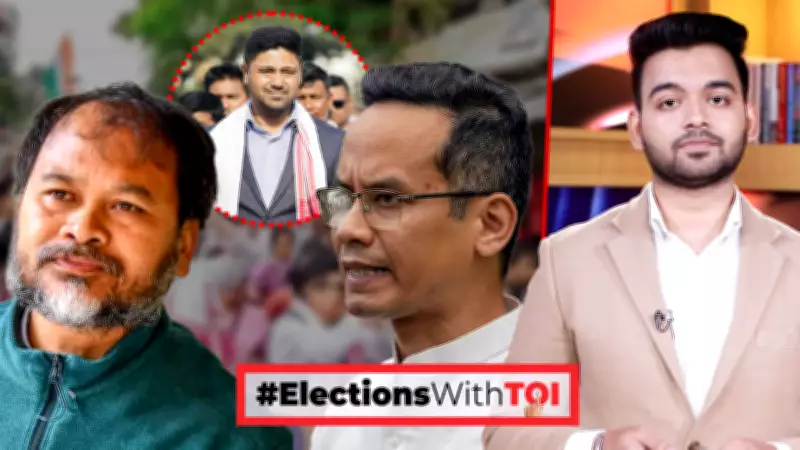
Assam 2026 Elections: Congress Deploys Gogoi Trio and Alliances in High-Stakes Battle Against BJP
The Assam Assembly elections in 2026 are shaping up to be a pivotal political showdown, with the Congress party adopting a nuanced strategy centered around three prominent Gogois to mount a serious challenge against the ruling Bharatiya Janata Party (BJP). This electoral contest is not just about seats but also about legacy, regional influence, and strategic partnerships that could redefine Assam's political landscape.
Congress's Strategic Focus: The Gogoi Factor
In a bold move, the Congress is rallying its campaign around three key figures from the Gogoi family: Gaurav Gogoi, Akhil Gogoi, and Lurinjyoti Gogoi. This approach aims to consolidate opposition votes, particularly in Upper Assam, where the Gogoi name carries significant historical and political weight. By leveraging their combined appeal, Congress hopes to create a unified front that can effectively counter the BJP's well-established machinery.
Gaurav Gogoi, a sitting MP and son of former Chief Minister Tarun Gogoi, brings national-level experience and a connection to the party's legacy. Akhil Gogoi, known for his grassroots activism and leadership in peasant movements, adds a layer of regional credibility and anti-establishment appeal. Lurinjyoti Gogoi, associated with regional parties and student politics, helps bridge gaps with local factions. Together, they represent a multi-pronged effort to attract diverse voter segments, from urban elites to rural communities.

BJP's Counter-Strategy: Development and Welfare as Key Pillars
On the other side, the BJP is doubling down on its record of governance, emphasizing development projects, welfare schemes, and infrastructure growth as its core campaign themes. The party aims to retain its dominance by highlighting tangible benefits delivered during its tenure, such as improved roads, healthcare initiatives, and economic policies. BJP leaders are confident that their focus on performance and stability will resonate with voters seeking continuity and progress.
However, the BJP faces challenges, including internal defections and the need to address local issues like the National Register of Citizens (NRC) debate and eviction drives, which have sparked controversy in Assam. These factors could influence voter sentiment, making the election more competitive than previous cycles.
Key Electoral Dynamics: Legacy, Regional Influence, and Alliances
The 2026 Assam polls are expected to be closely fought across multiple constituencies, with several critical dynamics at play:
- Legacy Politics: The Gogoi family's legacy, tied to Tarun Gogoi's long tenure as Chief Minister, provides Congress with a nostalgic appeal and a foundation to rebuild its base. This contrasts with BJP's narrative of new leadership and modernization.
- Regional Influence: Upper Assam, in particular, will be a battleground where regional identities and issues like land rights and cultural preservation come to the fore. Both parties are tailoring their messages to address these localized concerns.
- Strategic Alliances: Congress is actively forging alliances with smaller regional parties and groups to broaden its coalition, while BJP relies on its existing partnerships and defection strategies to weaken opposition unity. The success of these alliances could tip the balance in tightly contested seats.
Broader Context and Implications
This election is part of a larger trend in Indian politics, where state-level contests increasingly influence national narratives. A strong performance by Congress in Assam could boost its morale ahead of other state elections, while a BJP victory would reinforce its hold in the Northeast. Voters will weigh factors like economic development, social justice, and political stability, making this a referendum on both local governance and broader ideological directions.
As campaigning intensifies, expect heated debates, manifesto releases, and public rallies to dominate the headlines. The outcome will not only determine Assam's next government but also signal shifts in regional politics that could have lasting impacts on India's democratic fabric.






