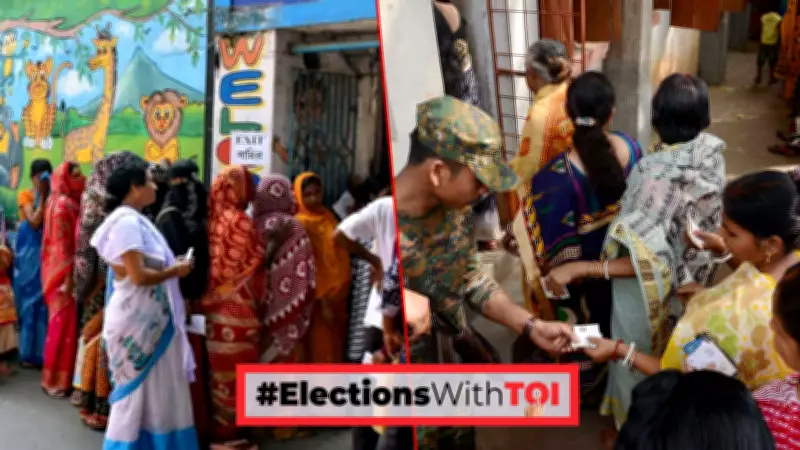
In a significant development during the West Bengal Assembly elections, Axis My India has decided against releasing its exit poll projections. The pollster cited an unusually high rate of voter silence, with nearly 70% of respondents refusing to disclose their voting choices. This created a substantial non-response bias, rendering the data statistically unreliable.
High Non-Response Rate
Axis My India reported that the overwhelming refusal to participate in exit polls made it impossible to produce accurate projections. The pollster emphasized that the data collected could not be considered representative of the actual voting patterns, leading to the decision to withhold any predictions.
Conflicting Projections from Other Pollsters
While Axis My India has stepped back, other polling agencies have released conflicting exit poll results. Some projections indicate a victory for the Bharatiya Janata Party (BJP), while others suggest the Trinamool Congress (TMC) is set to secure a fourth consecutive term. The divergence in predictions has added to the uncertainty surrounding the election outcome.

Upcoming Results and Majority Mark
The final results for the West Bengal Assembly elections are scheduled to be announced on May 4. The majority mark required to form the government is 148 seats in the 294-member assembly. With Axis My India's withdrawal, the political landscape remains highly unpredictable, and both major parties are closely watching the developments.
Political Reactions
The decision by Axis My India has sparked reactions from political leaders. Some have questioned the credibility of exit polls in general, while others have urged their supporters to remain vigilant during the counting process. The TMC has particularly emphasized the need to guard electronic voting machines (EVMs) ahead of the counting day.
As the state awaits the final verdict, the high non-response rate has raised concerns about the reliability of exit polling methodologies in capturing voter sentiment. The situation underscores the challenges faced by pollsters in regions with high levels of voter privacy concerns or distrust.