Construction of Babri Masjid Replica Begins in West Bengal, Ignites Political Firestorm
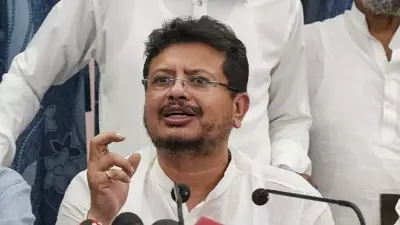
The construction of a replica of the Babri Masjid has officially commenced in Beldanga, Murshidabad, West Bengal, setting off a fierce political controversy as the state gears up for upcoming Assembly elections. The project, initiated by suspended Trinamool Congress (TMC) MLA Humayun Kabir, who now chairs the Janata Unnayan Party (JUP), has drawn sharp reactions from major political parties, including the TMC and BJP.
Foundation Ceremony and Project Details
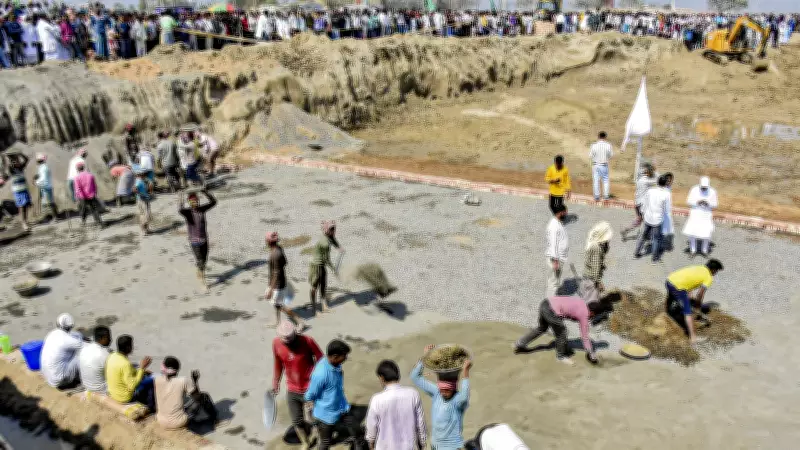
On Wednesday, Humayun Kabir led the formal start of construction with a Quran recitation ceremony at approximately 1 pm. He placed coins and silver bars inscribed with sacred texts at the site and symbolically applied the first few spades of cement mixture. The event attracted thousands of local supporters and attendees from neighboring districts, many of whom participated in the religious recitations.
According to Kabir, the mosque, designed as a replica of the historic Babri Masjid in Ayodhya, is now slated for completion in two years, accelerated from an initial three-year timeline. A private company from Kerala has been contracted for the construction, with an estimated total cost of Rs 55 crore. Key features include a main gate planned to be 14 metres high and 5 metres wide, costing around Rs 5 crore.

Political Accusations and Counterclaims
Humayun Kabir did not hold back in his criticism of his former party, the TMC. "If I had remained in TMC, they would have benefitted from the Babri Masjid-like mosque construction and garnered more votes," he stated, implying that the TMC seeks to capitalize on communal politics for electoral gains. He also targeted the BJP, accusing them of leveraging the Ram Mandir construction to expand their vote bank in Bengal, vowing to counter this influence.
In response, BJP state president Shamik Bhattacharya alleged that Kabir is still aligned with the TMC, calling the mosque project a "plan B" to covertly secure Muslim votes. He claimed, "TMC is trying to get the Muslim votes from the back door, and they will make Kabir deputy CM." Bhattacharya further warned of divisive tactics, suggesting the environment is being turned into "mini Pakistan" and urging Hindu unity.
TMC spokesperson Arup Chakraborty dismissed Kabir's actions as "cheap drama," emphasizing that the party does not engage in communal politics. He pointed out Kabir's past association with the BJP, noting, "Kabir needs to decide which is his true face and which is his mask." Chakraborty highlighted that Kabir had previously received a BJP ticket from Murshidabad, the same party involved in the demolition of the original Babri Masjid.
Rally Plans and Adjustments
Kabir had earlier announced a 'Babri Yatra' to raise awareness about the mosque project, planned as a 265-kilometer rally from Palashi in Nadia district to Itahar in Uttar Dinajpur district. Organizers estimated participation from 100 vehicles with six people each, totaling around 600 attendees. However, due to the commencement of state board Higher Secondary (Class 12) examinations, the rally has been postponed.
Instead, Kabir will conduct a smaller 22-kilometer march on Thursday from Palashi to Beldanga, the construction site. He explained, "The Malda police requested us to postpone it for Saturday or Sunday due to the HS exams, but we decided to hold a smaller rally." This adjustment reflects efforts to balance political activities with academic schedules.
Background and Motivations
Humayun Kabir, the TMC MLA from Bharatpur, was suspended from the party for alleged anti-party activities before forming his own outfit. He laid the foundation stone for the Babri Masjid replica on December 6 last year, with his party aiming to counter what they describe as misinformation surrounding the mosque's construction. The project is positioned as a symbolic response to the BJP's Ram Mandir, intended to mobilize support and challenge political narratives in West Bengal.

As construction progresses, the political row is expected to intensify, with implications for voter sentiment and party strategies in the lead-up to the elections. The controversy underscores the deep-seated communal and political tensions in the region, making it a focal point of national attention.