Baharampur's Political Weight Rooted in Rich Historical Legacy
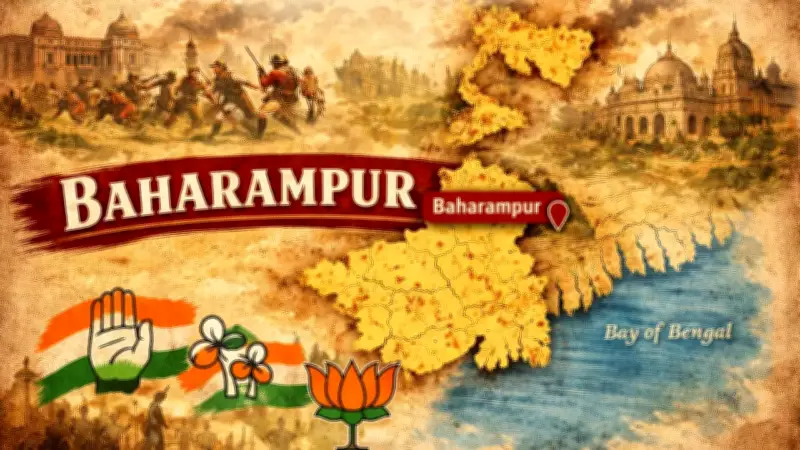
Baharampur's political significance cannot be fully grasped without delving into its storied past. Established in 1757 after the Battle of Plassey, the town emerged as one of the earliest administrative and military bases for the East India Company in India. Over the centuries, it evolved into a bustling commercial hub, attracting European trading interests from the Dutch and French. This layered historical backdrop has cultivated a politically conscious electorate, where identity, history, and local pride persistently shape voting behavior. In essence, Baharampur represents a unique fusion of historical legacy and contemporary political contestation.
From Congress Bastion to BJP Breakthrough: A Dramatic Political Shift
For decades, Baharampur stood as a formidable stronghold of the Congress party, largely under the influence of Adhir Ranjan Chowdhury, who represented the seat in the Lok Sabha five times between 1999 and 2024. However, the political landscape underwent a dramatic transformation during the 2021 West Bengal assembly elections when the BJP's Subrata Maitra secured a surprising victory. His win not only shattered Congress's long-standing dominance but also signaled the saffron party's deepening footprint in Murshidabad district, an area once considered inaccessible to the BJP.
Maitra's nearly 45% vote share marked a significant leap from the party's marginal presence in 2016, while both Congress and the Trinamool Congress (TMC) trailed behind, highlighting a major political realignment. The 2024 Lok Sabha elections introduced another twist, with Chowdhury, long perceived as invincible in Baharampur, suffering defeat at the hands of Yusuf Pathan of the TMC by a margin exceeding 85,000 votes. This loss underscored a sharp decline in Chowdhury's vote share and exposed the growing impact of communal polarisation and shifting loyalties in the region, raising critical questions about whether legacy politics can withstand modern electoral dynamics.

Triangular Contest or Bipolar Fight? Clashing Narratives on the Ground
The upcoming assembly election is officially a three-cornered contest involving BJP's Subrata Maitra, TMC's Naru Gopal Mukherjee, and Congress veteran Adhir Ranjan Chowdhury. Yet, narratives diverge sharply among the key players. The BJP views the race as a direct fight with the TMC, emphasizing governance and anti-infiltration rhetoric. The TMC dismisses Chowdhury as a spent force, projecting a bipolar contest. Meanwhile, Congress believes Chowdhury's return has reopened the race, injecting unpredictability. Political observers suggest that Chowdhury's presence may fragment votes across both BJP and TMC, rendering the contest tightly contested and highly unpredictable.
Polarisation: The Undercurrent Driving Voter Sentiment
A recurring theme in Baharampur is religious polarisation. While Murshidabad district has a Muslim majority, the Baharampur constituency itself comprises nearly 70% Hindu voters. Key issues influencing voter sentiment include allegations of infiltration from Bangladesh, communal tensions in nearby areas, political narratives around identity and security, and the ripple effects of past controversies such as the NRC-CAA protests. These factors have sharpened divisions since 2021 and continue to shape voter behavior, turning identity into a pivotal electoral determinant.
Security, Migration, and Local Anxieties Take Center Stage
Ground reports indicate that security has emerged as a central election issue in Baharampur. Urban areas have reportedly become a refuge for Hindus from neighbouring pockets affected by communal tensions, amplifying concerns over law and order, perceptions of demographic shifts, and demands for stronger administrative control. Political parties are tailoring their campaigns accordingly, with messaging heavily focused on safety, stability, and governance, often overshadowing traditional development issues.

Campaign Rhetoric Sharpens Identity Divide
The campaign has witnessed sharp exchanges, with leaders accusing each other of appeasement and selective outreach. Subrata Maitra has alleged community-specific bias by rivals, while Adhir Ranjan Chowdhury has countered by positioning himself as a leader with cross-community acceptance. Such rhetoric reflects deeper currents of polarisation that shape not only voter perception but also campaign strategy.
Chowdhury's Comeback Gamble After Lok Sabha Setback
For Adhir Ranjan Chowdhury, this election represents more than just another contest; it is a political comeback bid following his 2024 defeat. He argues that his Lok Sabha loss was driven by acute communal polarisation and that voters have since reconsidered their decision, with his legacy and grassroots connect remaining intact. If successful, his return would mark a rare resurgence of a seasoned national leader into state-level politics after decades, potentially reshaping Congress's prospects in West Bengal.
TMC's Steady Ground Game and Welfare Push
Naru Gopal Mukherjee, representing the TMC, has built his campaign around local governance and incremental vote share gains. Despite a 12.5% increase in 2021, he fell short of overtaking the BJP. This time, the TMC is banking on organisational strength, leveraging state welfare schemes, and positioning itself as the primary challenger to the BJP. The party is also attempting to consolidate its base amid a fragmented opposition space.
BJP's Consolidation Strategy: Welfare Plus Polarisation Pitch
Subrata Maitra's campaign focuses heavily on door-to-door outreach targeting hundreds of households daily, welfare schemes under Prime Minister Narendra Modi, and strong messaging on infiltration and corruption. His 2021 victory margin provides the BJP with confidence, but the party remains cautious about vote-splitting due to Chowdhury's entry into the fray.
External Factors Shaping Internal Choices
Interestingly, observers believe that developments outside Baharampur, including communal tensions in nearby regions and broader political narratives, are influencing voter choices more than strictly local issues. This trend, first noticed in 2021, appears to have deepened, making the constituency a reflection of wider socio-political currents in West Bengal.
An Open Race with No Clear Winner
Local observers describe Baharampur as one of the most closely watched constituencies in the state. The contest hinges on whether polarisation intensifies or diffuses, how much of Congress's traditional base Chowdhury can reclaim, whether the BJP retains its expanded support, and the TMC's ability to convert organisational strength into votes. For now, the seat remains too close to call, representing a rare three-way contest shaped as much by history as by present-day political churn, with each player holding a plausible path to victory.