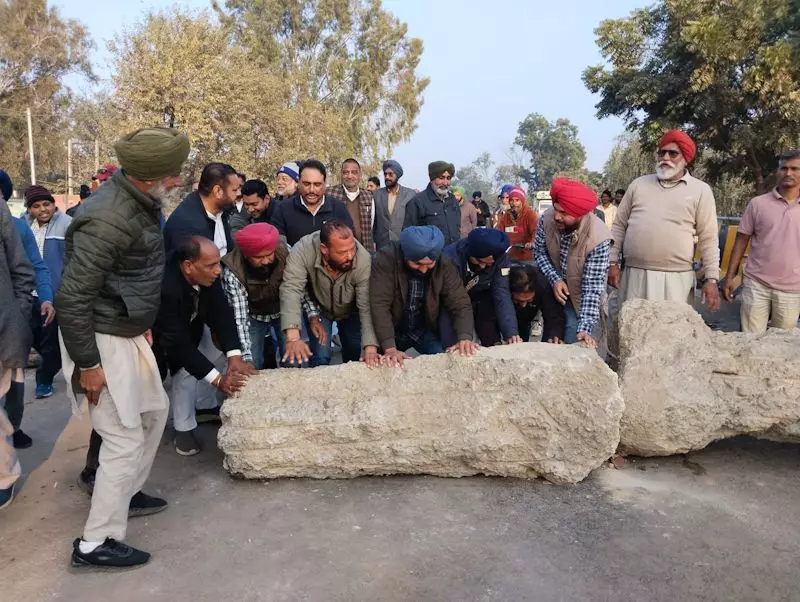
In a dramatic display of public frustration, residents of Bathinda took matters into their own hands on Thursday, forcibly removing boulders that were blocking the approach road to the much-delayed Multania railway overbridge. This citizen-led action marks a significant escalation in the ongoing protest against the authorities' failure to complete and open the crucial infrastructure project, which has been languishing for nearly four years past its deadline.
Decades of Wait Culminate in Direct Action
The genesis of the Multania railway overbridge project lies in a promise made decades ago. For over 30 years, residents of the Multania area and surrounding colonies in Bathinda have endured the inconvenience and danger of navigating a busy railway crossing. The foundation stone for the overbridge was finally laid, raising hopes for a permanent solution. However, these hopes have been repeatedly dashed. The project, initially slated for completion within two years, has now seen an inexplicable delay of approximately four years beyond that deadline. The prolonged inaction reached a boiling point this week, compelling the local populace to stage this unique protest.
Led by prominent citizen and former municipal councillor Rajinder Kumar Goyal, a group of determined locals gathered at the site. They were not carrying placards for a silent sit-in; instead, they arrived with a clear plan of action. Their target: the large boulders and debris deliberately placed by the railways to block vehicular access to the newly constructed approach roads. In a symbolic and practical act of defiance, the protesters physically removed these obstructions, clearing the path to the overbridge that stands ready but unused.

A Bridge to Nowhere: Safety and Inconvenience Ignored
The core of the residents' anger stems from severe daily hardships and safety hazards. With the overbridge non-functional, people are forced to use the old railway crossing, which is not only time-consuming but perilous. "The railway crossing is a major safety risk, especially for schoolchildren, the elderly, and during emergencies," explained Rajinder Kumar Goyal. He emphasized that the completed approach roads and the overbridge structure itself are ready, making the continued blockade by the railways utterly illogical and negligent.
The protestors highlighted that the closure forces residents to take a long, circuitous detour of several kilometers to reach the other side of the tracks for routine activities. This translates to wasted time, increased fuel costs, and daily frustration for thousands. The community's patience has been exhausted by what they perceive as bureaucratic apathy and a lack of coordination between different government departments responsible for the project's final commissioning.
Authorities' Response and The Road Ahead
Following the direct action, the protestors have issued a clear ultimatum to the district administration and the railway authorities. They have warned that if the overbridge is not opened for public use within the next 15 days, they will be forced to intensify their agitation. The ball is now firmly in the court of the officials. The Bathinda protest underscores a common issue across many Indian cities: the glaring gap between infrastructure completion and its operationalization due to administrative delays.
This incident in Bathinda is more than a local news item; it is a case study in civic activism born out of systemic failure. The residents' move to physically clear the road is a powerful message that citizens will no longer tolerate endless delays on projects that directly impact their safety and quality of life. All eyes are now on the concerned authorities to heed this call, demonstrate accountability, and finally open the Multania railway overbridge, ending a three-decade-long wait.