Election Officials in Bengal Face Voting Rights Paradox
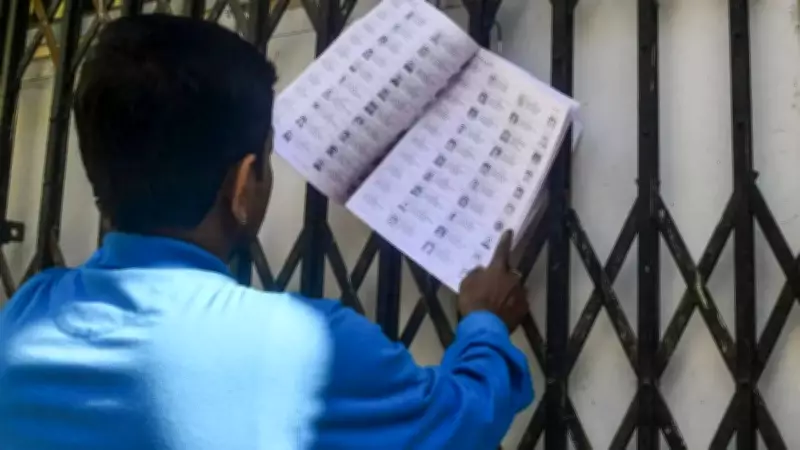
In a striking contradiction, senior executive magistrate Md Erfan Habib, aged 41, is actively engaged in election duty in West Bengal while being denied his own right to vote. As the deputy district election officer (DDEO) of Birbhum, Habib is responsible for overseeing the accuracy of the electoral roll and providing administrative guidance to electoral registration officers (EROs) on voter inclusions and deletions. Despite his critical role, the Election Commission (EC) has removed his name from the voters' list, even though his login ID, photograph, and EPIC number remain active on the EC's portal.
A Legacy of Service, Yet Disenfranchised
Habib hails from Burdwan Raina Block II, where his family has resided for generations. He has served the EC in various capacities over the years, including as a block development officer (BDO) in Old Malda, an assistant returning officer (ARO) in 2019, and an ERO for the 114 South Dum Dum Constituency in 2023-24. Following the publication of the draft summary revision (SIR) list, his name was placed in the 'logical discrepancy' category. During adjudication, he submitted extensive documentation, such as his family's 150-year-old land records, passport, and service records. However, when the supplementary list was released, his name was inexplicably deleted from the voters' list.
Habib is not alone in this predicament. Several other government employees in Bengal have lost their voting rights while being assigned election duties, creating a sense of humiliation and confusion.

Voices of Disenfranchised Officials
Jahirul Islam, a 40-year-old schoolteacher with 15 years of experience as a presiding officer, expressed deep distress over his situation. "I am crestfallen. I am running from pillar to post to get my name included. I feel dishonoured among my peers and relatives — as if I am Rohingya," he told sources. Despite his exclusion from the voter list, Islam has completed election training and remains assigned as a polling officer for the Kandi assembly constituency. Interestingly, his wife, Naina Sultana, also a teacher and polling officer, continues to be listed as a voter.
Sadekul Karim, aged 51 and a presiding officer for the Barasat assembly constituency, faces a dilemma. He is unsure whether to prioritize securing his voting right before a tribunal or focus on his election duties. His confusion is heightened by inconsistencies within his family: his daughters remain registered voters based on their mapping to him. "If a father's eligibility determines that of his children, how are my daughters voters while I am not?" he questioned.
Munsi Rezaul Karim, 47, a polling officer in Khanakul, described the situation as "surreal." During adjudication, he was assured that his name would be automatically included in the voters' list. "I don't know how to run a voting process without being a voter," he remarked.
Toibur Sekh, 36, who is set to serve as a presiding officer for the Raghunathganj assembly seat in Murshidabad, which votes on April 23, raised concerns about his eligibility. "How can I perform this duty when my eligibility is under question?" he asked. In his family, while he and his father have lost their votes, his mother continues to be an eligible voter. Sekh has contacted the EC but has yet to receive a response.
EC's Stance on Eligibility and Citizenship
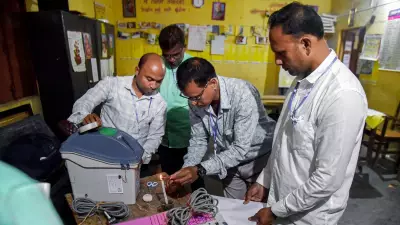
The EC requires nearly four lakh polling officials, including about a lakh presiding officers, to manage booths on election days in Bengal. When questioned whether the deletion of an officer's name during the SIR exercise affects their role, a senior EC official stated: "It will not prevent them from joining election-day duties. The law does not stipulate that a presiding or polling officer must be a registered voter."
Regarding deletions based on citizenship concerns, the official clarified that the EC is not the authority that determines citizenship. "There are other agencies to verify citizenship. Indian citizenship is only one condition for voter enrolment. Names can be deleted for multiple reasons, not just citizenship," he added.

This situation underscores broader issues in the electoral process, where officials tasked with upholding democracy find themselves disenfranchised, raising questions about fairness and administrative consistency.