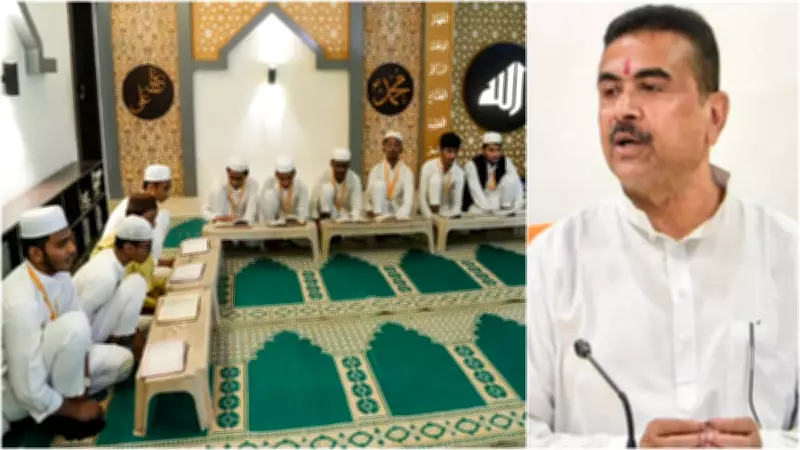
The West Bengal government, under the leadership of Suvendu Adhikari, has extended the mandatory recitation of Vande Mataram to all madrasas across the state. This decision follows the earlier implementation of the rule in schools, marking a significant step in promoting nationalistic fervor within educational institutions.
Background of the Decision
The move comes as part of the state's efforts to instill a sense of patriotism among students. Initially, the rule was applied to schools, requiring students to sing Vande Mataram at the start of the academic day. Now, madrasas, which are Islamic religious schools, are also included under this mandate. The government asserts that this will foster unity and respect for the nation among all communities.
Reactions and Controversy
The extension has sparked mixed reactions. Supporters argue that it reinforces national identity and integrates minority institutions into the mainstream. However, critics, including some Muslim leaders and opposition parties, view it as an imposition on religious freedom. They claim that Vande Mataram, while a patriotic song, has historical and religious connotations that may not align with Islamic teachings. Protests have been reported in several districts, with demands for the decision to be reconsidered.

Government's Justification
In response, the state government emphasized that the rule is not about religious symbolism but about nationalism. Officials stated that Vande Mataram is a song that unites all Indians, regardless of faith. They also pointed out that similar practices exist in other states and that the goal is to ensure that all educational institutions contribute to nation-building.
Impact on Madrasas
Madrasas in West Bengal are now required to incorporate the recitation into their daily routine. This has led to logistical challenges, as many madrasas have their own curricula and traditions. The government has assured that it will provide support for implementation, including training for teachers and provision of audio materials. However, some madrasa authorities have expressed concerns about the potential disruption to their educational environment.
The decision is seen as a test case for the broader debate on nationalism versus religious autonomy in India. As the rule takes effect, all eyes are on how madrasas and their communities will adapt to this new requirement.