

Bengaluru MLAs Unite in Demand for Decentralized Ward Funding at GBA Pre-Budget Meeting
In a significant show of cross-party consensus, legislators in Bengaluru have strongly advocated for decentralized development funding during the Greater Bengaluru Authority (GBA) pre-budget meeting held on Friday. City MLAs, cutting across political lines, collectively pushed for a substantial grant of Rs 5 crore per ward to tackle pressing civic issues that plague the metropolis.
Focus on Grassroots Infrastructure and Local Empowerment
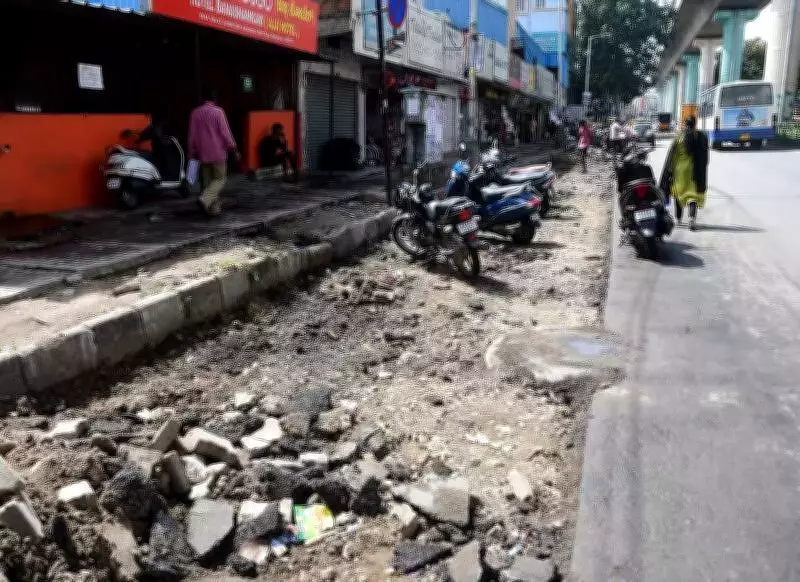
The meeting, chaired by Deputy Chief Minister and Bengaluru in-charge minister DK Shivakumar, saw legislators presenting detailed constituency-level requirements. Among the various proposals, the demand for a fixed ward-wise allocation emerged as the most prominent, reflecting widespread concerns over deteriorating roads, encroached footpaths, and inadequate civic amenities.
Jayanagar MLA CK Ramamurthy emphasized that all MLAs have jointly sought this Rs 5 crore per ward allocation, which would be in addition to existing state and corporation funds. "These dedicated funds are absolutely essential for internal development within our constituencies," Ramamurthy stated. "We want to prioritize clean and accessible footpaths, motorable ward roads, and improved civic infrastructure through targeted grassroots spending."

Shivakumar's Response and Budget Context
Responding to the legislators' unified demand, Deputy Chief Minister DK Shivakumar acknowledged their requests. "MLAs have submitted their proposals and have urged that grants be provided on a ward-by-ward basis," Shivakumar said. "We will examine how much can be realistically allocated within our budgetary constraints."
This demand comes at a crucial juncture in Bengaluru's civic administration restructuring. Following the division of the Bruhat Bengaluru Mahanagara Palike (BBMP) into five separate city corporations under the GBA umbrella, each entity is now preparing to present its own independent budget for the 2026-27 financial year.
Massive Budget Scale and Administrative Transition
Sources within GBA have indicated that the combined outlay for all five corporations is expected to reach approximately Rs 20,000 crore. Each corporation is likely to have a budget ranging between Rs 3,000 crore and Rs 5,000 crore, representing a significant scale of spending in the first financial year following the administrative restructuring.
For comparison, the erstwhile BBMP had an outlay exceeding Rs 19,000 crore for FY 2025–26. However, after the GBA's establishment in August 2025, funds and revenues were distributed among the five newly formed corporations, which are now poised to present independent budgets.
Maheshwar Rao, Chief Commissioner of GBA, explained the transition: "Unlike the previous year, each corporation will now have its own full-fledged budget. In 2025-26, the overall budget was shared with all corporations by allocating funds for various works between September 2025 and March 2026."
Timeline and Implementation Considerations
Officials added that while the exact date for budget presentation hasn't been formally announced, it is likely to be tabled within the coming week, before the end of March. "This timeline is being considered to ensure sufficient time for approvals before the start of the new financial year," an official noted.
Broader Civic Priorities and Systemic Challenges
The pre-budget meeting also highlighted broader civic priorities beyond ward-level funding. These include:
- Improving road conditions across the city
- Strengthening pedestrian infrastructure and walkability
- Ensuring better utilization of funds at the ward level
- Addressing bureaucratic bottlenecks that delay critical works
MLAs pointed out that in the absence of dedicated allocations, smaller but essential projects often face significant delays due to both bureaucratic hurdles and funding constraints. The push for ward-level grants is being viewed as a strategic effort to empower local representatives to directly address constituency-specific issues, particularly in rapidly expanding urban areas where infrastructure demands are most acute.

This development marks a pivotal moment in Bengaluru's urban governance, as the city transitions to a more decentralized administrative model while grappling with the challenges of rapid urbanization and infrastructure maintenance.





