Fresh Controversy Erupts Over Media Access at Bengaluru's Vidhana Soudha
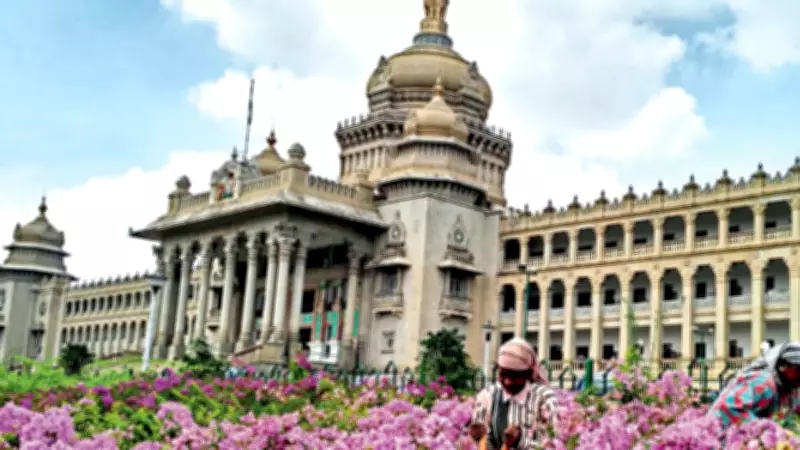
A new dispute has flared up at Vidhana Soudha in Bengaluru, following a directive from the Department of Personnel and Administrative Reforms (DPAR) aimed at controlling the movement of media personnel within the legislature complex. This development has ignited a heated debate over press freedom and security protocols.
DPAR's Directive to Regulate Journalist Movement
In a communication dated January 9, 2026, DPAR wrote to the Department of Information and Public Relations (DIPR), outlining strict measures to manage media activities. The letter mandates that journalists be confined to a designated area at the portico near the West Gate, commonly known as the Kengal Gate, for obtaining reactions from political leaders.
Citing security concerns, the directive specifies that only authorized media personnel with ID cards issued by DIPR will be permitted at this spot. It further instructs that interactions with key figures, including the chief minister, deputy chief minister, ministers, and legislators, should occur exclusively as they enter through the gate. Media persons are explicitly prohibited from following leaders to other parts of the building or premises for additional comments.

Opposition Leader Slams Move as Attack on Press Freedom
The move has drawn sharp criticism from Chalavadi Narayana Swamy, the leader of the opposition in the Legislative Council. He condemned the directive, labeling it an attempt to curb press freedom and stifle journalistic access. Swamy alleged that recent security lapses, such as a reported gold theft incident, are being exploited as a pretext to impose restrictive measures.
He expressed strong disapproval, stating that the decision evokes memories of the Emergency era, a period marked by severe restrictions on civil liberties in India. Swamy emphasized the importance of a free press in a democratic society and warned against any actions that could undermine transparency and accountability.
Government Sources Defend Directive as Congestion Solution
In response to the backlash, sources within the state government have clarified the intent behind the directive. They explained that the primary goal is to regulate the electronic media crowd, which often blocks entrances and causes significant congestion within the legislature complex. By confining media activities to a specific area, authorities aim to ease traffic flow and enhance overall security.
The sources added that the order is not intended to suppress press freedom but to create a more organized environment. They also indicated that the directive will be reconsidered and potentially adjusted based on feedback and practical implementation challenges. This reassessment aims to balance security needs with the media's role in covering legislative proceedings effectively.
Broader Implications for Media and Governance
This controversy highlights ongoing tensions between media access and security management in government spaces. As Bengaluru's Vidhana Soudha serves as a critical hub for state politics, the outcome of this dispute could set precedents for how media interactions are handled in similar institutions across India.
Stakeholders, including journalists, political leaders, and civil society groups, are closely monitoring the situation. The debate underscores the need for clear, fair policies that safeguard both press freedom and operational efficiency in public buildings.