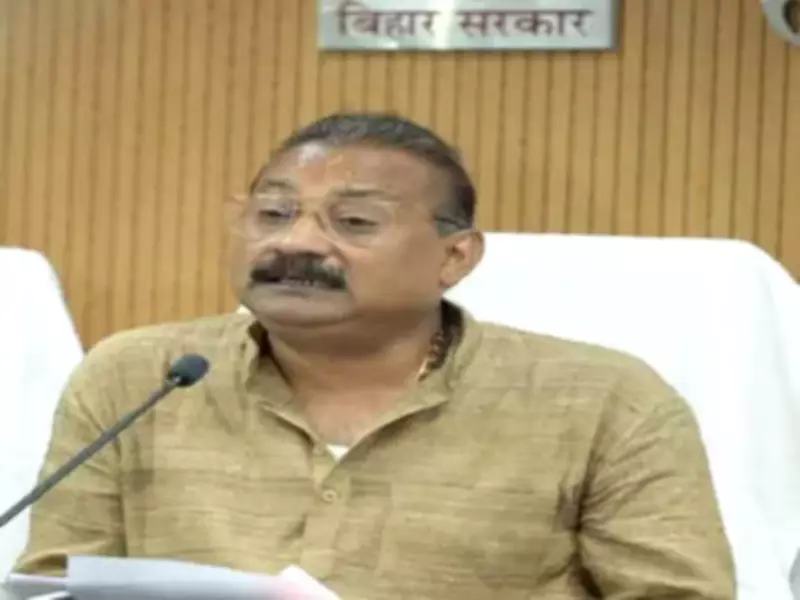
Patna: In a significant announcement highlighting two decades of infrastructure development, Rural Works Department Minister Ashok Choudhary informed the Bihar Legislative Assembly on Wednesday that the state has constructed an impressive 1.19 lakh kilometers of rural roads and 2,884 bridges over the past 20 years. This massive undertaking has been instrumental in boosting the rural economy and improving connectivity across the state.
The Nitish Kumar Model of Rural Development
Minister Choudhary described this achievement as the "Nitish Kumar model of rural development through expanded road infrastructure." He provided a stark comparison, noting that when Chief Minister Nitish Kumar first assumed office in November 2005, Bihar had only 8,000 kilometers of roads. The transformation represents a fifteen-fold increase in rural road infrastructure, fundamentally changing transportation and economic opportunities in previously isolated regions.
Current Construction Projects and Future Targets
At present, construction work is actively underway on 7,113 kilometers of roads throughout the state, demonstrating continued momentum in infrastructure development. Looking ahead to the 2026-27 fiscal year, the government has set ambitious targets that include the construction of 3,000 kilometers of new rural roads, 300 kilometers under the Pradhan Mantri Gram Sadak Yojana (PMGSY), and 300 additional bridges.

The minister emphasized that the focus will remain on "further strengthening and expansion of the rural roads" in the coming years. Under the Saat Nishchay-3 initiative, select rural roads will be widened to 5.5 meters to accommodate increased traffic and improve safety.
Budgetary Approval and Legislative Proceedings
Choudhary was responding to the House debate on the department's budgetary demand of Rs 11,312 crore for the 2026-27 fiscal year. While Rashtriya Janata Dal member Rahul Kumar moved a cut motion, the budget was ultimately passed by voice vote after opposition members, with the exception of those from the All India Majlis-e-Ittehadul Muslimeen (AIMIM), staged a walkout from the assembly.
Prioritizing Connectivity to Smaller Habitations
Responding to demands for improved connectivity to smaller and more remote settlements, Minister Choudhary outlined the government's phased approach. "First the government had started giving road connectivity to villages with a population of 500. Then, the Chief Minister decided to extend the same to tolas with 250 population, and now the plan has focused on covering all the tolas inhabited by extremely backward caste and Dalit groups," he explained.
This progressive strategy ensures that priority is being given to providing all-weather roads and bridges to increasingly smaller habitations, with special attention to marginalized communities that have historically lacked adequate infrastructure.
Bridge Construction and Maintenance Initiatives
The infrastructure development extends beyond roads to critical bridge construction. Under the Chief Minister Setu Yojana, sanction has been granted for 909 bridges, with agreements already signed for 660 of these projects. For the maintenance of existing infrastructure, the government has allocated Rs 2,000 crore specifically for the upkeep of old bridges during the 2026-27 fiscal period.
This comprehensive approach to rural infrastructure—encompassing new construction, strategic widening, and systematic maintenance—represents a sustained commitment to transforming Bihar's rural landscape and creating lasting economic opportunities through improved connectivity.