Bihar's Dry Law Sparks Political Turmoil as Allies Demand Review
In a significant political development, Bihar Chief Minister Nitish Kumar is confronting intense pressure from his National Democratic Alliance (NDA) partners to reassess the state's stringent total prohibition law, enacted a decade ago. This call for review emerges merely three months after the NDA government secured a historic mandate in the state, highlighting internal discord over a policy that has rendered Bihar dry but entangled over 8 lakh individuals in legal proceedings.
Allies Voice Concerns Over Revenue and Enforcement
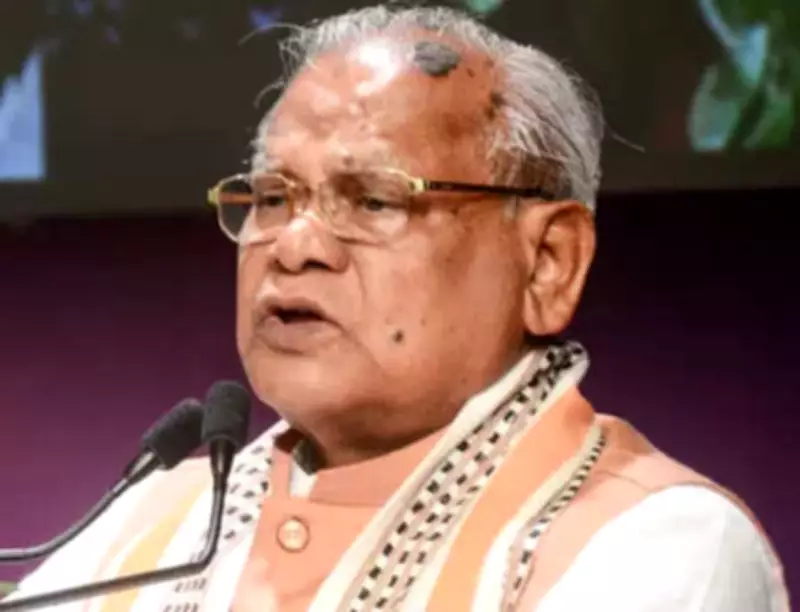
The debate gained momentum on Wednesday when Hindustani Awam Morcha (Secular) founder and Union Minister Jitan Ram Manjhi publicly advocated for a review. Manjhi asserted that the prohibition policy has inflicted substantial financial losses on the Bihar government and disproportionately targeted deprived communities. "Prohibition is causing significant financial losses to the Bihar government, and Nitish Kumar should address this," Manjhi stated during a press interaction in Gaya.
He further criticized the enforcement, alleging that the ban is ineffective, with home delivery of liquor becoming rampant. "Sharabbandi to ho nahi rahi hai... home delivery ho raha hai," he remarked, pointing to systemic flaws. Manjhi highlighted that out of the more than 8 lakh pending prohibition-related cases in courts, 3.5 to 4 lakh involve individuals from marginalized sections, underscoring the policy's skewed impact.

Health Risks and Implementation Flaws Cited
Manjhi raised alarming health concerns, noting that spurious liquor, often available at cheap rates, is flooding Bihar and endangering the poor. "But what is more alarming, it is mainly the spurious liquor which is reaching Bihar and killing the poor since they are available at a cheap rate," he alleged. He warned that such illicit alcohol shortens lifespans and increases susceptibility to diseases, arguing that while the prohibition intent is not wrong, its execution is flawed.
"Prohibition should be implemented. However, there are flaws in its implementation. That is why we were repeatedly telling Nitish about its review," Manjhi emphasized. He accused enforcement officers of unfairly targeting impoverished individuals while allowing large-scale smugglers to evade justice through bribes.
RLM Joins the Fray with Similar Demands
A day prior to Manjhi's comments, the Rashtriya Lok Morcha (RLM), led by Rajya Sabha member Upendra Kushwaha, echoed the call for review in the legislative assembly. Party legislator Madhav Anand pressed for a detailed assessment, though the government promptly rejected the proposal. Anand contended that despite the law's passage, liquor remains accessible via home delivery, and the state has suffered considerable revenue losses. He raised these issues directly in the presence of Chief Minister Nitish Kumar, amplifying the political pressure.
JD(U) Defends Prohibition, Dismisses Review as "Ridiculous"
In response, the Janata Dal (United) [JD(U)] staunchly defended the prohibition law, labeling the review demand as "ridiculous." Party spokesperson Neeraj Kumar recalled that the legislation was enacted following a broad consensus among all political parties, with pledges made on the floor of the House. "First, all parties reached a consensus and then they took a pledge on the floor of the House. So, review for what?" he questioned.
Kumar argued that public confidence has strengthened post-prohibition, with women in particular driving new chapters of development. This defense underscores the deep ideological divide within the NDA coalition, pitting social welfare claims against economic and enforcement critiques.
Broader Implications for Bihar's Governance
The escalating debate over Bihar's prohibition law not only tests Nitish Kumar's leadership but also exposes fissures within the ruling alliance. Key points of contention include:

- Revenue losses estimated in the wake of the dry law.
- Enforcement challenges leading to widespread illicit trade.
- Disproportionate legal burdens on economically weaker sections.
- Health risks from unregulated, spurious liquor consumption.
As allies intensify their push for a policy reassessment, the outcome could reshape Bihar's socio-political landscape, balancing prohibition's intended social benefits against practical governance and economic realities.