

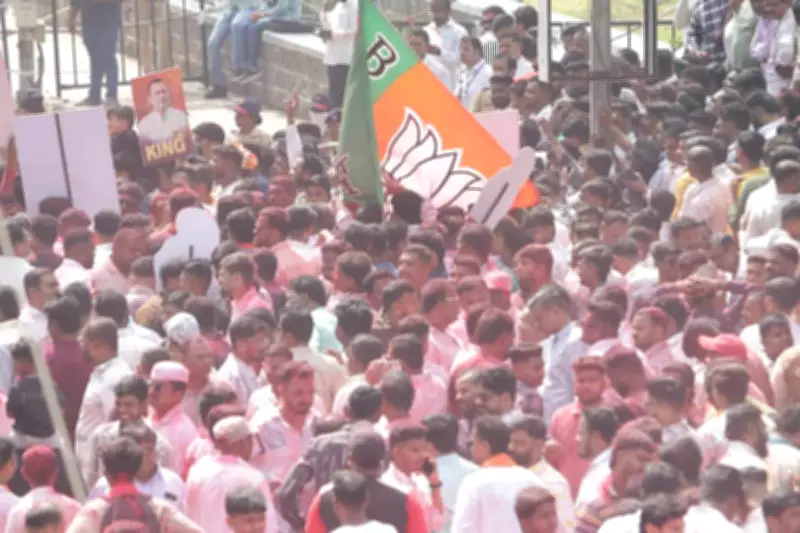
BJP Expands Rural Dominance in Maharashtra as NCP Alliance Yields Results in Western Belt
The Bharatiya Janata Party (BJP) has solidified its position as the leading political force in Maharashtra, according to the recent Zilla Parishad election results. The party secured a significant victory, winning 225 out of 731 seats across 12 districts, reinforcing its growing influence in rural areas traditionally dominated by the Nationalist Congress Party (NCP) and Congress.
NCP Alliance Strategy Vindicates Ajit Pawar's Vision
The election outcomes also underscore the success of the alliance between the two factions of the NCP—led by Deputy Chief Minister Sunetra Pawar and Sharad Pawar. Contesting on a common symbol in many districts, the NCP won 165 seats, with the NCP(SP) securing an additional 43 seats. This performance appears to validate the late former Deputy Chief Minister Ajit Pawar's advocacy for coordination between the groups, arguing that a split in votes was diminishing their political space.
Ajit Pawar, who passed away late last month, had pushed for both the alliance and a potential merger, a strategy that now seems prescient given the results in western Maharashtra, a long-standing NCP stronghold.

Detailed Breakdown of Election Results
According to the State Election Commission (SEC), the BJP emerged as the largest party in Zilla Parishads in Chhatrapati Sambhajinagar, Solapur, Parbhani, Sindhudurg, Satara, and Dharashiv. Meanwhile, the Shiv Sena, led by Deputy Chief Minister Eknath Shinde, won Raigad and Ratnagiri, and the NCP secured Pune and Kolhapur.
In comparison to the 2017 Zilla Parishad elections, the BJP has shown substantial growth, increasing its seat count from 141 to 225. The NCP, then undivided, won 217 seats in 2017, but the current alliance's combined tally of 208 seats (including NCP and NCP(SP)) indicates a strategic consolidation.
Other parties fared less favorably, with the Congress winning only 55 seats and the Shiv Sena (UBT) securing 43 seats, marking a setback for the Maha Vikas Aghadi (MVA) coalition.
Factors Behind NCP's Success in Western Maharashtra
The decision for the two NCP factions to contest together or coordinate seat-sharing in districts like Pune, Kolhapur, Sangli, and Satara proved crucial. In Pune, the NCP achieved an absolute majority in the 73-member Zilla Parishad, winning over 40 seats by using the common "Clock" symbol, which helped consolidate votes.
This approach was replicated in Kolhapur, where the NCP became the single largest party with 20 seats, and in Sangli, where the NCP(SP) emerged as the largest party with 19 seats. These results highlight how Ajit Pawar's strategy of alliance and common symbols strengthened the party's position in its traditional bastions.
BJP's Organizational Strength and Development Focus
For the BJP, the results reflect robust organizational capabilities and a focused campaign on development issues. Chief Minister Devendra Fadnavis emphasized progress in villages, towns, and cities, moving away from polarizing slogans used in previous elections. Despite canceling 30 rallies following Ajit Pawar's death, the party maintained intensive groundwork through door-to-door campaigns and district tours led by state chief Ravindra Chavan.
BJP Minister Chandrashekhar Bawankule cited former Prime Minister Atal Bihari Vajpayee's words, noting that BJP workers "either win or learn," underscoring the party's resilient cadre system from the booth to state level.
Implications for Maharashtra's Political Landscape
The Zilla Parishad results signal a shifting political dynamic in Maharashtra, with the BJP expanding its rural footprint and the NCP alliance demonstrating effective coordination. The outcomes may influence future merger talks between the NCP factions and reshape alliances ahead of upcoming elections.
As the BJP celebrates its dominance and the NCP reflects on a revived performance, these local body polls offer key insights into voter sentiments and party strategies in one of India's most politically significant states.






