

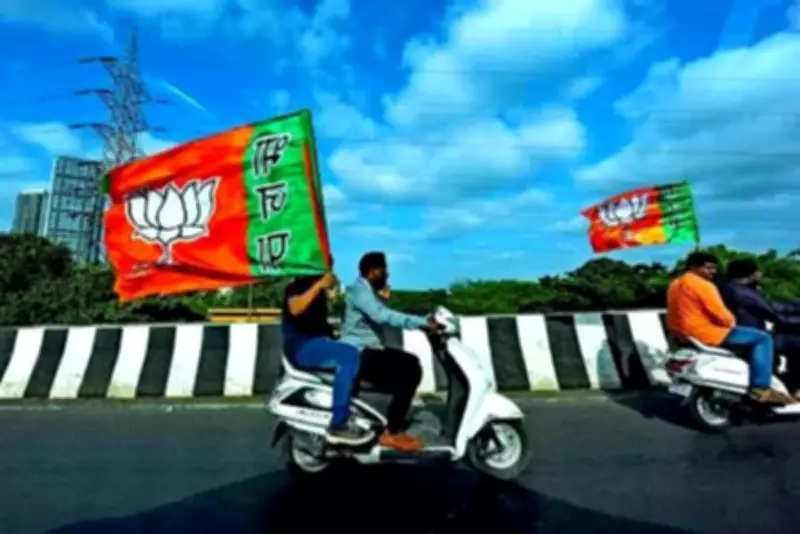
BJP Commissions Private Agency for Comprehensive Ground Survey Ahead of UP Assembly Elections
The Bharatiya Janata Party (BJP) has reportedly initiated early preparations for the upcoming Uttar Pradesh assembly elections scheduled for next year. According to sources, the party's central leadership has engaged a private agency to conduct an extensive ground-level survey. This strategic move aims to gather detailed feedback about the political landscape, evaluate the performance of sitting MLAs, and identify potential alternative candidates.
Composition and Methodology of the Survey Agency
The hired agency comprises a team of professional surveyors and interning academic scholars from prestigious educational institutions, including the Indian Institutes of Technology (IITs) and top colleges in Delhi and Bengaluru. These individuals will work in coordination with BJP's organizational functionaries and party veterans. Their primary task involves meeting locals, particularly the influential class, to derive insights into the prevailing poll scenario and assess the effectiveness of BJP legislators.
Additionally, the surveyors may consult with local Rashtriya Swayamsevak Sangh (RSS) functionaries to incorporate their inputs, ensuring a holistic view of the political dynamics. A senior BJP functionary emphasized that this survey has been commissioned directly by the party's central leadership, making it a crucial and independent exercise separate from the feedback collected by the state unit.

Historical Context and Strategic Importance
Engaging private survey organizations has been a common practice for the BJP since 2014, when the party emerged as a political behemoth under the leadership of Prime Minister Narendra Modi. This data-driven approach to electoral management has played a pivotal role in the party's past successes, including the 2022 Uttar Pradesh elections. During that election cycle, the BJP denied tickets to as many as 120 sitting MLAs who were either retired, denied tickets, or saw their seats adjusted based on survey findings.
The senior functionary highlighted that the current survey will specifically assess any anti-incumbency sentiments against sitting MLAs. Sources indicate that the BJP may engage an additional agency to obtain another independent perspective before finalizing ticket distribution decisions, underscoring the party's meticulous and layered strategy.
Analytical Perspectives and Expert Opinions
Political analysts note that the decision to hire a private survey agency well ahead of the Uttar Pradesh elections underscores the BJP's early and systematic approach to electoral management. Professor SK Pandey of the political science department at Babasaheb Bhimrao Ambedkar University commented, "Election is now more about management than just a contest. Parties like BJP often seek to assess public sentiments through agencies which have a proven credibility."
This time, the number of ticket denials or adjustments could be significant, especially as the BJP faces a belligerent opposition alliance comprising the Samajwadi Party and its ally Congress. This alliance successfully leveraged the PDA (Pichhda, Dalit, Alpsankhyak) narrative during the 2024 Lok Sabha polls, reducing the BJP's tally in Uttar Pradesh from 62 to 33 seats.
Multi-Layered Approach and Future Steps
BJP sources revealed that following the private agency's survey, the party plans to depute ‘Vistaraks'—independent organizational functionaries—to conduct separate surveys of various constituencies. Their reports will be submitted directly to the state leadership. Experts suggest that this layered approach reflects the BJP's bid to avoid blind spots, particularly in politically sensitive or marginal constituencies.
Sources further indicated that, consistent with past trends, the BJP will prioritize the ‘winnability' factor over incumbency and loyalty when effecting a large-scale churn of candidates. This strategy will be especially focused on constituencies showing signs of anti-incumbency or social realignment, ensuring the party fields the most viable candidates to secure electoral victory.






