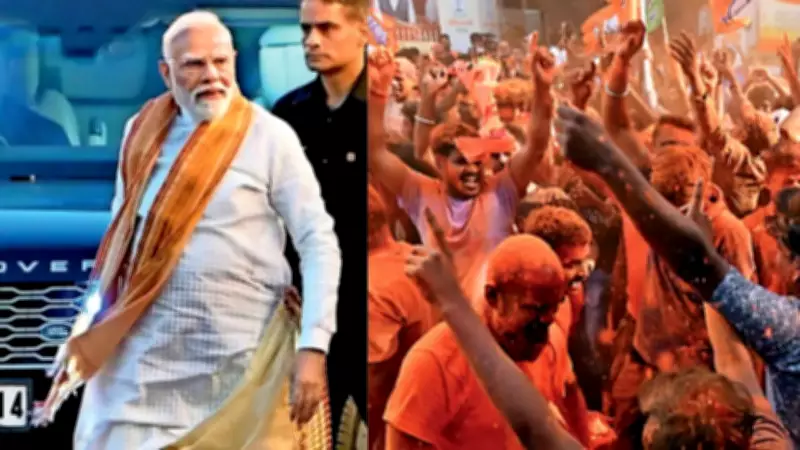
Kolkata: Bengal's voters have decided to hand over the reins of governance to the BJP, effecting a seismic change in state politics whose aftershocks will be felt far beyond the state's borders. The Trinamool Congress fortress crumbled under the twin onslaught of strong anti-incumbency sentiment and a voter roll reduced by nearly 12% through the SIR process, giving the BJP a historic win in a state often described as the last frontier for a party in power at the Centre since 2014.
BJP's Landslide Victory
The BJP won 202 seats and was leading in four more, securing 45.8% of the votes polled. Trinamool's vote share slipped from 48% in 2021 to 40.8%, indicating a shift away from a party that championed Bengal nativism over nationalist politics. Its 225 seats in the outgoing assembly were whittled down to a two-figure number (81 leads and wins). Some Trinamool strongholds, like South 24 Parganas, East Burdwan, and Howrah, staunched the vote haemorrhage, but the BJP more than compensated by winning a majority of seats in large swathes from north to south. BJP's dominance in the north was near-total, nearly blanking out Trinamool until North Dinajpur. Several southern districts—Jhargram, Purulia, East Midnapore—blanked out Trinamool entirely. The highest margin for BJP came in Matigara-Naxalbari (1.4 lakh votes), reinforcing the anti-incumbency message.
Urban and Suburban Shift
What hurt Trinamool most was the backing the saffron party received from a large section of urban and suburban voters in Kolkata and its fringes, from seats in South 24 Parganas skirting Kolkata to the old-industry belts in Howrah and North 24 Parganas. Trinamool saw its southern fortress crumble, losing 10 seats in Kolkata (including Rashbehari, Jadavpur, Shyampukur, Jorasanko, Maniktala), a large swathe of North 24 Parganas (Barrackpore, Bidhannagar, Dum Dum, and Panihati, where the raped and murdered RG Kar junior doctor's mother was the BJP candidate), and Howrah (a notable BJP win was Rudranil Ghosh's). In 2021, Trinamool held 123 of the 142 seats in Kolkata, North and South 24 Parganas, Nadia, Howrah, Hooghly, and East Burdwan; this time, it won only 48. This belt made the difference between victory and defeat for both parties.

Multi-Colour Assembly
Congress and Left Front returned to the assembly after a five-year gap. Congress won two seats (both in Malda), the LF won one (in Murshidabad), and ISF retained Bhangar. This gives the new assembly a multi-colour hue rather than the two-coloured assembly of 2021.
Factors Behind the Swing
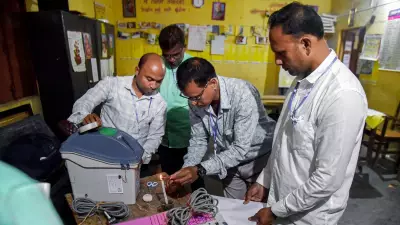
Several factors swung the vote for BJP and away from Trinamool. The two most important were distinct anti-incumbency sentiment among a large section of the electorate and the SIR process, which knocked out over 91 lakh voters. Logical discrepancy alone deleted 60 lakh voters from the roll, many of whom could only watch their friends, neighbours, and even families voting. While it cannot be said with certainty what the result would have been had these voters not been excluded, anecdotal evidence and exclusion figures suggest that a majority of those left out were women and minority community voters, sections more receptive to Didi's message. This exclusionary process was compounded by anti-incumbency sentiment that cut across urban and rural booths, as incidents like the RG Kar rape-murder scarred Bengal's voter-scape. PM Modi's repeated pleas for paribartan also swayed a large section of voters.

BJP's Promises
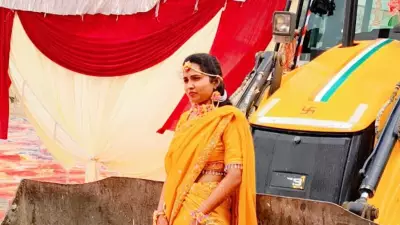
BJP promised many things to many sections. Enhanced handouts were promised for the class that gained most from Banerjee's social-welfare schemes, such as doubling the Lakshmir Bhandar dole from Rs 1,500 to Rs 3,000 (renamed Annapurna Bhandar). Female voter turnout was 93.2%, higher than the average of 92.9%, but this bloc was more evenly split this time. Promises of factories and jobs returning to Bengal were made for those who felt they had not gained from 15 years of Trinamool rule. For the average Hindu voter across language barriers, there was the stated promise of a Bengal not overrun by Bangladeshi (Muslim) immigrants. For the average Hindu voter whose mother tongue was not Bengali, there was the unstated promise of Bengal being governed like Uttar Pradesh and Bihar, where rule of law would be enforced by bulldozer if normal processes could not deliver justice. The use of the bulldozer as a prop in some campaigns was not accidental.
Trinamool's Decline
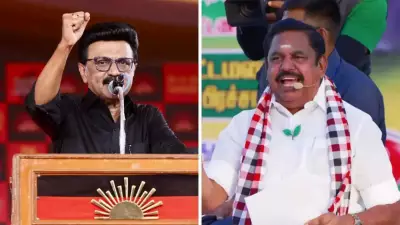
This cocktail—something for all sub-groups except Muslims—proved too heady for Trinamool to counter. Till 2021, most voters bought the argument that Didi was different from her party. Five more years in office frayed that argument; many sought succour from the top when throttled by the bottom rung of Trinamool in their neighbourhoods. Unfortunately for voters and Trinamool, that succour often did not come, prompting many to turn away from the party they had credited for booting out the Left Front 15 years ago. Many voters felt a huge gulf between what Didi stood for (a soft, socialistic administrative approach manifested in welfare schemes) and what her party cadre did on the ground.
BJP's Resolve
All this was boosted by BJP's new-found resolve to fight. PM Modi remained BJP's vote-catcher, and the presence of central-force boots on the ground gave courage to anti-incumbency voters. But one incident in March—before the EC announced the poll schedule—showed which way the wind was blowing. Sashi Panja, a senior minister, had to barricade herself inside her Central Avenue home as BJP supporters showered brick and stone chips. That afternoon fracas indicated a paribartan when very few, even among state BJP seniors, were predicting a change. PM Modi's first chun-chun ke hisab liya jayega speech, delivered a few days later, bolstered BJP workers and anti-incumbency voters to deliver a knockout punch to Trinamool.