BJP Sets Sights on Over 30 Seats in Tamil Nadu Assembly Elections
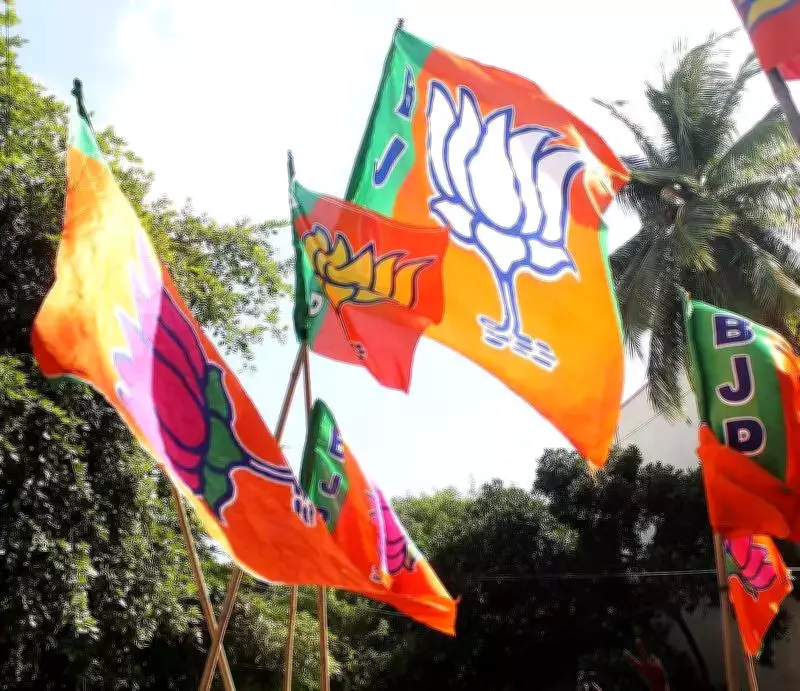
In a significant political development, the Bharatiya Janata Party (BJP) is actively preparing to contest approximately 30 seats or more in the upcoming Tamil Nadu assembly elections. This target notably exceeds the 28 seats allocated to its rival, the Congress party, within the DMK-led alliance. The strategic move aims to bolster the BJP's presence in the southern state and counter potential perceptions of weakness compared to its national opposition.
Strategic Meeting Focuses on Linguistic Minorities and Poll Preparedness
The party's election strategy was thoroughly discussed during a high-level consultation meeting held at Ayyavu Mahal in Aminjikarai, Chennai. The session was chaired by BJP national general secretary (organisation) B L Santhosh and attended by around 150 leaders from Tamil Nadu, Kerala, Telangana, and Karnataka. Participants included election in-charges and members of the management committee, highlighting the importance of the gathering.
Sources revealed that party leaders responsible for the election manifesto were specifically instructed to concentrate on attracting votes from linguistic minorities across the state. Particular emphasis was placed on the Telugu-speaking population, indicating a targeted outreach effort to expand the BJP's voter base beyond traditional demographics.
Timeline and Alliance Dynamics Under Scrutiny
During the meeting, Santhosh directed leaders to focus exclusively on election-related work until April 15, noting that polls in Tamil Nadu could be announced within approximately 45 days. This timeline aligns with indications previously given by Union Minister Piyush Goyal, the party's state election in-charge, during his recent visit to the region.
Several leaders at the consultation advocated for the BJP to contest at least 30 seats within the alliance framework. They argued that contesting fewer seats than the Congress, which has been allotted 28 seats in the DMK alliance, could create an adverse public perception for the BJP, especially given its position as the ruling party at the Centre.
Clarifications on Alliance Leadership and Seat-Sharing
Addressing recent remarks by AIADMK general secretary Edappadi K Palaniswami, who stated that his party would form the government independently, Santhosh clarified that the alliance remains part of the National Democratic Alliance (NDA) framework. He advised state leaders to refrain from commenting on leadership roles or the nature of a potential coalition government, emphasizing that such decisions would be handled by the national leadership.
Following the meeting, BJP state president Nainar Nagenthran told reporters that discussions on seat-sharing have not been finalized. In a separate address at an RSS event, Nagenthran reflected on his political journey, mentioning his previous affiliation with the AIADMK and admiration for MGR, before embracing the ideological work of the RSS after training as a swayamsevak.
Constituency-Specific Strategies and Organizational Review
The leadership also conducted a detailed review of constituency-specific strategies, particularly in areas where the BJP has established a stronger organizational presence. This focused approach aims to maximize electoral gains in regions with existing party infrastructure while simultaneously expanding into new territories through targeted minority outreach.
The BJP's concerted efforts to secure a substantial number of seats and appeal to linguistic minorities underscore its determination to make significant inroads in Tamil Nadu's political landscape. As election preparations intensify, the party's ability to negotiate favorable seat-sharing terms and effectively implement its outreach strategy will be crucial in determining its performance in the upcoming assembly polls.