

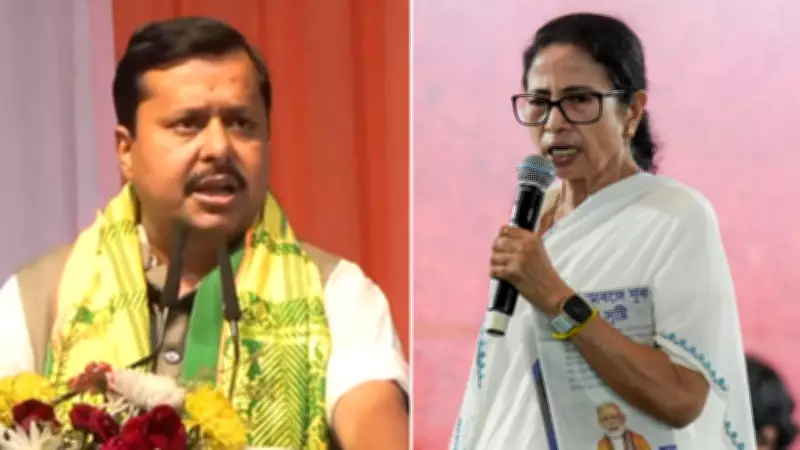
Political Tensions Escalate in West Bengal Ahead of Assembly Elections
The political atmosphere in West Bengal has intensified significantly as the state assembly elections draw closer, with the Bharatiya Janata Party (BJP) and the Trinamool Congress (TMC) engaging in a sharp exchange of accusations and counter-accusations. On Wednesday, both parties traded barbs, highlighting deep-seated conflicts over religious permissions, voter rights, and regional identity.
BJP Accuses Government of Religious Discrimination
Newly appointed BJP chief Nitin Nabin launched a scathing attack on the Mamata Banerjee-led government, alleging double standards in the treatment of religious activities. Speaking after offering prayers at the historic Dakshineswar Kali Temple in North 24 Parganas, Nabin claimed that Hindus are forced to seek permission from the high court to set up puja pandals, while Muslims are allowed to offer namaz without similar hurdles.
"This is unfortunate," Nabin told reporters, emphasizing the disparity. "I received blessings here in Maa's darbar. I also prayed before Maa Kali because in this state, one has to seek permission from the high court to set up puja pandal while permission is given for offering namaz." He further stated that the BJP seeks divine blessings to transform West Bengal into a 'Sonar Bangla' and a developed state.

Nitin Nabin's visit to the Dakshineswar Kali Temple marked the second day of his organizational tour in West Bengal, aimed at reviewing the BJP's preparedness for the upcoming elections. His comments have added fuel to the ongoing debate over religious freedom and governance in the state.
Mamata Banerjee Hits Back with Strong Allegations
In response, Chief Minister Mamata Banerjee, addressing a rally in Maynaguri, North Bengal, launched a counter-offensive by labeling the BJP as an "anti-Bengali" party. She accused the BJP of beating up Bengalis in other states and raised serious concerns about the integrity of the electoral process.
"There are serious concerns that genuine voters’ names have been deleted from the electoral rolls," Mamata asserted. "This raises questions about the fairness and transparency of the election process. At the same time, questions are being raised about identity and citizenship, who is being recognised as a legitimate Indian voter and on what basis?"
She warned that the BJP's actions could lead to broader issues, stating, "Today they are snatching voting rights, tomorrow they will snatch citizenship through NRC." Additionally, Mamata advised TMC candidates to take lawyers with them when filing nominations, citing instances of nominations being cancelled in Assam, as reported by PTI.
Broader Implications for West Bengal Politics
The heated exchanges between the BJP and TMC underscore the high stakes involved in the upcoming assembly elections. Key issues at the forefront include:
- Religious Permissions: Allegations of bias in granting permissions for Hindu and Muslim religious activities.
- Voter Rights: Concerns over deletions from electoral rolls and the transparency of the election process.
- Regional Identity: Accusations of the BJP being anti-Bengali and threats to citizenship through mechanisms like the NRC.
- Election Preparedness: Both parties are actively campaigning and reviewing strategies, with the BJP focusing on organizational tours and the TMC rallying support in key regions.
As the political battlefield becomes increasingly charged, these developments are likely to shape voter sentiment and influence the outcome of the elections. The BJP's push for a 'Viksit Bengal' and the TMC's defense of Bengali identity and voter rights are set to be central themes in the coming weeks.
The ongoing conflict between the two major political forces in West Bengal highlights the deep divisions and competitive nature of state politics, with both sides leveraging emotive issues to galvanize their support bases ahead of the crucial polls.






