

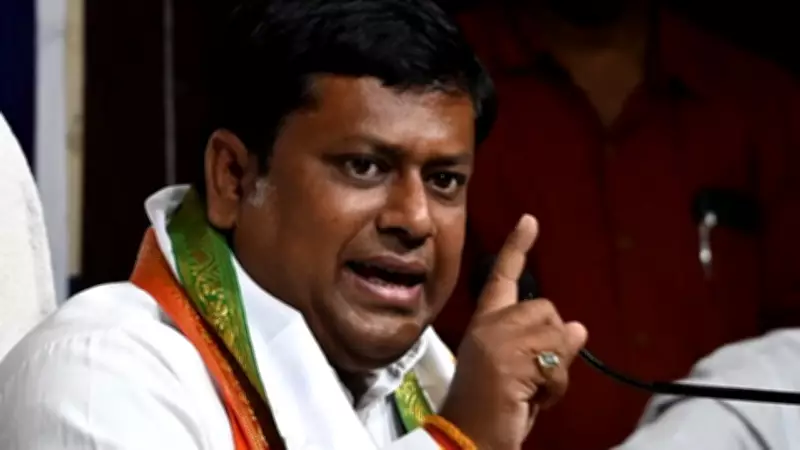
BJP Leader Sukanta Majumdar Raises Alarm Over Demographic Changes in West Bengal
Union minister and former West Bengal BJP president Sukanta Majumdar has issued a stark warning about the political future of the state, asserting that under the Trinamool Congress (TMC) rule, rapid demographic shifts could potentially render Hindus a minority in several districts. Speaking to the media on Monday, Majumdar emphasized that this development would make it very difficult for Hindu candidates to secure electoral victories in the coming years.
Recalibrating BJP Strategy After 2021 Election Setback
Majumdar revealed that the Bharatiya Janata Party has undertaken a comprehensive recalibration of its political strategy following its inability to form the government in the 2021 assembly elections. The party is now concentrating on three primary fronts:
- Strengthening booth-level organization across the state
- Promoting a more Bengal-centric narrative that resonates with local sentiments
- Revising electoral rolls through the Special Intensive Revision (SIR) process
The minister believes these strategic adjustments could significantly alter the electoral arithmetic in West Bengal, particularly as the state approaches what he describes as a demographic turning point in the 2026 assembly polls.

Demographic Projections and Political Implications
Majumdar pointed to Chief Minister Mamata Banerjee's own acknowledgment that Muslims constitute approximately 33 percent of West Bengal's population. This percentage could potentially increase to 33-35 percent within the next five years, according to his assessment. He warned that beyond this threshold, electoral victories for Hindu candidates would become increasingly challenging.
The BJP leader further predicted that the TMC would be compelled to allocate more tickets to Muslim candidates instead of Hindus due to these demographic changes. You can already hear demands for a Muslim deputy chief minister, Majumdar noted, suggesting that such demands would likely be fulfilled in the future, potentially paving the way for a Muslim chief minister in West Bengal.
Historical Parallels and Border District Concerns
Drawing historical parallels, Majumdar referenced communal violence during Partition and the Great Calcutta Killing when the Muslim League held power. He alleged that demographic transformations in border districts are fundamentally reshaping West Bengal's political landscape, creating substantial challenges for the BJP if the Muslim community votes overwhelmingly against the party.
Majumdar also expressed concerns about growing fundamentalist influences, particularly along the Bangladesh border. A large portion of West Bengal is already under the influence of criminals, fundamentalists and fanatics, he claimed, adding that the BJP would implement necessary measures against unrecognized madrassas allegedly involved in communal activities if elected to power.
Beyond Identity Politics: Governance and Development Challenges
The Union minister emphasized that the upcoming election extends beyond identity politics to encompass critical issues of governance and development. He highlighted what he described as West Bengal's economic stagnation, noting that Gujarat receives approximately 17 percent of India's foreign direct investment, while West Bengal attracts only 0.66 percent.
Majumdar painted a grim picture of the state's current condition, citing:
- No major investments in 15 years
- Deteriorating fiscal health
- Declining education system
- Overall lack of development initiatives
BJP's Electoral Strategy and Voter Consolidation
The BJP is banking on consolidation among Bengali Hindu voters and growing disillusionment with the TMC government. Hindus now understand that if they want to survive in West Bengal, they must remove this government, Majumdar asserted, expressing confidence in his party's organizational strength despite the 2021 election outcome.

He pointed out that the BJP secured 38-39 percent vote share in the previous election, with many seats decided by narrow margins. Nearly 40 seats in 2021 were determined by margins below 5,000 votes, with several others within 8,000 votes. Majumdar believes the ongoing revision of electoral rolls, which has removed thousands of dead or invalid voters, could prove decisive in such close contests.
Electoral Irregularities and Turnout Patterns
Majumdar highlighted what he described as unusual voting patterns in certain areas, noting that in many Muslim-dominated booths, turnout exceeded 90 percent, sometimes reaching 98 or 99 percent. He specifically mentioned 14 booths where turnout was recorded at 100 percent, suggesting these patterns warrant closer examination.
Regarding TMC criticism of the Special Intensive Revision exercise, Majumdar dismissed concerns, stating that there is no damage to legitimate voters. He explained that BJP workers have been assisting eligible voters in completing Form 6 to ensure their names are included in the revised electoral lists.
Strategic Decisions and Direct Confrontation
Unlike the TMC, which is led by Mamata Banerjee, the BJP has deliberately avoided projecting a chief ministerial candidate for the upcoming polls. Why should we play on Mamata Banerjee's pitch? Majumdar questioned, using a cricket analogy to explain the party's team-oriented approach. He referenced the BJP's electoral successes in Delhi and Odisha without projecting CM candidates as evidence of this strategy's effectiveness.
In a bold move, the BJP plans to field Suvendu Adhikari from Bhabanipur, Mamata Banerjee's own constituency. We want to defeat Mamata directly, Majumdar declared, signaling the party's intention to confront the chief minister head-on in what promises to be one of the most closely watched electoral battles in West Bengal's political history.





