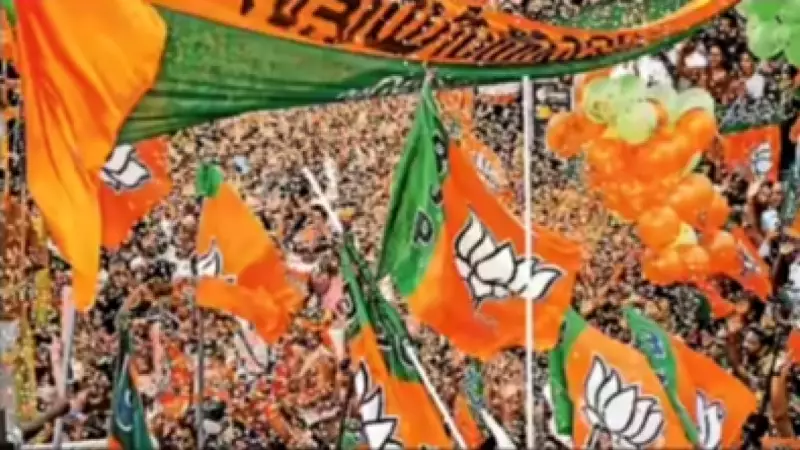
The Bharatiya Janata Party's disappointing performance in the 2026 Tamil Nadu assembly election, securing victory in only one seat, underscores a persistent political challenge for the party in the state. The outcome highlights how regional identity, the legacy of the Dravidian movement, Tamil pride, welfare-driven politics, and a strong anti-BJP narrative continue to obstruct the saffron party's efforts to establish a foothold in the region.
Despite frequent campaign visits by Prime Minister Narendra Modi and Union Home Minister Amit Shah since January, the BJP has failed to devise a convincing strategy to translate visibility and organizational effort into voter trust for a "double-engine government." Repeated setbacks in Tamil Nadu have weakened the BJP's attempt to project itself as a truly pan-Indian force and have reinforced arguments that its ideology does not resonate with the state's political culture. Opposition parties have seized on the election result as evidence that Tamil Nadu continues to resist Hindutva politics.
Internal Strategy and Seat Allocation Issues
Internally, the national leadership took a gamble by replacing K. Annamalai as state BJP chief, keeping senior functionaries in the dark about constituency decisions, and making key calls from Delhi. This even required AIADMK general secretary Edappadi K. Palaniswami to travel to the national capital. At the party's state headquarters, Kamalalayam, the common refrain has been poor seat allocation. Of the 27 seats the BJP contested, it took on the DMK in 17, including five constituencies held by influential ministers in the Stalin government.

The defeat is strategically demoralizing for the state unit. Warning signs were visible when the party fielded several leaders who had suffered repeated electoral defeats, including former Telangana governor Tamilisai Soundararajan, Union Minister L. Murugan, M. Muruganandam, Pon V. Balaganapathy, and Raama Srinivasan.
Internal Factionalism and Future Outlook
Internal factionalism, inadequate recognition for grassroots workers, and poor consultation on seat selection have raised serious questions about the party's strategy, campaign, state leadership, and long-term direction in Tamil Nadu. However, the party's improved vote share has offered some solace to its cadres, suggesting that while electoral success remains elusive, there is a slow but steady growth in support.
The 2026 election results serve as a stark reminder of the hurdles the BJP faces in Tamil Nadu, where regional pride and Dravidian ideology remain powerful forces. The party's ability to adapt its approach and build trust among voters will be crucial for any future breakthroughs in the state.