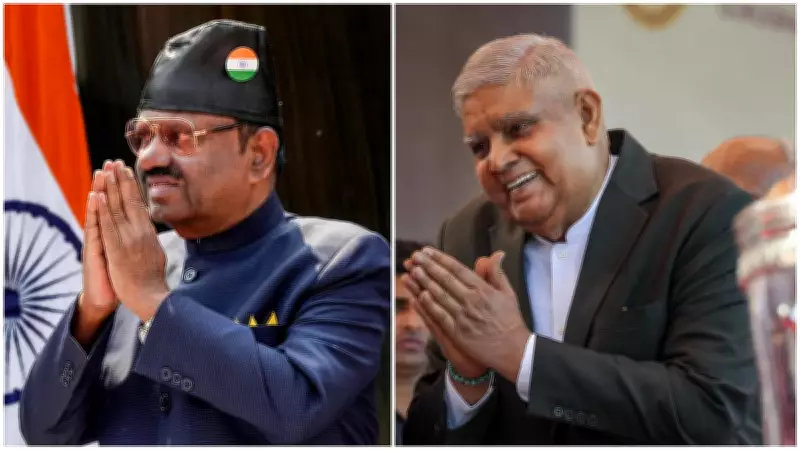
Déjà Vu in West Bengal: Governor's Surprise Exit Mirrors Dhankhar's Resignation
In a stunning political development that has sent shockwaves through Indian politics, West Bengal Governor C.V. Ananda Bose has tendered his resignation, a move that bears an uncanny resemblance to the sudden departure of former Vice President Jagdeep Dhankhar in July of last year. The abrupt exit, confirmed on March 6, 2026, has reignited debates about gubernatorial appointments and their implications for federal relations.
A Mirror Image of Last Year's Political Drama
The parallels between the two resignations are striking and have not gone unnoticed by political observers. Both Jagdeep Dhankhar and C.V. Ananda Bose stepped down unexpectedly, leaving a vacuum that has prompted immediate speculation about their successors and the underlying reasons for their decisions. This pattern of high-profile exits has raised questions about the stability and tenure of key constitutional positions in India.
While the specific circumstances surrounding Bose's resignation remain unclear, the timing and manner of his departure have drawn direct comparisons to Dhankhar's move, which was also shrouded in mystery and followed by intense political maneuvering. The recurrence of such events suggests a potential trend that could influence future appointments and resignations at the highest levels of government.
Mamata Banerjee Launches Swift Political Attack
West Bengal Chief Minister Mamata Banerjee wasted no time in capitalizing on the situation, launching a sharp and immediate attack on the Bharatiya Janata Party (BJP). Known for her combative political style, Banerjee seized the opportunity to criticize the central government, accusing it of mishandling gubernatorial appointments and undermining the autonomy of states.
Her response highlights the ongoing tensions between the Trinamool Congress-led state government and the BJP-led central administration, with Bose's resignation serving as a fresh flashpoint in this protracted political conflict. Banerjee's quick reaction underscores her strategy of leveraging such developments to bolster her party's position and rally support against the BJP.
Implications for West Bengal and National Politics
The resignation of C.V. Ananda Bose has significant ramifications for both West Bengal and the broader Indian political landscape:
- Governor-State Relations: The exit may further strain the already tense relationship between the Raj Bhavan and the West Bengal government, potentially affecting governance and administrative coordination.
- Political Narratives: Banerjee's attack on the BJP is likely to shape political narratives in the lead-up to future elections, with both sides using the incident to appeal to their respective voter bases.
- Constitutional Precedent: The repeated pattern of sudden resignations raises concerns about the consistency and predictability of gubernatorial tenures, which are crucial for maintaining stable federal dynamics.
- Succession Planning: The focus now shifts to the appointment of a new governor, a process that will be closely watched for its political implications and potential to either ease or exacerbate existing tensions.
As the political fallout continues to unfold, the echoes of Jagdeep Dhankhar's resignation serve as a poignant reminder of the volatile nature of India's political appointments. The coming days are expected to bring further clarity on Bose's reasons for stepping down and the central government's response to this latest development in West Bengal's turbulent political scene.