CESC Proposes to Bridge Rs 528.1 Crore Revenue Gap with KERC Approval
In a significant development, the Chamundeshwari Electricity Supply Corporation (CESC) has formally submitted a proposal to the Karnataka Electricity Regulatory Commission (KERC), seeking approval to bridge a net revenue deficit of Rs 528.1 crore for the 2024-25 financial year. The utility, based in Mysuru, attributed this substantial shortfall primarily to increased power procurement costs and expenditures incurred in ensuring high-quality electricity supply to consumers across its operational areas.
Public Hearing Highlights Financial and Operational Challenges
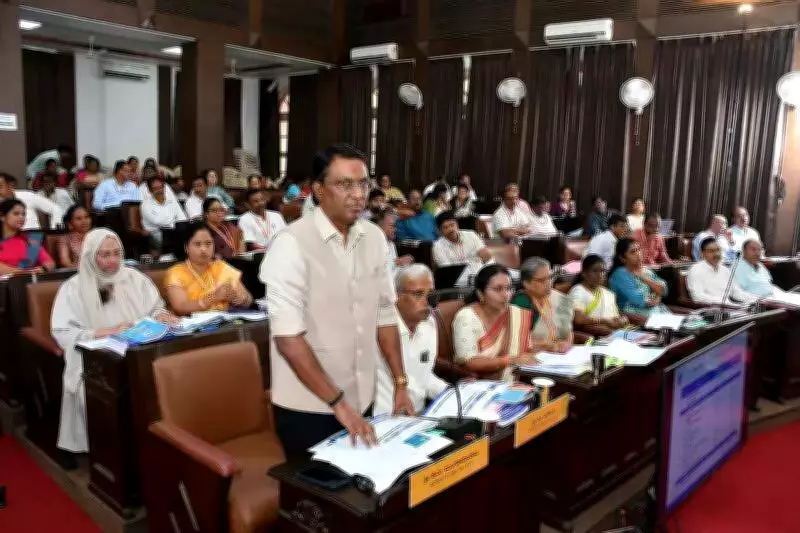
The proposal was presented during a public hearing on the Annual Performance Review (APR) for 2024-25, held at the ZP Hall in Mysuru under the chairmanship of KERC chairman P Ravikumar. CESC Managing Director KM Munigopala Raju outlined the corporation's performance and financial position, emphasizing the need for permission to recover the deficit to maintain service standards.
Clarifying the scope of the meeting, Chairman Ravikumar stated that the hearing was strictly confined to reviewing CESC's performance and was not related to any immediate tariff hike. He noted that electricity tariffs, which were previously revised annually, are now reviewed once every three years under current regulations. He added that a separate proposal seeking a tariff increase for commercial and industrial consumers for the 2026-27 period is scheduled for discussion on February 25, 2025.

Detailed Financial Analysis Reveals Key Deficits
According to CESC's submission, the actual electricity consumption stood at 8,447.4 million units (MU), a marginal rise of 0.2% compared to the approved 8,428.8 MU. However, revenue collection fell significantly short, with only Rs 7,173.3 crore realized against the projected Rs 7,591.2 crore, resulting in a gap of 5.8%. This shortfall was exacerbated by rising interest and finance costs, which increased from Rs 424.1 crore to Rs 638.9 crore, further straining the corporation's financial health.
Operational Achievements and Efficiency Measures
Despite the financial challenges, CESC highlighted several operational achievements during the hearing. Managing Director KM Munigopala Raju reported that the corporation saved Rs 200 crore through improved revenue measures and enhanced operational efficiency. Key performance indicators showed progress, including:
- Distribution losses reduced from 9.4% to 8.8%.
- Maintenance of 705 11 kV lines to ensure reliable power transmission.
- Servicing of 20,000 transformers to prevent outages and improve longevity.
- Repair of over 40,000 hazardous installations to enhance safety for consumers.
Additionally, CESC reported significant progress under various government schemes, such as solar energy initiatives and rural electrification projects, aimed at expanding access and promoting sustainable energy solutions in the region.
Regulatory Oversight and Future Implications
The public hearing was attended by KERC member HK Jagadish, underscoring the regulatory body's commitment to thorough oversight. The outcome of this proposal could have broader implications for electricity pricing and service delivery in Karnataka, as CESC seeks to balance financial sustainability with consumer affordability. Stakeholders, including residential, commercial, and industrial users, are closely monitoring the situation, especially with the upcoming tariff discussion slated for February 2025.
This move by CESC reflects ongoing challenges in the power sector, where utilities grapple with rising costs and the need for infrastructure investments. The KERC's decision will be pivotal in shaping the future of electricity supply and regulatory frameworks in the state.