

Chandigarh Beer Prices Set for Significant Hike Under New Excise Policy
Residents of Chandigarh will soon feel the pinch as beer prices in the city are poised to increase by approximately Rs 30 per bottle. This adjustment comes as part of the newly announced excise policy for the fiscal years 2026-2027, unveiled by the Chandigarh administration on Wednesday. The move is expected to impact consumers directly, with industry representatives confirming the substantial rise.
Details of the Price Increase
According to Darshan Singh Kler, president of the Chandigarh Wine Contractor Association, the current price of a beer bottle, which stands at Rs 120, will escalate to Rs 150. This represents a 25% increase, marking one of the most notable adjustments in recent years. The hike is specifically targeted at Indian beer categories, including strong, light, and mild varieties, while other liquor types see minimal changes.
For other categories such as Indian Made Foreign Liquor (IMFL), country liquor, and imported liquor, prices will remain largely unchanged. The minimum retail sale prices for country liquor and IMFL have been kept steady for the upcoming fiscal year compared to the outgoing period. This selective increase underscores the administration's focus on beer as a key revenue driver.

Revised Pricing Structure for Indian Beer
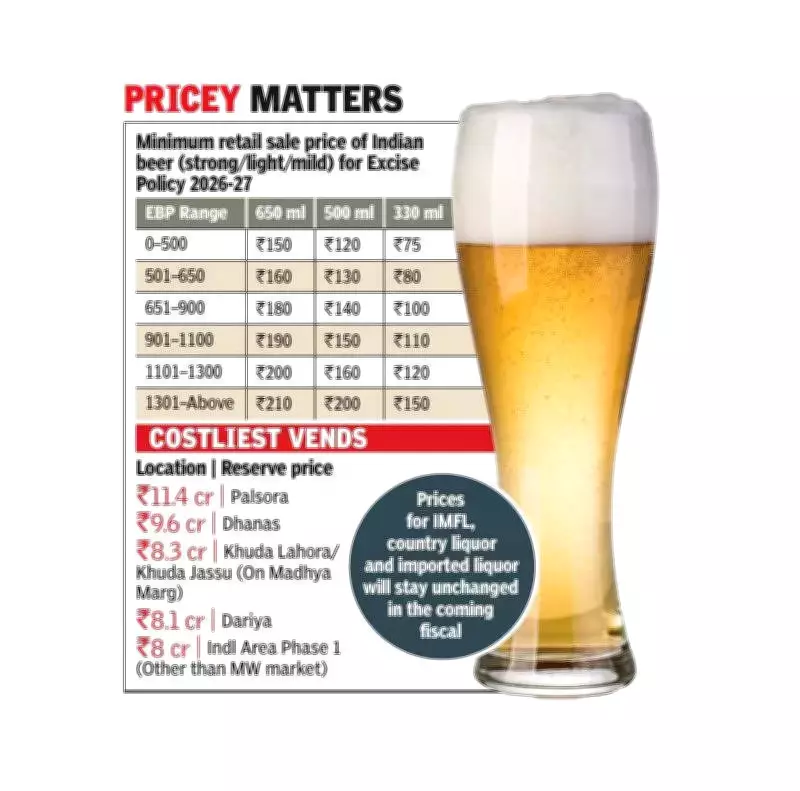
The new excise policy introduces a revised pricing framework for Indian beer, based on the Ex-Brewery Price (EBP). EBP refers to the price at which manufacturers sell beer to wholesalers before adding excise duty, wholesaler margins, and retailer margins. The minimum retail sale prices have been fixed range-wise, as detailed below:
- EBP Range 0-500: 650 ml at Rs 150, 500 ml at Rs 120, 330 ml at Rs 75
- EBP Range 501-650: 650 ml at Rs 160, 500 ml at Rs 130, 330 ml at Rs 80
- EBP Range 651-900: 650 ml at Rs 180, 500 ml at Rs 140, 330 ml at Rs 100
- EBP Range 901-1100: 650 ml at Rs 190, 500 ml at Rs 150, 330 ml at Rs 110
- EBP Range 1101-1300: 650 ml at Rs 200, 500 ml at Rs 160, 330 ml at Rs 120
- EBP Range 1301-above: 650 ml at Rs 210, 500 ml at Rs 200, 330 ml at Rs 150
This structured approach aims to standardize prices across different bottle sizes and quality tiers, ensuring transparency in the market.
Factors Behind the Price Adjustment
While the excise duty has been kept unchanged, a marginal increase of up to 2% in the Ex-Distillery Price (EDP) has been implemented for country liquor, IMFL, Indian beer, and Indian wines. This adjustment accounts for inflation and rising raw material costs, which have pressured manufacturers in recent months. Notably, this increase does not apply to imported wines, imported beer, and imported foreign liquor (IFL), highlighting a distinction between domestic and international products.
Any proposals for further increases in EDP or EBP will only be considered after the completion of the first quarter of the Excise Policy Year 2026–27, subject to uninterrupted supply of brands. This provision aims to maintain stability in the liquor market while allowing for periodic reviews based on economic conditions.
Retail Vends and Licensing Details
The Chandigarh administration has maintained the total number of retail sale liquor vends at 97, ensuring no reduction in availability across the city. The total reserve price for licensing units for the Excise Policy Year 2026–27 has been fixed at Rs 454.35 crore, which is only marginally higher than the outgoing policy's Rs 443.51 crore. This slight increase reflects cautious fiscal planning amid economic uncertainties.
Among the retail vends, the location at Palsora village commands the highest reserve price of Rs 11.4 crore, up from Rs 10.2 crore under the previous excise policy. Other top-priced vends include:
- Dhanas at Rs 9.6 crore
- Khuda Lahora/Khuda Jassu (On Madhya Marg) at Rs 8.3 crore
- Dariya at Rs 8.1 crore
- Indl Area Phase 1 (Other than MW market) at Rs 8 crore
These figures indicate the strategic value of certain locations within the city's liquor retail network.

Broader Implications and Consumer Impact
The price hike for beer is likely to affect both casual drinkers and regular consumers, potentially altering consumption patterns in Chandigarh. With other liquor categories remaining stable, there may be a shift in preference towards alternatives such as IMFL or country liquor, which could influence market dynamics in the coming fiscal year.
This policy update aligns with broader trends in excise taxation across India, where state administrations often adjust liquor prices to boost revenue while managing inflation. Chandigarh's approach of targeting beer specifically may serve as a model for other regions looking to balance consumer affordability with fiscal needs.
As the new excise policy takes effect, stakeholders including retailers, wholesalers, and consumers will closely monitor its implementation. The administration's decision to keep the number of vends unchanged suggests a focus on revenue optimization rather than expansion, aiming to sustain the city's liquor market without over-saturation.





