

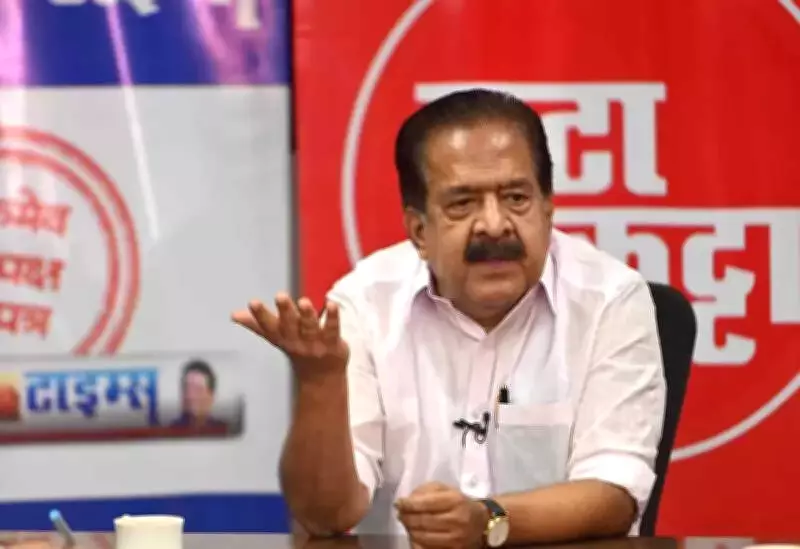
Former Opposition Leader Calls for Boycott of Kerala's International Democracy Conference
In a significant political development, former opposition leader Ramesh Chennithala has issued a strong appeal to distinguished invitees of the Kerala government's upcoming "International Conference on Development and Democracy" to reconsider their participation. The event is scheduled to take place on February 15 in Thiruvananthapuram, and Chennithala's intervention has sparked considerable debate about the state's political climate.
Open Letter to Intellectual Luminaries
Chennithala addressed his concerns through an open letter to several prominent figures who have been invited to the conference. The recipients include Nobel laureate economist Amartya Sen, eminent historian Romila Thapar, renowned nutrition expert Dr. Shakuntala Thilsted, National Conference president Farooq Abdullah, and DMK parliamentarian Kanimozhi. In his communication, Chennithala articulated serious reservations about the government's motives behind organizing this high-profile gathering.
The former opposition leader alleged that the conference represents a calculated attempt by the state administration to refurbish its public image ahead of crucial elections, despite facing multiple corruption allegations and demonstrating what he described as fascist tendencies. Chennithala emphasized that the participation of these respected intellectuals might be interpreted as an implicit endorsement of the government's policies, which he claims are fundamentally anti-democratic.

Concerns About Democratic Erosion
Chennithala clarified that he was writing not from a position of political partisanship but as a concerned citizen and legislator who deeply respects the intellectual contributions and democratic commitments of the invitees. He expressed apprehension that their presence at the conference would be exploited to validate the government's narrative on development and democracy, thereby obscuring the harsh realities confronting the people of Kerala.
The letter highlighted what Chennithala perceives as a disturbing decline in democratic culture within the state. He asserted that dissent is increasingly being suppressed rather than constructively addressed. As a concrete example, he referenced the controversial amendment to the Kerala Police Act in 2020, which was eventually withdrawn following substantial public outcry. This episode, according to Chennithala, serves as clear evidence of the government's inclination to curtail freedom of expression.
Allegations of Corruption and Misgovernance
Chennithala's communication detailed various corruption allegations plaguing the current administration, including those involving companies with connections to the chief minister's family. He argued that organizing an international conference focused on democracy under such circumstances severely undermines the government's credibility and moral authority to host such an event.
Furthermore, the letter pointed to additional governance failures, including financial irregularities within the cooperative sector, alleged political misuse of power, and a concerning erosion of public trust in law enforcement agencies. Chennithala cited specific allegations of institutional bias and undisclosed meetings with right-wing groups as developments that threaten Kerala's traditionally secular political culture.
Appeal to Democratic Principles
In his concluding remarks, Chennithala made a passionate appeal to the invitees' principles, suggesting that withdrawing from the conference would better align with their lifelong dedication to democratic values and intellectual integrity. He urged them to consider the broader implications of their participation and the message it would send about condoning what he characterizes as anti-democratic practices.
The controversy surrounding this conference comes at a politically sensitive time for Kerala, with elections looming and ongoing debates about governance, transparency, and democratic norms. Chennithala's intervention has undoubtedly intensified these discussions, placing both the government and the invited intellectuals in a challenging position as they weigh their responses to these serious allegations.






