Chhattisgarh Unveils ₹1.72 Lakh Crore 'SANKALP' Budget with Focus on Tribal Regions
RAIPUR: The Chhattisgarh government on Monday presented a comprehensive ₹1.72 lakh crore budget titled "SANKALP," placing the tribal-dominated regions of Bastar and Surguja at the forefront of its development agenda. This ambitious financial plan combines substantial infrastructure investment with continued welfare programs and enhanced security measures in areas affected by Left Wing Extremism.
Budget Highlights and Fiscal Framework
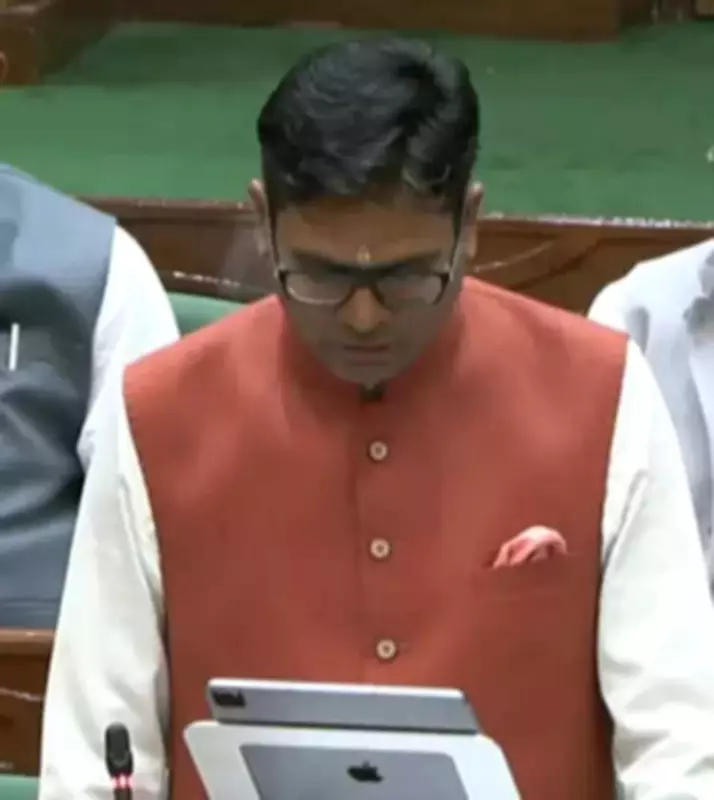
Finance Minister O P Choudhary presented his third budget for the current BJP government on Tuesday at the new Vidhan Sabha building in Nava Raipur. The budget estimates the state's Gross State Domestic Product (GSDP) at approximately ₹7.09 lakh crore for the 2026–27 fiscal year. Total receipts and expenditure are both projected at ₹1.72 lakh crore, with revenue expenditure accounting for about ₹1.45 lakh crore and capital spending around ₹26,500 crore.
The fiscal deficit is projected at roughly ₹20,400 crore, representing 2.87% of GSDP, which remains within prescribed financial limits. Choudhary emphasized that 'Sankalp' represents a strategic shift from policy formulation to concrete execution, aiming to ensure balanced regional development while simultaneously strengthening economic expansion and social equity.
Regional Development Focus: Bastar and Surguja
The budget establishes Bastar and Surguja as clear priorities through a multi-faceted approach combining development initiatives with security enhancements. Key allocations include funding for the Bastar–Surguja Olympics, a chief minister bus service scheme for remote areas, and a new homestay tourism policy to boost local economies.
Livelihood support programs feature prominently, with livestock-based income assistance and additional nutrition schemes designed to improve economic conditions. The government has also extended support for establishing medical colleges in Dantewada, Kunkuri, and Manendragarh, aiming to balance development with stabilization in Left Wing Extremism-affected zones. Security measures include the creation of 1,500 additional Bastar Fighter posts to strengthen law enforcement capabilities.
Infrastructure and Connectivity Investments
Infrastructure development forms a cornerstone of the budget, with the Public Works Department receiving over ₹9,400 crore specifically for roads and connectivity projects. New provisions include fast-lane corridors under the Mukhyamantri Drutgami Sadak scheme, airport upgrades in Bilaspur, Ambikapur, and Jagdalpur, and significant investments in urban infrastructure and power networks to improve regional accessibility and economic potential.
Welfare Continuity and Mission-Driven Governance
On the welfare front, the budget maintains substantial allocations for flagship schemes, including ₹10,000 crore for the Krishak Unnati Yojana (farmer welfare program), ₹8,200 crore for the Mahtari Vandan support scheme for women, and significant provisions for food security, housing, and power subsidies to support vulnerable populations.
The government has announced five chief ministerial missions covering artificial intelligence, tourism, sports development, infrastructure planning, and startups, each supported by dedicated funding to drive focused implementation. Officials indicate these missions are designed to promote outcome-driven governance and accelerate transformation in emerging sectors, reflecting a strategic approach to development administration.
Balancing Growth and Regional Equity
Overall, the SANKALP budget attempts to strike a careful balance between welfare continuity and growth-oriented investments, with a pronounced regional emphasis on Bastar and Surguja. The financial plan demonstrates a visible push to anchor development through infrastructure enhancement and mission-mode governance, aiming to create sustainable progress in historically underserved areas while maintaining fiscal discipline.