

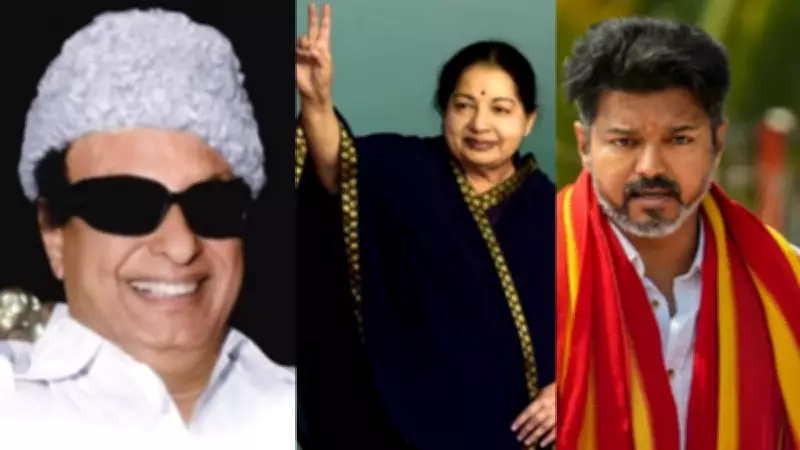
The Cinematic Influence on Tamil Nadu's Political Arena
The intersection of cinema and politics in Tamil Nadu is a distinctive phenomenon that has profoundly shaped the state's electoral dynamics for over half a century. This unique blend of entertainment and governance has created a political culture where film stars transition seamlessly into powerful political leaders, leveraging their on-screen personas to build mass appeal and voter loyalty.
MGR: The Pioneering Icon Who Blazed the Trail
Marudur Gopalan Ramachandran, popularly known as MGR, stands as the foundational figure in this cinematic-political nexus. Rising from a celebrated film career where he often portrayed heroic, pro-poor characters, MGR founded the All India Anna Dravida Munnetra Kazhagam (AIADMK) in 1972. His immense popularity translated directly into political success, leading to his election as Chief Minister of Tamil Nadu in 1977. MGR's governance was characterized by welfare schemes that mirrored his cinematic image as a champion of the downtrodden, cementing a legacy where stardom and statecraft became inextricably linked.
Jayalalithaa: The Actress Who Became a Political Titan
Following in MGR's footsteps, Jayalalithaa Jayaram demonstrated how a successful film career could be parlayed into formidable political authority. Initially entering politics under MGR's mentorship, she ascended to lead the AIADMK after his death. Jayalalithaa served multiple terms as Chief Minister, from 1991 to 2016, wielding significant influence over Tamil Nadu's political and social landscape. Her tenure was marked by a mix of populist policies and a strong, centralized leadership style, proving that the star power cultivated in cinema could sustain long-term political dominance and reshape party structures.

Vijay: The Contemporary Star Fueling Political Speculation
In recent years, actor Vijay has emerged as a focal point of political speculation, illustrating the ongoing relevance of cinema in Tamil Nadu's electoral discourse. Through his fan clubs and public engagements, Vijay has cultivated a substantial grassroots following. His announcements regarding potential political entry have sparked widespread media coverage and public debate, highlighting how modern film personalities continue to influence voter sentiment and party strategies. This trend underscores the enduring expectation among the electorate that popular stars may transition into governance roles, maintaining the state's unique political tradition.
The Mechanisms of Cinematic Political Appeal
The success of cinema stars in Tamil Nadu politics can be attributed to several key factors. Firstly, their films often embed social messages and Dravidian ideals, resonating deeply with regional identity and cultural values. Secondly, their celebrity status provides immediate name recognition and a loyal fan base that can be mobilized for electoral support. Thirdly, the portrayal of heroic, benevolent characters on screen creates a public perception of leadership capability and empathy, which voters associate with governance potential. This synergy has enabled stars to bypass traditional political apprenticeship and assume leadership positions directly.
Impact on Tamil Nadu's Political Ecosystem
This cinematic influence has fundamentally altered Tamil Nadu's political ecosystem. It has fostered a personality-centric politics where individual star appeal often outweighs ideological platforms. Major parties like the AIADMK and the Dravida Munnetra Kazhagam (DMK) have historically integrated film personalities to enhance their electoral prospects. Moreover, it has democratized political entry, allowing individuals from non-political backgrounds to achieve high office based on popular acclaim. However, it has also led to criticisms regarding the prioritization of image over administrative experience and policy depth.

Future Trajectories and Enduring Legacy
Looking ahead, the role of cinema stars in Tamil Nadu politics shows no signs of diminishing. With the rise of social media and digital platforms, contemporary actors can engage with the public more directly, potentially amplifying their political influence. The legacy of MGR and Jayalalithaa continues to set a precedent, inspiring new generations of film personalities to consider political careers. As Tamil Nadu approaches future elections, the interplay between cinematic fame and electoral success remains a critical factor, ensuring that the silver screen will continue to shape the state's political narrative for years to come.





