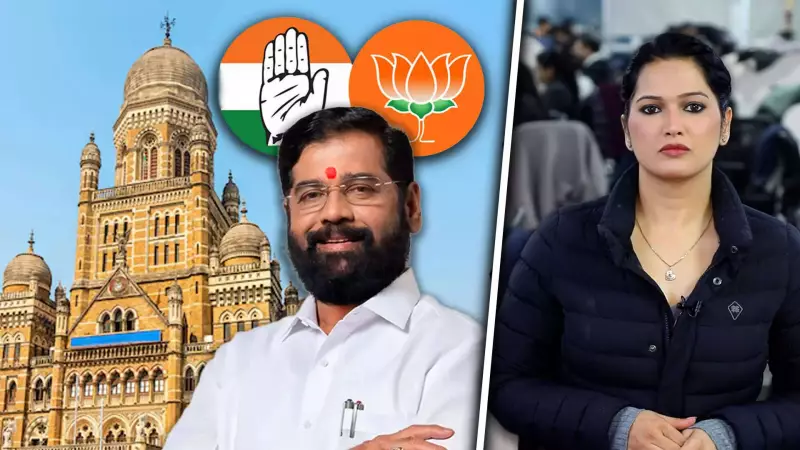
A local political maneuver in the town of Ambernath has erupted into a full-blown crisis for Maharashtra's ruling coalition, exposing deep fissures within the alliance. Reports of an understanding between the Congress and the Bharatiya Janata Party (BJP) for municipal power-sharing have ignited fury from the BJP's key ally, the Shiv Sena, putting the stability of the Mahayuti government under fresh and severe strain.
Local Deal Triggers Statewide Political Firestorm
The controversy began with a power-sharing arrangement at the Ambernath Municipal Council level, where local units of the Congress and BJP reportedly came to an understanding. This move was swiftly framed by participants as a local anti-corruption front, aimed at tackling specific civic issues. However, the optics of two ideologically opposed national parties collaborating at the grassroots sent shockwaves through the state's political landscape.
While the Congress party was quick to deny any formal alliance with the BJP, stating the arrangement was strictly confined to local governance, the damage to coalition harmony was already done. The visual of their partnership proved explosive, demonstrating how pragmatic local politics can often run ahead of and undermine national party ideologies and alliances.

Shiv Sena's Fury and BJP's Defensive Posture
The reaction from the Shiv Sena, which shares power with the BJP in the state's Mahayuti government, was one of immediate outrage. The party perceived the local tie-up as a direct betrayal and a move that undermined its position and authority within the coalition.
Facing the heat, BJP leaders initially defended the Ambernath arrangement. They pointed fingers at the local leadership of the Shiv Sena, suggesting that failures at the local level had necessitated the unconventional partnership. However, this justification failed to placate their angry ally, and the dispute rapidly escalated beyond the municipal boundaries, reaching the highest echelons of state leadership.
CM Fadnavis Intervenes, Orders Rollback
The situation demanded top-level intervention. Chief Minister Devendra Fadnavis publicly stepped in to address the growing rift. Making the state leadership's displeasure clear, Fadnavis objected to the local arrangement and issued a directive ordering the party's local units to undo such tie-ups. This intervention highlighted the seriousness with which the state BJP viewed the threat to the larger Mahayuti alliance.
The order aimed to control the political fallout and reassure the Shiv Sena of the BJP's commitment to the coalition. However, the incident has left a mark, revealing the persistent tensions and trust deficits that can exist even in established political partnerships.
Ambernath as a Political Flashpoint
The events of January 7, 2026, have firmly placed Ambernath on Maharashtra's political map as a significant flashpoint. The episode serves as a stark case study in the complex, two-level game of Indian politics, where local electoral calculations and governance necessities can violently collide with the demands of broader coalition dharma and ideological positioning.
The fallout underscores a recurring theme in Indian politics: local bodies often become laboratories for political realignments that can have state or even national repercussions. The Ambernath pact, though now officially disavowed by the leadership, has successfully exposed the underlying strains within the Mahayuti, suggesting that the alliance's stability is contingent on constant negotiation and management of competing interests at all levels of the political ladder.