

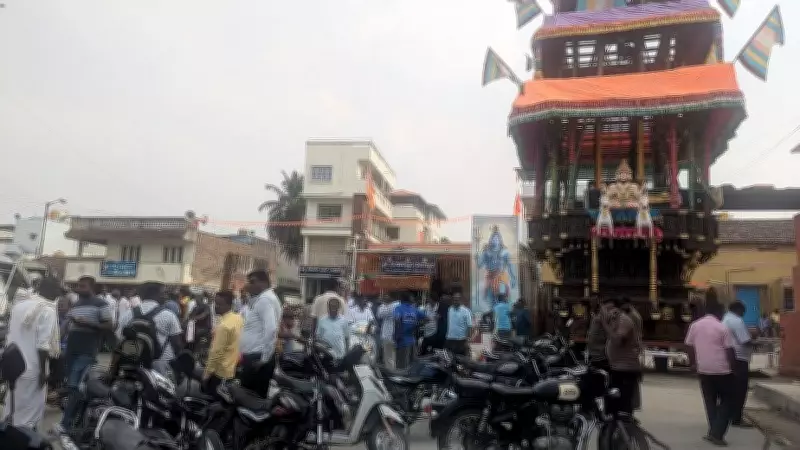
Congress-JD(S) Prestige Battle Erupts Over Chariot Fabric in Hassan
A seemingly minor tradition of draping a chariot with new fabric during a local festival in Hassan, Karnataka, has spiraled into a full-blown political confrontation between the Congress and the Janata Dal (Secular). The customary practice, intended to honor religious festivities, has now become a flashpoint for prestige and influence between the two rival parties, leading to significant chaos and disruption at the event.
Chaos Unfolds Over Festival Tradition
According to reports, the festival, which follows long-standing customs, typically involves the ceremonial adornment of a chariot with fresh fabric as part of the celebrations. However, this year, the process turned contentious as both Congress and JD(S) members vied for control over the selection and placement of the fabric. The disagreement quickly escalated beyond mere logistics, morphing into a symbolic struggle for dominance and public recognition in the region.
Eyewitnesses described scenes of confusion and disorder as supporters from both parties attempted to assert their authority, with arguments breaking out over who had the right to oversee the tradition. This clash not only disrupted the festive atmosphere but also highlighted the deep-seated political rivalries that often permeate local events in Karnataka.

Political Implications and Regional Tensions
The incident underscores the intense competition between Congress and JD(S) in Karnataka, where even cultural and religious occasions can become battlegrounds for political one-upmanship. Analysts suggest that such disputes are reflective of broader tensions as both parties seek to consolidate their bases ahead of upcoming electoral challenges.
In Hassan, a district known for its political significance, this fabric drape issue has drawn attention to how local traditions are increasingly being politicized. The Congress and JD(S), both key players in the state's political landscape, appear to be using the festival as a platform to demonstrate their clout and connect with voters, albeit at the cost of communal harmony.
Public reaction has been mixed, with some residents expressing frustration over the politicization of a religious event, while others see it as an inevitable part of the region's dynamic political culture. Authorities have been called upon to mediate and ensure that future festivals remain focused on their cultural and spiritual roots, rather than becoming arenas for political posturing.
As the situation develops, it remains to be seen whether this clash will have lasting repercussions on the relationship between Congress and JD(S) in Karnataka, or if it will be quickly overshadowed by other political developments. For now, the fabric on the chariot stands as a stark reminder of how even the smallest details can ignite major political fires in India's vibrant democracy.






